




















Cricket is a game of extreme contrasts, where a player can go from being a hero to an afterthought in the span of just a few days. The ongoing series in England highlights this volatility, with Vaibhav Suryavanshi serving as the latest case study. When he stepped onto the field at Old Trafford on July 4, he became India's youngest international cricketer. His performance in the IPL 2026, where he amassed 776 runs at a staggering strike rate of over 237, had already set high expectations. Smashing the very first ball of his international career—delivered by his IPL teammate Jofra Archer—for a six felt like a scene straight out of a Bollywood blockbuster.
The Growing Pains of International Cricket
However, the narrative shifted rapidly within just three matches. As praise turned into scrutiny, critics began questioning his approach. Opposing bowlers, led by Jofra Archer, have successfully identified chinks in the youngster's armor. While there are calls from some quarters to recall Sanju Samson, the Indian team management would be wise to avoid impulsive decisions. Suryavanshi represents the future of Indian cricket, and his current struggles should be viewed as a vital part of his growth, provided he is backed by the right guidance and coaching.
International cricket is ruthless in exposing technical flaws. Transitioning from the flat, predictable pitches of India to the bouncy surfaces in England has highlighted a recurring issue for Suryavanshi. Against high-velocity short-pitched deliveries, his arms and elbows tend to lock up. Because his hands remain tucked close to his body, he fails to carve out the necessary space to execute pull or cut shots effectively. Consequently, when the ball is directed at his chest or neck, he is forced into playing awkward, defensive strokes. Word travels fast in the professional circuit, and it is almost certain that bowlers will continue targeting this specific weakness.
Archer's Calculated Strategy
During their time together in the Rajasthan Royals net sessions, Suryavanshi frequently dominated Jofra Archer. It is now clear that Archer recognized these technical vulnerabilities during their IPL stint but withheld that strategy while they were on the same side. Now that they are international adversaries, Archer has executed that long-planned strategy with clinical precision, dismissing him twice in three games. This highlights the gap between domestic dominance and international strategic planning.
Expert Perspectives and the Path Ahead
A consistent pattern has emerged in Vaibhav's first three innings in England: a promising start followed by a struggle against the short ball. While his ability to hit massive sixes off the world's best bowlers in just 25 balls showcases his immense raw talent, his record against Archer—18 runs in 13 balls with two dismissals—reveals the scale of his current challenge. Commentator Nasser Hussain refused to write him off, comparing him to Abhishek Sharma and stating that in terms of pure talent, Suryavanshi is in a league of his own. Hussain also noted that hitting sixes in England is fundamentally different due to wind conditions and the unpredictable nature of the wickets.
At only 15 years old, he has the rare luxury of time. The team management must prioritize patience over immediate perfection. If India benches him now, it sends a message that the team lacks the temperament to foster young talent. History shows that many legendary Indian batters faced their toughest technical tests on their maiden tours of England; those who survived and adapted went on to define an era.
Coaching and Long-term Vision
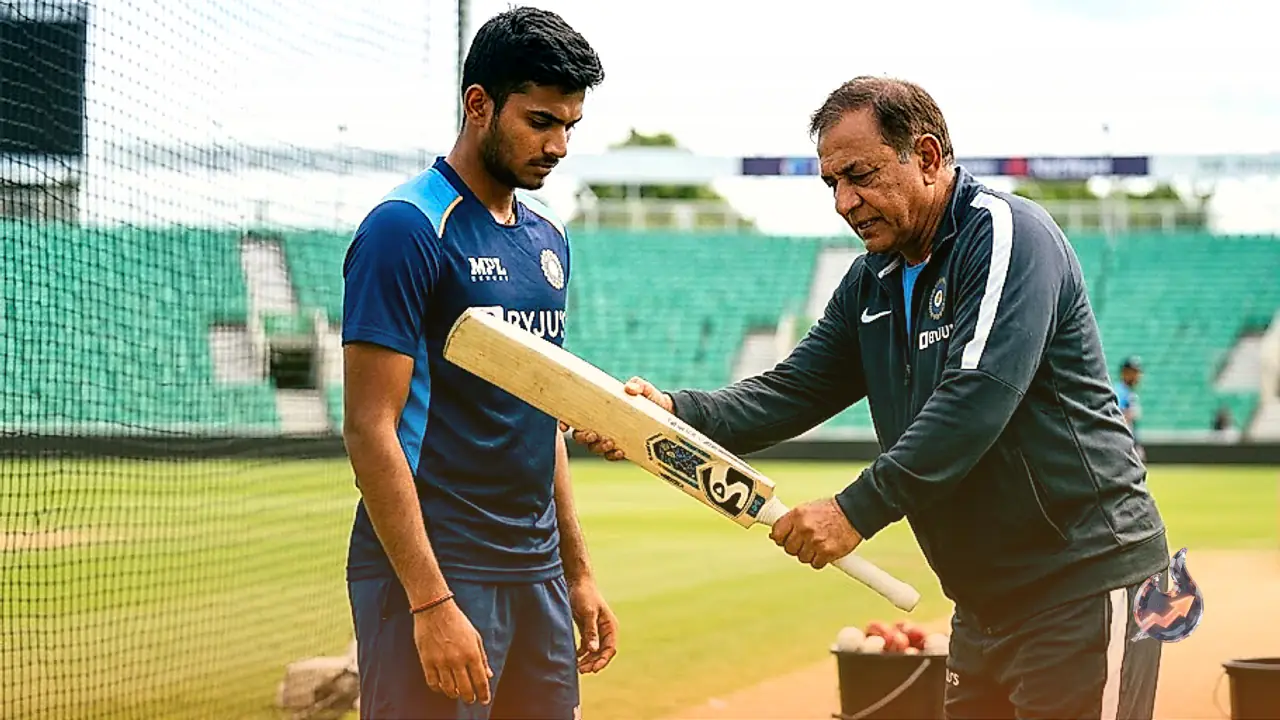
Rather than shielding him from difficult conditions, the focus should be on refining his stance and footwork so that he can shift his weight back efficiently during short-pitched deliveries without losing balance. Coaches need to help him keep his hands free so they don't get jammed near his body when the ball climbs sharply. As Gautam Gambhir rightly pointed out, Vaibhav is a match-winner capable of changing the game in just a few deliveries. If he is given the necessary time, security, and technical support, India will not just preserve a talent but nurture a future great. He needs the freedom to make mistakes and the space to learn from them on the pitch.