























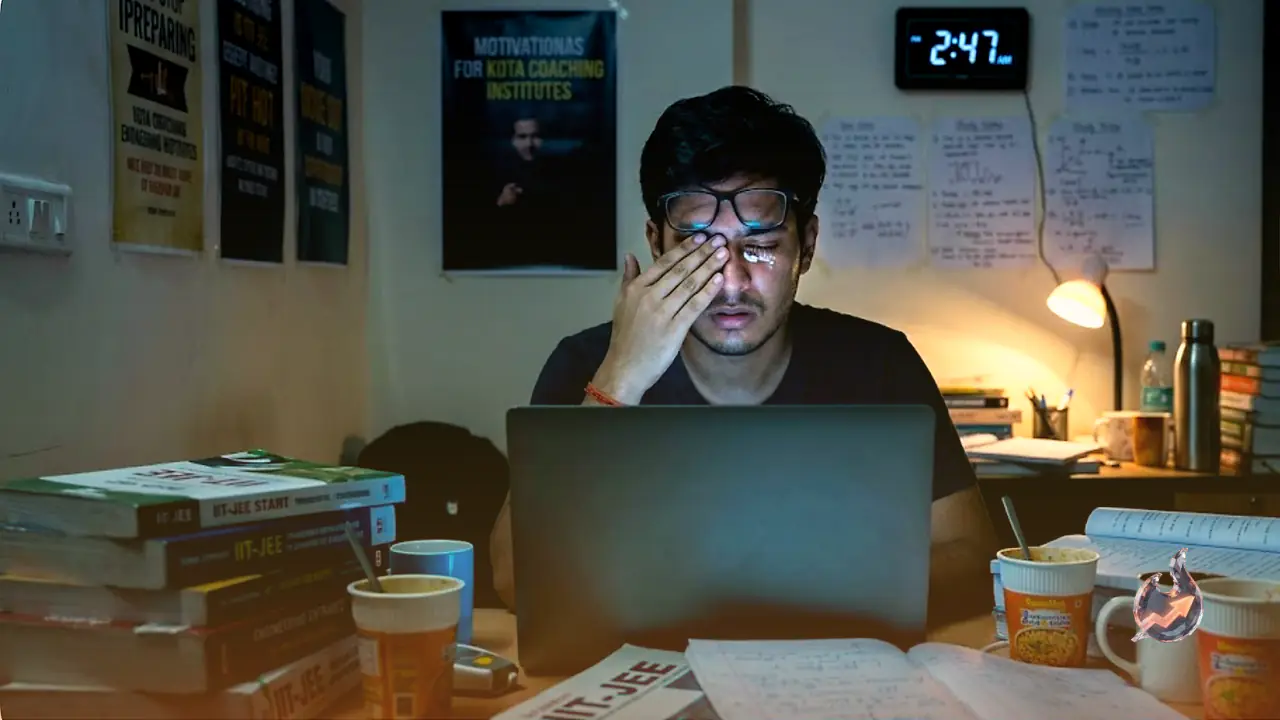

Kota, widely recognized as India's premier coaching hub, draws hundreds of thousands of aspiring doctors and engineers every year. However, the intense academic pressure coupled with shifting lifestyle patterns is taking a massive toll on the physical and mental well-being of these young competitive exam candidates. Highlighting these hazards, senior ophthalmic surgeon Dr. Suresh Pandey has voiced deep concern over the escalating cases of ocular problems and mental exhaustion among coaching students. He points out that the increasingly common habit of studying late into the night is pushing students toward severe physical and psychological issues, which ultimately damages their academic focus and final exam performances.
The Consequences of Screen Exposure and Night Owls
With over two decades of experience treating students in the coaching city, Dr. Suresh Pandey has observed a sharp spike in digital eye strain, medically termed computer vision syndrome. This spike is directly linked to prolonged exposure to smartphones, tablets, and laptops during late-night study sessions. When students continuously stare at digital screens, they suffer from a range of discomforts including dry eyes, burning sensations, heaviness, persistent headaches, and acute eye pain. Many candidates deliberately choose to study until 4 AM, believing that the absolute silence of the night helps them concentrate better. However, the medical expert warns that this schedule runs completely contrary to the human body's natural biological design.
How Sleep Deprivation Blocks Memory Recall
The habit of keeping late hours severely disrupts the biological clock. Dr. Pandey explains that late-night wakefulness restricts the secretion of melatonin, a vital hormone produced by the brain to regulate sleep. This restriction leads to chronic sleep deprivation, which directly harms the cognitive abilities of even the most brilliant students. During deep sleep, the brain actively works to convert short-term memory into long-term memory. When a student is deprived of sufficient rest, this essential conversion process is disrupted. As a direct consequence, students find it incredibly difficult to retain what they have learned, leading to a frustrating inability to recall vital information during their actual exams.
The Growing Threat of Myopia Among Coaching Students
The lifestyle of students in Kota has undergone a dramatic shift, contributing to high rates of nearsightedness. Approximately 40 percent of the coaching student population in Kota is currently affected by myopia. This rapid rise in vision problems is triggered by a combination of factors, including an unhealthy dependence on fast food, a near-total lack of physical exercise, and minimal exposure to natural sunlight. If left unaddressed, this trend could lead to much more severe eye complications in the future.
Practical Recommendations for Better Eye and Mental Health
To help students maintain their physical health and optimize their academic output, Dr. Suresh Pandey has shared a set of essential lifestyle adjustments. First, he advises students to adjust their sleep schedules by sleeping around 10 PM or 11 PM and waking up early at 3 AM or 4 AM to study. This sleep-wake routine aligns perfectly with the body's circadian rhythm, keeping the internal clock balanced. Second, instead of studying continuously for several hours, students should divide their study time into distinct two-hour blocks separated by short restorative breaks. Third, spending 10 to 15 minutes outdoors in natural sunlight every day is highly recommended. Sunlight exposure helps release dopamine in the eyes, which plays a major role in halting the progression of myopia. Finally, committing to at least 30 minutes of physical exercise, yoga, or pranayama daily is crucial for physical and mental fitness.
The DOSE Formula to Fight Exam Stress
Dealing with severe mental strain requires an active hormonal balance. Dr. Pandey introduces the DOSE formula, which represents the four key happy hormones that the body needs to combat stress. He emphasizes that physical movement is the ultimate medicine for a stressed mind. Engaging in daily physical activities like yoga, structured workouts, or traditional breathing exercises for at least half an hour stimulates the balanced release of these happy hormones. This chemical balance naturally lowers anxiety levels, promotes deeper sleep, enhances concentration, and significantly boosts memory retention, ensuring students are mentally equipped for their rigorous academic challenges.