

















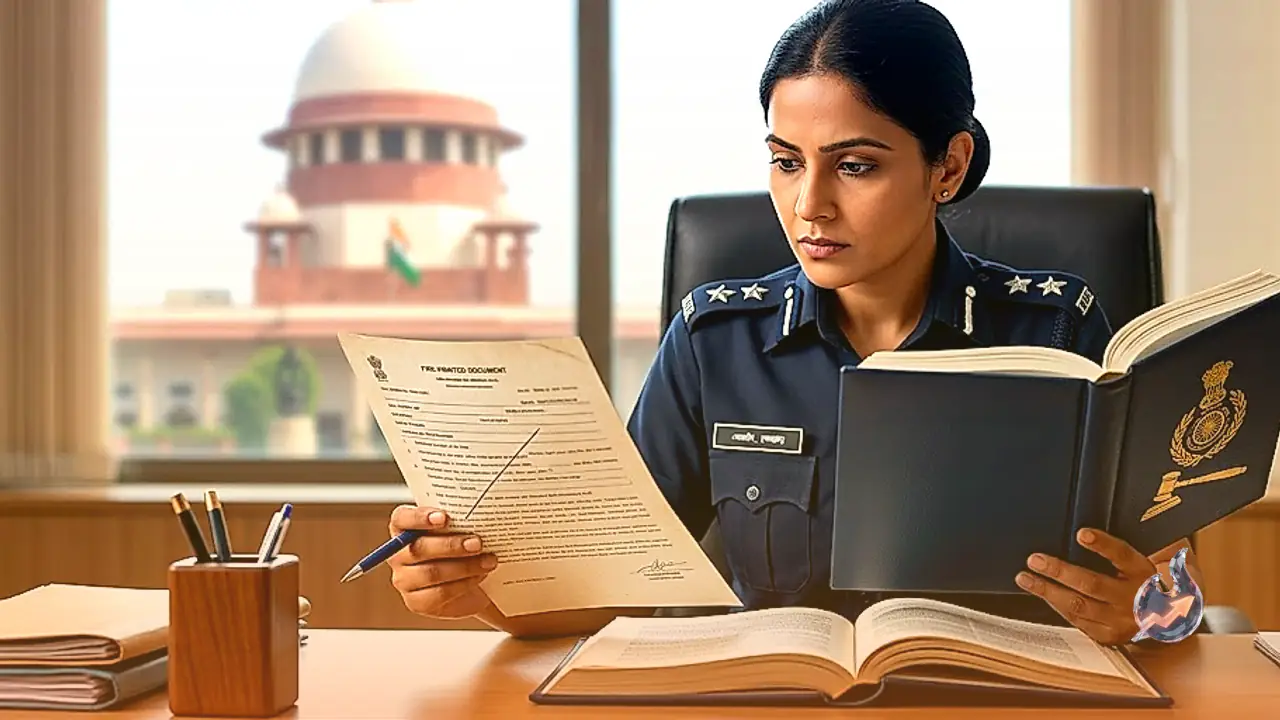

The Supreme Court has made a major call on the language used in India's courts and police stations. The top court has approved a new draft guidebook called the Handbook on Combating Gender Stereotypes, which directs that outdated and insulting words used for victims during FIRs, chargesheets and hearings be dropped. The handbook was drafted at the National Judicial Academy, or NJA, based in Bhopal.
A Supreme Court bench has made clear that all courts and police departments across the country must follow this guideline at every stage, from registering an FIR to preparing a chargesheet and through the judicial process. The goal is to make the legal process free of bias, simpler in its language, and more sensitive toward victims.
Which Words Are Being Dropped, And What Replaces Them
The new handbook pushes to remove words and attitudes that foster a wrong perception of victims. Several old terms that were used earlier will now be replaced by respectful and neutral language. For instance, words like prostitute or call girl will now be replaced with sex worker. Similarly, the word prosecutrix will be replaced with victim or survivor. Terms like outraging modesty or unchaste, used loosely for character, will also be phased out of court and police language, replaced by language that stays focused on the crime and the victim's rights.
New Rules For How Victims And Witnesses Are Treated
The handbook also makes clear that in sexual offence cases, questions should not be based on the victim's clothing, behaviour or past relationships. Courts have been told to base their decisions strictly on facts and evidence. An important point is that a minor's consent will not be treated as legally valid. Beyond this, instructions have been issued to treat witnesses with respect too, so that they do not feel fear or pressure while testifying in court.
Two-Finger Test Ban In Rape Cases Reiterated
The new handbook once again repeats a complete ban on the two-finger test in rape cases. This examination method has long been considered degrading and irrelevant to establishing the facts of a case.
Who Was On The Committee That Prepared The Handbook
A five-member expert committee was formed to prepare this handbook. It was headed by Justice (Retired) Anirudh Bose, Director of the National Judicial Academy. The committee included experts from the judiciary, law and education fields, among them two members connected to Bhopal. Once implemented, the handbook is expected to help reduce gender discrimination in the justice process and deliver better, more sensitive justice to victims.