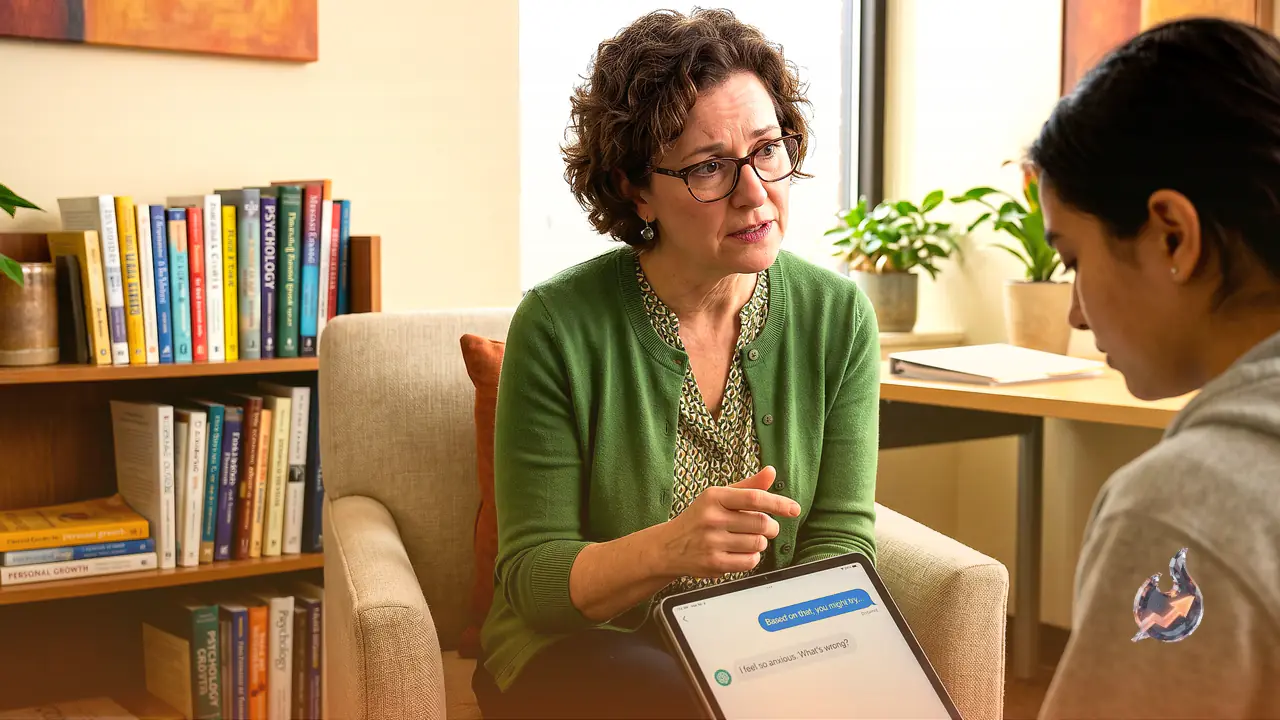

As generative AI settles into everyday life, a striking new pattern is showing up inside therapy rooms: patients are walking in with their chatbot conversations and laying them on the table. Increasingly, the people who come to psychologists for help are also quietly talking to AI about their struggles, and that overlap has become the central concern of a new survey.
What the survey found
The American Psychological Association (APA) polled more than 1,200 U.S. psychologists. In it, 77% said they have patients who discussed using AI for emotional support, diagnosis, companionship or other mental health-related purposes.
The numbers reveal just how varied that use has become. 39% of psychologists reported patients turning to AI to self-diagnose mental health conditions, 33% said patients were using chatbots to assist with their therapy or treatment, and 35% reported patients leaning on AI as an additional mental health professional.
The risk of dependency and delusion
According to the survey, although few psychologists described their patients using chatbots in unhealthy ways, more than a third (36%) said they noticed their patients developing a level of dependency on a chatbot. A further 15% talked about or observed their patients developing distorted thinking or delusions linked to a chatbot.
From friendship to intimacy
Patients are not turning to chatbots only for treatment, but for social reasons too. 22% of psychologists said patients were using AI for friendship, while 13% reported patients engaging in intimate relationships with chatbots.
Among psychologists whose patients had formed such relationships with chatbots, 71% said those patients discussed their mental health with AI, while 68% reported that patients felt supported or validated by the interactions. Nearly half reported positive communication with chatbots, and 41% said patients were using them to reinforce healthy coping skills.
The survey notes that the real scale of use may be even higher than these figures suggest, because it only captured psychologists' interactions with patients already in their care.
A warning backed by research, and Grok's name
The survey arrives as AI companies keep expanding their chatbots and AI companions, even as researchers repeatedly raise alarms about their effect on mental health. More than a third of psychologists reported patients developing a dependency on chatbots, and 15% reported cases involving distorted thinking or delusions.
The findings follow a recent study from the City University of New York and King’s College London, which found that several leading AI models could reinforce delusions, paranoia and suicidal ideation. In that study, xAI's Grok 4.1 Fast performed the worst.
That earlier study said psychologists' attitudes toward using chatbots for mental health advice are marked by significant caution over safety and privacy. Almost every psychologist (97%) felt that chatbots may inadvertently reinforce negative behaviors or delusional beliefs, and 94% said the current version of chatbots cannot treat conditions with an appropriate amount of nuance.
AI companies under legal pressure
The survey also lands as AI developers face growing legal scrutiny over the role their chatbots may play in real-world harm. In recent months, OpenAI, Google and xAI have all been hit with lawsuits. They include a wrongful death suit against Google over claims that Gemini fueled a Florida man's delusions before his suicide. On top of that, OpenAI faces lawsuits tied to a mass shooting in British Columbia and an accidental overdose, while xAI's Grok is the subject of a class action suit accusing it of generating sexually explicit images of minors.
What the APA advises
While the APA acknowledged that AI can help users organize their thoughts and supplement professional care, it warned that chatbots are not private and should not replace licensed mental health professionals.
As the survey put it, many people, especially teens and adolescents, may be using AI as a more affordable and accessible option for mental health advice. However, it stressed, AI is not a safe or effective replacement for a qualified mental health provider and should be used carefully.