





















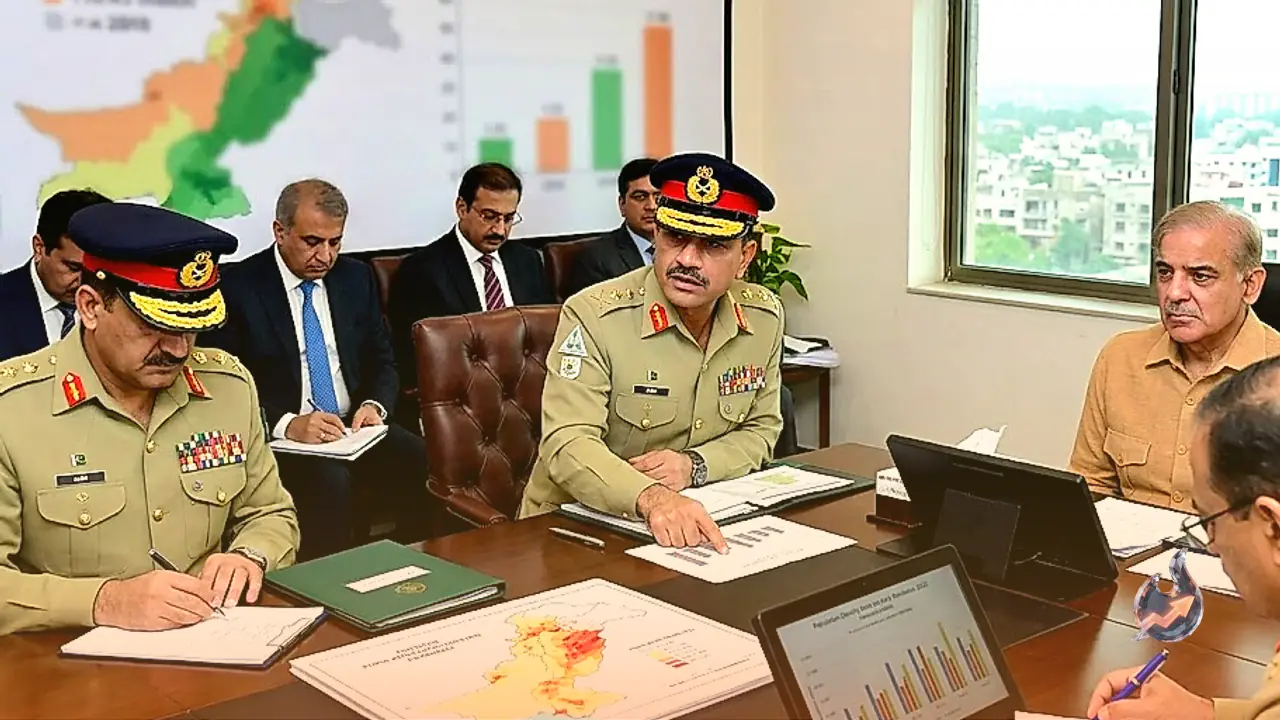

Pakistan's army chief Field Marshal Asim Munir already juggles several jobs beyond running the military, he weighs in on diplomacy, shapes economic policy, and still finds time for anti-India rhetoric. His job list is about to grow even longer, with Pakistan now looking to Munir to help rein in its runaway population growth.
A population crisis Pakistan can't ignore
Pakistan's population currently stands at more than 259 million, making it the world's fifth most populous country. Projections suggest that by 2030, Pakistan will overtake Indonesia to become the fourth most populous nation on earth. For a country already battling economic distress, this rapid population growth is being treated as nothing short of a looming disaster, with resources stretched thin and the burden growing heavier every year.
Shehbaz Sharif turns to Munir, forms a committee
Faced with this crisis, Prime Minister Shehbaz Sharif turned to his most trusted circle, and the most prominent name on that list was Asim Munir. Sharif has formed a committee to tackle the population problem, and Munir has been included as a member. The issue has now become a national priority for the government. Pakistan's health minister Syed Mustafa Kamal made the announcement during a Senate session earlier this week, stating that the army chief would be handed responsibility for controlling population growth. Kamal said, "The government is giving top priority to the issue of rapidly growing population, and important policy decisions are being made at every level."
What's actually driving the population boom?
Pakistan's health department has pointed to a few key reasons behind the surge.
- The first is limited access to contraceptives. Pakistan sees roughly 6.7 million children born every year on average. To address this, the government is now planning tax exemptions on contraceptive products to make them more accessible to the public.
- The second reason lies in how revenue is shared with the provinces. Currently, around 80% of the resources allocated to provinces is determined purely by population size. The health minister has proposed cutting that share to below 50%, aiming to curb the incentive built into the current system.
- Such a move could stir unrest in Pakistan's more populous provinces. Punjab, the country's most populous province, is also the stronghold of the Sharif family and the political and military nerve centre of Pakistan, home to all the country's key financial institutions. A proposal that cuts into Punjab's revenue share is unlikely to be welcomed there.