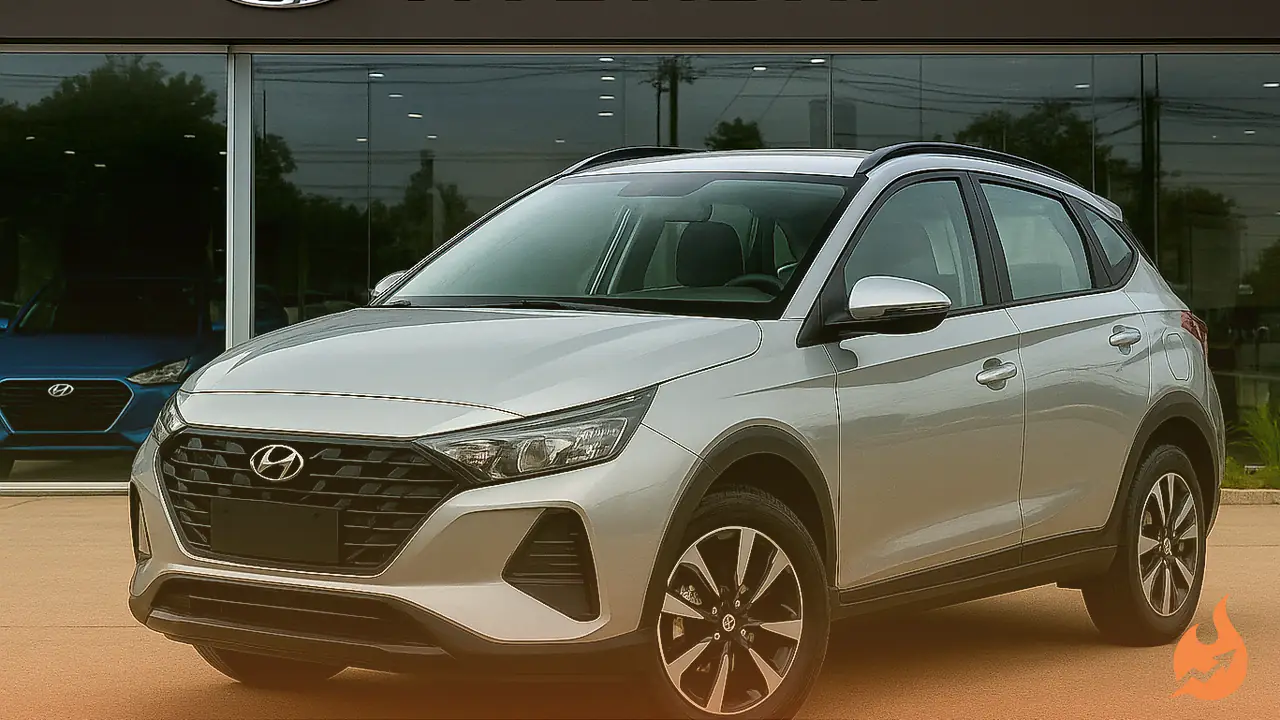

Hyundai Motor has rolled out the fourth-generation version of its popular i20 in Brazil, and this time the carmaker has moved it away from its old sleek-hatchback identity toward a chunky crossover character. Within the brand's lineup, the model slots neatly between the HB20 hatchback and the Creta SUV — making it a middle path for buyers who want something above a hatchback but aren't stretching their budget all the way to an SUV.
Dimensions and Platform
The new i20 measures 4,130 mm in length, rides on a 2,580 mm wheelbase and offers 165 mm of ground clearance. That raised clearance makes it comfortable both on city roads and over light off-road surfaces. The car is built on the K3 platform, which promises a stronger body structure, sharper handling and a higher level of safety.
Pricing and Rivals
In Brazil, the entry-level Comfort variant carries a starting price of BRL 99,990, which works out to roughly ₹18.77 lakh. The top-end variants could climb to somewhere between ₹22 lakh and ₹25 lakh. For comparison, the current i20 sold in India is priced between ₹6 lakh and ₹11.5 lakh ex-showroom. That gap explains why the Brazilian version — packing premium features, ADAS and crossover styling — turns out to be considerably more expensive. There, it will square off directly against rivals like the Fiat Pulse and the VW Tera.
Exterior Design
On the design front, the new i20 looks bolder and more angular than before. The front gets Y-shaped LED DRLs paired with a full-width light bar, sharp headlamps and a muscular bonnet. From the side the car appears tall and boxy, while the rear features C-shaped lights and a connected light bar that lend it a modern flourish. Many users are taking a liking to this SUV-inspired stance, although some feel it resembles older Fiat models. All told, it has shed its earlier sleek profile for a more adventurous, contemporary appearance.
Cabin and Interior
Step inside and the cabin feels spacious and premium. The dashboard houses two 12.3-inch displays — one serving as the instrument cluster and the other for infotainment. There is support for wireless Android Auto and Apple CarPlay, along with high-quality materials, a good fit and finish, and generous leg and head room. The 5-seater layout makes it well suited to everyday family use.
Comfort and Connectivity
The car doesn't skimp on convenience either. It offers wireless charging, a Bose audio system on the top variants, power-folding mirrors, cruise control and keyless entry. Connected car technology and multiple USB ports are part of the package as well.
Safety Features
On the safety side, the new i20 comes with Level-2 protection courtesy of the Hyundai SmartSense ADAS suite. The kit includes forward collision avoidance, blind-spot collision avoidance, lane keeping and lane following assist. Backing that up are six airbags, a 360° camera on certain variants and the robust K3 platform structure.
Engines and Performance
For Brazil, the car gets specific flex-fuel engine options. The first is a 1.0-litre naturally aspirated unit that produces 80 hp and is paired with a manual transmission. The second is a 1.0-litre turbo engine that puts out between 115 and 120 hp and comes mated to an automatic gearbox. The turbo variant delivers strong pickup and confident highway performance, while fuel efficiency is expected to be good too. The K3 platform further sharpens the car's ride quality and handling.