
Growing Demand for Electric Scooters in India
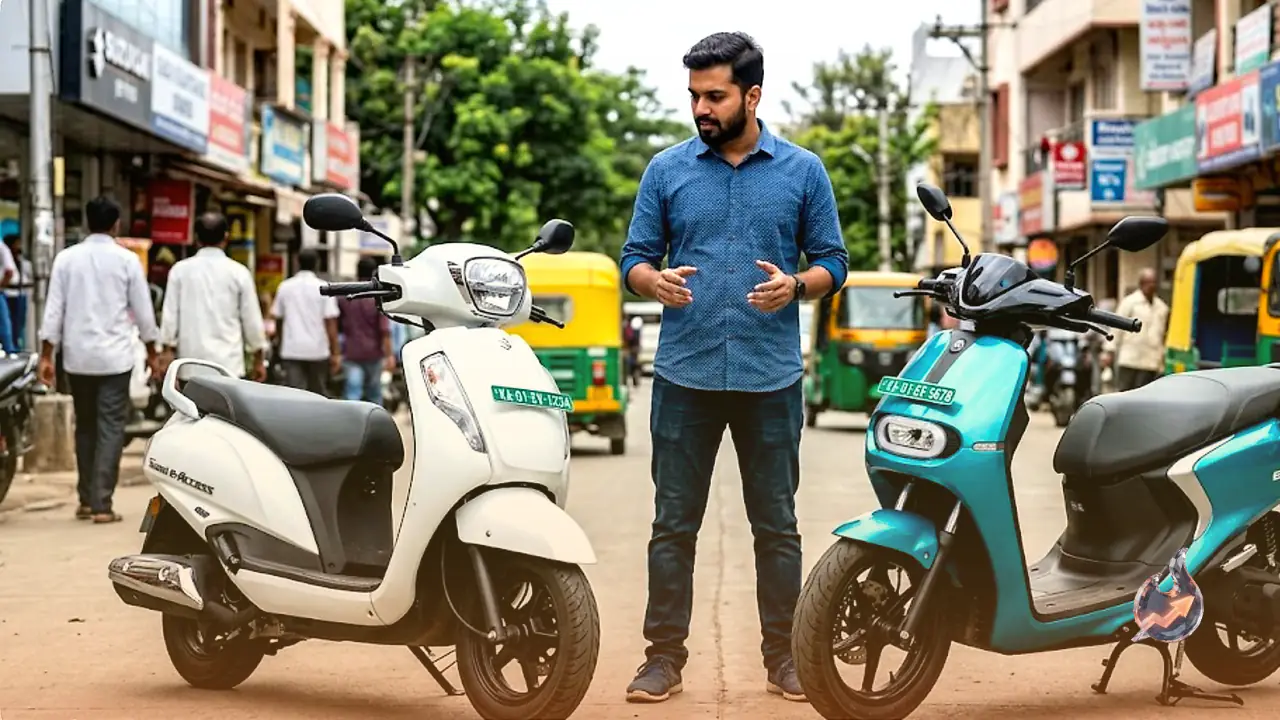
The demand for electric scooters in the Indian market is witnessing a significant surge, driven by a growing preference for eco-friendly and cost-effective personal mobility solutions. Amidst this evolving landscape, two notable contenders from Japanese automotive giants, the Suzuki e-Access and Yamaha EC-06, are vying for consumer attention. Both models are presented as excellent options for daily commuting, catering to different priorities of urban riders.
Distinct Philosophies: Reliability vs. Performance
While both scooters champion eco-friendly mobility, they are engineered with distinct philosophies to meet varying user needs. The Suzuki e-Access emphasizes core reliability, the longevity of its LFP battery, and a premium build quality, aiming to provide a dependable and durable ride. In contrast, the Yamaha EC-06 positions itself as a leader in superior performance, extended range capabilities, and a host of practical features designed for a more dynamic riding experience. Suzuki is renowned for its trustworthy service network and robust battery, whereas Yamaha excels in overall performance and utility, including storage solutions.
Design and Aesthetics
In terms of design, the Suzuki e-Access adopts a classic scooter aesthetic, offering a sleek, family-oriented appearance. It features a comfortable 765 mm seat height and a good ground clearance of 160 mm, making it suitable for everyday use and diverse road conditions. Its look is characterized by simplicity and practicality. Conversely, the Yamaha EC-06 sports a more modern and sporty design, appealing particularly to younger buyers. It boasts 14-inch wheels, contemporary LED lighting, and enhanced ergonomics. Despite its slightly higher weight of 132 kg, it offers excellent handling, indicating a focus on agile performance.
Features and Connectivity
When it comes to onboard technology and convenience, both scooters offer a range of features, though Yamaha takes a lead in practicality. The Suzuki e-Access includes a color TFT LCD display, Bluetooth connectivity, a keyless start system, and selectable riding modes (Eco, Ride) for varying efficiency and power needs. The Yamaha EC-06, however, goes further with three distinct riding modes (Eco, Standard, Power), support for the Y-Connect R app, a color LCD, a generous 24.5 liter under-seat storage capacity, a reverse mode for easier maneuvering, and superior braking performance with dual 200 mm discs combined with CBS (Combined Braking System). These additions make the Yamaha model more feature-rich and practical for diverse user requirements.
Battery, Motor, and Range Capabilities
The core of any electric scooter lies in its battery and motor configuration, which directly impacts range and power. The Suzuki e-Access is equipped with a 3 kWh LFP battery, powering a 4.1 kW motor that delivers 15 Nm of torque. It offers a claimed range of 85 km, with normal charging taking approximately 6 hours. The LFP battery technology is particularly noted for its long lifespan. The Yamaha EC-06 features a larger 4 kWh NMC battery pack, driving a more powerful 6.7 kW motor that generates 26 Nm of torque. This configuration enables an impressive IDC range of 167 km, though its charging time is longer, typically between 8 and 10 hours. While Yamaha clearly leads in both range and power output, it's worth noting that NMC batteries generally have a slightly shorter lifespan compared to LFP batteries.
Choosing Your Ideal Electric Scooter
In summary, the choice between the Suzuki e-Access and the Yamaha EC-06 largely depends on individual priorities. The Suzuki e-Access stands out as an excellent choice for riders who prioritize unwavering reliability and long-term battery durability. On the other hand, the Yamaha EC-06 emerges as a superior option for those seeking extended range, higher performance, and overall better value for money, especially considering it is slightly more affordable. Prospective buyers are strongly advised to consider their daily commuting needs, desired features, and budget, and ideally, take both scooters for a test drive before finalizing their decision.