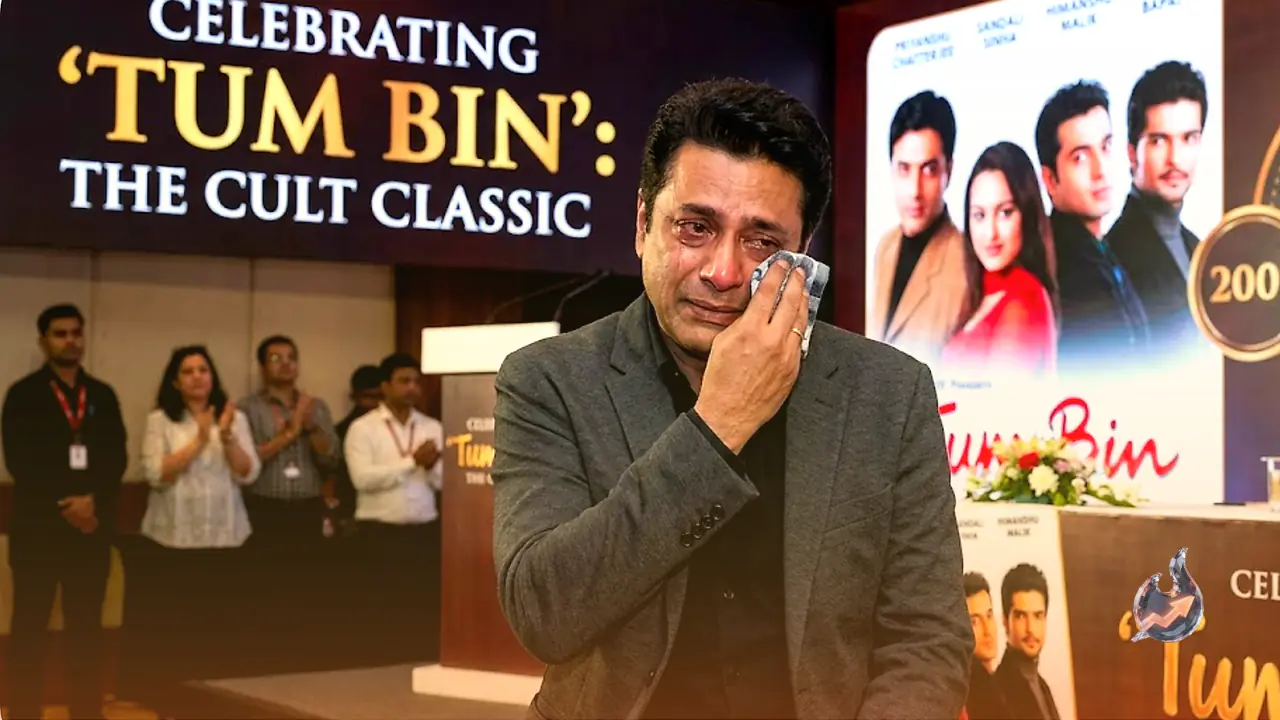

In the early 2000s, a time before smartphones dominated, when entertainment often came from music heard on TV and radio, a musical romantic film emerged that continues to resonate with audiences today. 'Tum Bin', released on July 13, 2001, is now counted among cult classic movies. It's said that director Anubhav Sinha was moved to tears during the recording of its songs, a testament to the film's deeply emotional music.
An Unexpected Success
Featuring new faces like Sandali Sinha, Priyanshu Chatterjee, Himanshu Malik, and Raqesh Bapat, 'Tum Bin' was a modest, low-budget production. It managed to connect with viewers' hearts, largely due to its touching music and the strong performances of its relatively unknown cast. Amidst the massive success of films like 'Gadar' and 'Lagaan' in 2001, 'Tum Bin' emerged as a surprise hit. Produced under the T-Series banner, it was Anubhav Sinha's directorial debut. Interestingly, it opened on the same day as Amitabh Bachchan's 'Aks', which bombed, while 'Tum Bin' went on to become a sleeper success.
Music Was the Soul of the Film
Anubhav Sinha not only directed 'Tum Bin' but also penned its story and screenplay. The film's greatest asset was undoubtedly its music, featuring a total of 11 songs. While the music was composed by Nikhil-Vinay, TS Jarnail, and Ravi Pawar, Nikhil-Vinay were the primary composers. Nikhil-Vinay, full names Nikhil Kamath-Vinay Ram Tiwari, had composed music for several films in the 1990s. Four songs from 'Tum Bin' became immensely popular: 'Tumhare Siva Kuch Na Chahat Karenge', 'Koi Fariyaad', 'Chhoti Chhoti Raatein', and 'Tum Bin Jiya Jaye Kaise'. 'Koi Fariyaad' was sung by Jagjit Singh, and 'Tum Bin Jiya Jaye Kaise' by K.S. Chithra, with both tracks now considered timeless classics.
Fascinating Production Stories
Anubhav Sinha, who had directed numerous music videos and TV serials for T-Series, frequently expressed his desire to make a feature film to Bhushan Kumar. One day, when composers Nikhil-Vinay and Anubhav Sinha were at Bhushan Kumar's residence, Bhushan Kumar announced his intention to make a film titled 'Tum Bin'. On that occasion, Anubhav Sinha briefly outlined the film's plot.
Composer Nikhil Kamath recalled in an interview that the story resonated deeply with them, and Anubhav Sinha crafted the film with similar emotional depth. They presented a couple of songs they already had in their repertoire, such as 'Chhoti Chhoti Raatein' and 'Tumhare Siva Kuch Na Chahat Karenge', which Bhushan Kumar noted down. The formal announcement of the film took place the following day at the T-Series office, where Anubhav Sinha elaborated on the complete storyline.
The Journey of 'Koi Fariyaad' and 'Tum Bin Jiya Jaye Kaise'
Nikhil Kamath shared an anecdote from the recording of the song 'Koi Fariyaad'. He mentioned that during the recording, when he heard K.S. Chithra's voice, it reminded him of Sandali Sinha's, likening her to Chithra, who was then hailed as the 'Lata Mangeshkar of the South'. He imagined Sandali Sinha in solitude, longing for her love, and this emotion inspired the songs 'Koi Fariyaad' and 'Tum Bin Jiya Jaye Kaise'.
The recording of 'Tum Bin Jiya Jaye Kaise' was particularly notable. Nikhil-Vinay and director Anubhav Sinha flew to Madras for the recording at AVMG Studio. K.S. Chithra listened to the song over the phone, rehearsed for 15 minutes, took a two-hour break, and then recorded the song in just three takes. The song's widespread popularity is well-known today.
Box Office and Beyond
Made on a budget of just around 2.75 crore rupees, 'Tum Bin' collected 7.53 crore rupees at the box office, exceeding expectations and proving to be a hit. Sandali Sinha became an overnight sensation following the film's release, with audiences charmed by her innocent smile and expressive face. However, her Bollywood career did not achieve the widespread success anticipated. She married businessman Kiran Salaskar in 2005.