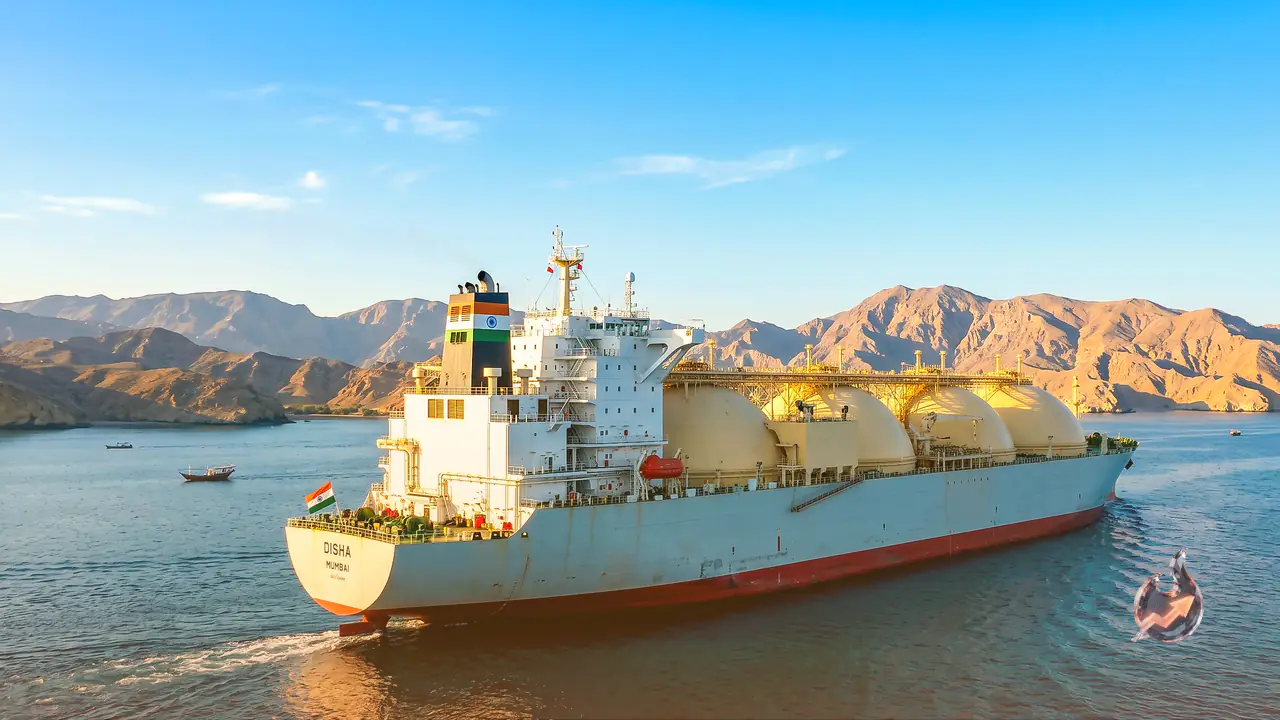

After months of uncertainty, there is significant good news for India's energy and fertiliser supply chain. With the peace agreement between the United States and Iran and the lifting of the twin blockade on the Hormuz Strait, the ship 'Disha', carrying LNG (liquefied natural gas) from Qatar to India, has crossed this sensitive sea route. This is not merely the journey of a single vessel, but a ray of confidence for the dozens of ships that had been stuck in the Persian Gulf for a long time.
Why the Return of 'Disha' Matters So Much
According to the Indian government, the LNG carrier 'Disha', operated by a consortium led by the Shipping Corporation of India, is moving swiftly toward India with 62,370 metric tonnes of gas, and is likely to reach Dahej port by June 18. What makes it especially notable is that, after more than three months, this is the first Indian-flagged LNG ship to manage a safe exit from the war-hit region. That is precisely why its safe passage is being read as a sign that normalcy is returning.
The Fate of 34 Ships Tied to 'Disha'
The importance of Disha's safe voyage grows further because the future of 34 other Indian and foreign ships rides on it. A large share of these vessels stuck in the Persian Gulf are carrying the energy and fertiliser that India urgently needs. With Disha clearing the route without trouble, the hope has strengthened that the remaining ships will soon be able to set sail for India as well.
According to available information, 16 of these 34 ships are carrying fertiliser directly. Of these, 8 are loaded with urea, 4 carry DAP (di-ammonium phosphate), 3 are bringing sulphur, and one is carrying ammonia. The other 15 ships are hauling energy cargo such as crude oil, LNG and LPG. In other words, the arrival of these vessels in India is decisive not only for the petroleum sector but also for millions of families tied to farming.
Relief for the Country's 15 Crore Farmers
The timely arrival of fertiliser-laden ships at port translates into a direct benefit for India's roughly 15 crore farming families. An uninterrupted supply of urea, DAP and other fertilisers is critical during the cropping season. As such, the freeing of these vessels stuck in the Persian Gulf raises hopes of easing fears of a fertiliser shortage and reducing the pressure on agriculture.
Why the Hormuz Strait Is So Crucial for India
Hormuz is effectively the backbone of India's energy security. India imports more than 88 percent of its crude oil requirement, and a large part of it comes from West Asia. In addition, over 60 percent of the country's imported LNG and nearly 90 percent of its LPG pass through this very Hormuz Strait. Such heavy dependence means any disruption on this route immediately affects India's energy security and domestic prices.
Challenges Remain Amid the Relief
Experts believe that the resumption of ship movement is certainly a good sign, but it may take some time for the petrol and gas crisis to fully subside. During the conflict, key energy facilities such as Qatar's Ras Laffan LNG complex and the UAE's Habshan gas plant suffered damage, which has affected production capacity and means the situation will take time to return to normal. Moreover, global shipping companies are not yet fully reassured, and several operators are watching the situation cautiously.
What Is the Biggest Hope
After the ceasefire between the United States and Iran and the agreement to reopen Hormuz, confidence is beginning to return to maritime trade. The biggest takeaway is that a path now appears to be opening for India's energy and fertiliser supply chain, which had been gripped for nearly three months. Disha has not only delivered LNG, it has also sent the message that the Hormuz routes can open again. If the remaining 34 ships also make it out safely in the coming days, India could see major relief in its supply of fuel, gas and fertiliser.