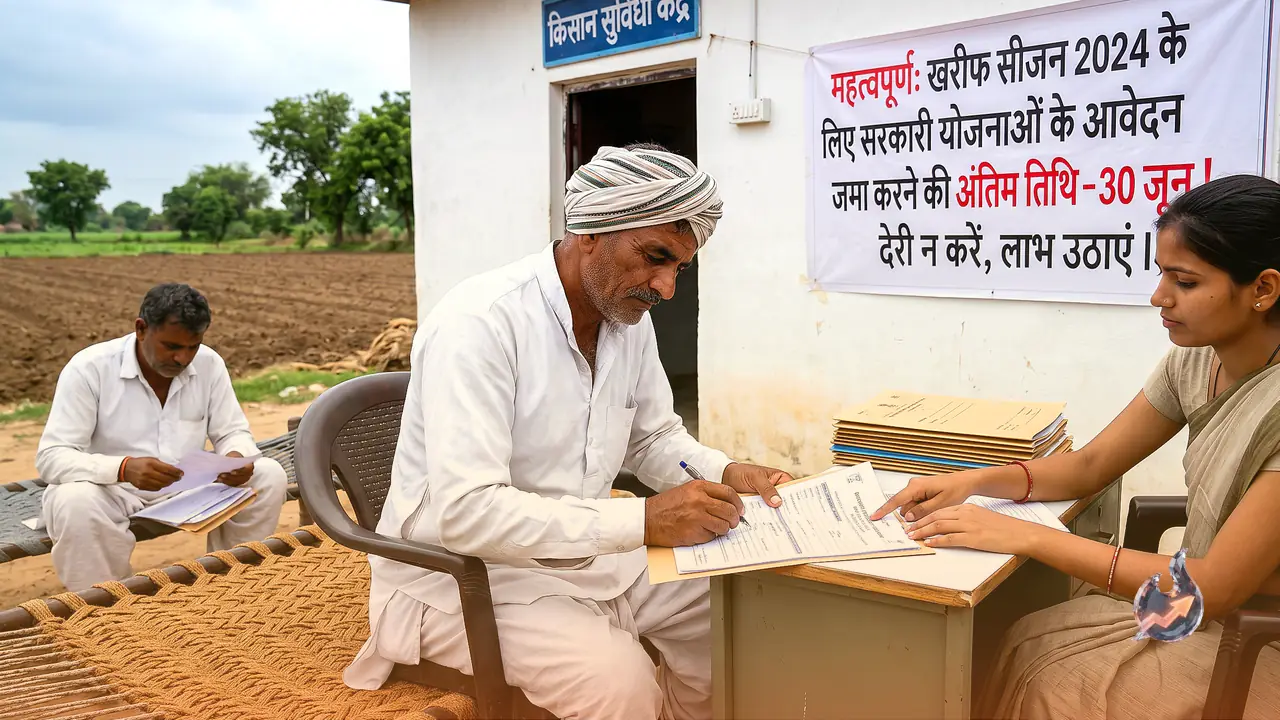

The moment monsoon clouds gather over Rajasthan, the fields spring to life. Farmers throw themselves into ploughing, picking improved seeds and arranging fertiliser for the kharif sowing. Yet one part of this preparation often slips through the cracks, namely having accurate and timely knowledge of government farming schemes. Thanks to coordination between the central and state governments, the state runs a number of programmes that lower the cost of cultivation and also shield farmers financially when the weather turns hostile. The catch is simple: the benefit reaches only those who apply on time.
Heavy Subsidy On Farm Machinery, Costly Equipment At Cheaper Rates
To make farming less laborious and less expensive, the Rajasthan government offers farmers a large discount on the purchase of agricultural equipment. The scheme covers a range of machines such as tractor operated implements, seed drills, rotavators, cultivators, power tillers and modern spray machines. The amount of the grant is fixed according to the farmer's category, which means small, marginal or woman farmers receive support set for their respective class. The upshot is that equipment which is expensive in the open market becomes affordable, saving farmers a great deal of both labour and time in their field work.
Pradhan Mantri Fasal Bima Yojana: A Shield Against Disaster
The monsoon's mood is rarely reliable. Excessive rain and flooding one day, drought, hailstorms or pest attacks the next, any of these can wreck a crop. To guard against such natural blows, the Pradhan Mantri Fasal Bima Yojana acts like a shield. The agriculture department advises farmers to insure their crops either at the time of sowing or within the prescribed deadline. The advantage is that if a disaster destroys the crop, proper compensation helps the farmer recover the financial loss.
Samman Nidhi And Grants On Irrigation
Under the state's Mukhyamantri Kisan Samman Nidhi Yojana, eligible farmers in the state receive extra financial help. This money goes straight into their bank accounts so that immediate needs like seeds and fertiliser can be met without hindrance. The government is equally active on water conservation. Heavy grants are being given on drip (drop by drop) irrigation and the sprinkler (fountain) system. These techniques, which water a larger area with less water, save water while also improving crop quality.
Soil Testing And Low Cost Credit
The foundation of a good yield rests on the health of the field's soil. Under the Soil Health Card scheme, the agriculture department tests the soil of farmers' fields free of cost. The card tells the farmer which nutrient the land is lacking, allowing the use of urea or other fertilisers in exactly the right measure and saving on cost. In addition, through cooperative banks farmers are provided crop loans (KCC) for farming work at very low interest rates or with an interest waiver.
Improved Seeds And Expert Advice Before Sowing
During the monsoon the agriculture department distributes certified and improved varieties of seeds to farmers at concessional rates. Alongside this, the department's agricultural supervisors and experts visit villages from time to time to explain weather forecasts, sound crop management, organic farming and disease control measures. Experts repeatedly point out that most schemes have a fixed last date for applications. So as soon as the monsoon begins, farmers should visit their nearest e-Mitra centre or agriculture office and apply according to their eligibility, so that the full benefit reaches them on time and no opportunity is lost.