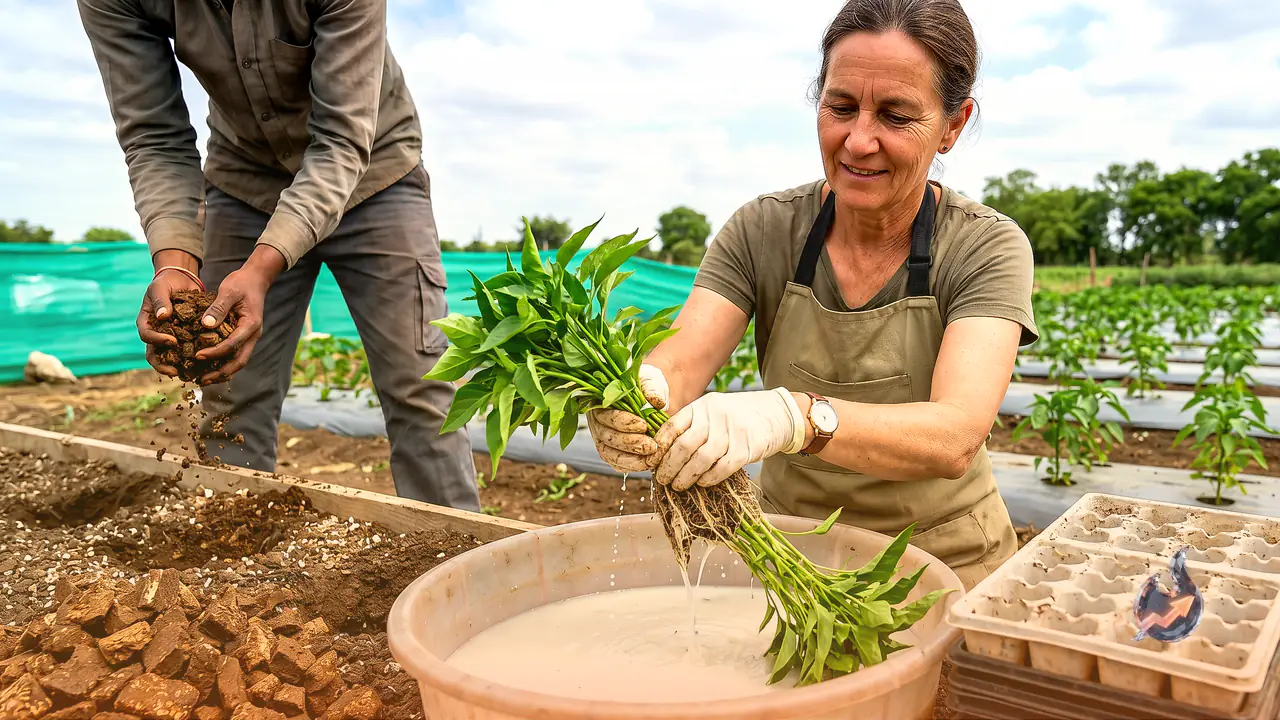

The Khargone district of Madhya Pradesh has carved out a distinct identity in chilli farming and is regarded as the state's largest chilli producing district. During the Kharif season, chilli serves as the most important cash crop for farmers here. Thanks to its sharp pungency and deep red colour, Khargone chilli has earned recognition not only across the country but in foreign markets as well. Chilli is cultivated on roughly 48 thousand hectares in the district, and farmers are currently busy preparing their fields and carrying out sowing work.
The Right Window for Transplanting and This Season's Hurdle
According to agricultural experts, the period between 25 June and 5 July is considered the most suitable time for transplanting chilli. This year, however, with the monsoon advancing slowly, farmers have been advised to transplant only after rainfall. Those who have adequate irrigation arrangements can still go ahead with transplanting by setting up a drip system.
Why Early Protection Matters
Chilli farming may be a profitable venture, but the crop faces its biggest threats from thrips, whitefly, aphids and fungus-borne diseases. In many cases plants turn weak in the very early stage, which directly hits production. Farmers then have to spray pesticides again and again, pushing up the cost of cultivation. Experts believe that if farmers treat the plant roots properly before transplanting, the risk of early infection can be reduced to a large extent. This makes the plants stronger and improves the overall growth of the crop.
How to Treat the Roots Before Transplanting
Dr SK Tyagi, a horticulture scientist in Khargone, told TrendKia that root treatment is extremely important to protect the chilli crop from pests and diseases. He advised farmers to mix 3 ml of Imidacloprid 17.8 percent SL in 10 litres of water, then dip the roots of the chilli plants in this solution for about 30 minutes before going ahead with transplanting. According to Dr Tyagi, if a smaller quantity of solution is needed, the roots can also be treated by mixing 0.3 ml of Imidacloprid in one litre of water. This method keeps the plants safe from early pest attacks and supports better growth.
Twin Benefits of Neem Cake
Experts have also advised farmers to spread one quintal of neem cake per acre in the field before transplanting. On one hand this improves the quality of the soil, while on the other it boosts the plants' ability to fight diseases and reduces pest infestation. Farmers gain directly from this in the form of higher production. Experts say that if attention is paid to protecting the plants at the very start, the extra money spent later on pesticides can be brought down. Timely root treatment and care keep the chilli crop healthy and lead to a rise in yield.