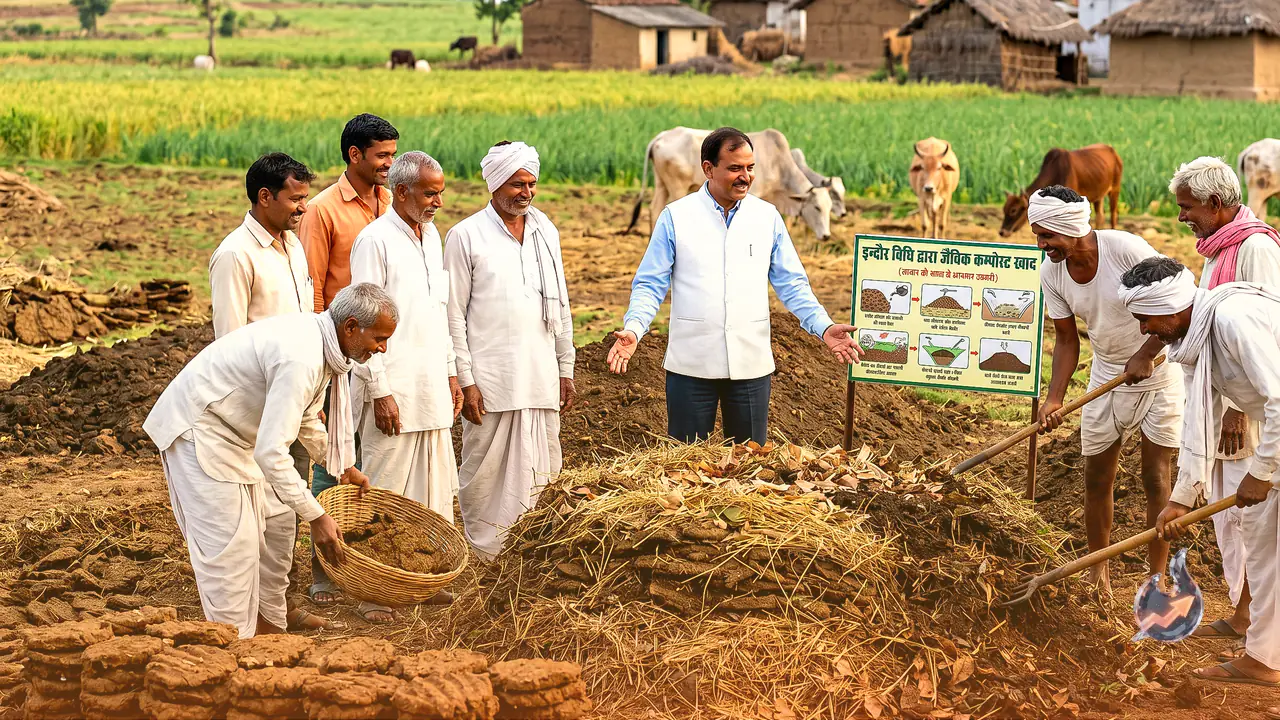

If you keep leaning on chemical fertilisers like DAP and NPK season after season just to push your crops up faster, it may be worth pausing to think. These fertilisers not only strain your wallet every cycle, they also slowly drain the life out of your field, pushing the soil year by year towards going barren. For farmers in the Chambal region, the solution is sitting much closer than they think, right inside their cattle shed and household waste.
Who shared the advice and why it matters
In a special conversation with TrendKia, agriculture department deputy director Pan Singh explained that desi compost made from cow dung and organic residue feeds crops the nutrition they need while also preserving the fertilising power of the land. According to him, this manure can bring farming costs down to almost nothing and improve the health of the soil at the same time.
Chemical versus organic: where the difference lies
The expert points out that chemical fertilisers do deliver quick nutrition to crops, but relying only on them for years on end starts to affect soil quality. Manure made from cow dung and organic waste does the opposite. It raises the level of organic matter in the soil, so the structure and fertility of the land both stay intact over the long run.
What the ‘Indore method’ is
In villages people usually call it ‘ghoora lagana’ or simply ‘the waste pit’. In scientific terms the very same process is known as the ‘Indore method’. Using this technique, good quality compost can be ready in three to four months.
Where and how to dig the pit
First, pick a spot near the field or home where rainwater does not collect. If possible, a shaded place under a tree works better. Keep the depth of the pit at about three feet, while the length and width can be decided according to your need.
Fill it in layers
The pit should not be filled all at once but in separate layers. At the very bottom, spread dry grass, leaves or crop residue. Over that, add cow dung and wet organic waste. Keep sprinkling a little soil or ash in between, which helps the manure form faster and keeps the smell down.
Looking after moisture
Sprinkle light water into the pit from time to time so that moisture stays, but make sure the water is never too much. Once the pit is completely full, cover it with a mixture of soil and cow dung. After roughly one to one and a quarter months, turn the pit once so that enough air can reach inside.
How to recognise the finished manure
In about three to four months, dark brown or black crumbly manure is ready. The right way to recognise it is that it gives off no foul smell, but instead carries an earthy, pleasant fragrance like soil.
Benefits for both field and farmer
According to deputy director Pan Singh, organic manure helps make the soil crumbly, which raises the water-holding capacity of the land so crops keep getting moisture for longer. This also cuts the need for irrigation to some extent. He adds that by using chemical and organic fertilisers in a balanced way, farmers can keep their soil healthy and move towards sustainable farming.