
With the kharif season setting in, farmers across Chhattisgarh are busy mapping out their paddy sowing. But in many parts of the state, farming is not as straightforward as it looks. There are fields here where water starts collecting the moment the rains arrive and refuses to drain for months. Which variety to plant on such land is a question that confronts farmers every year. Agriculture experts say that if the variety is matched to the nature of the soil, neither will yields fall nor will farmers be forced to bear losses.
The Real Trouble With Low-Lying Land
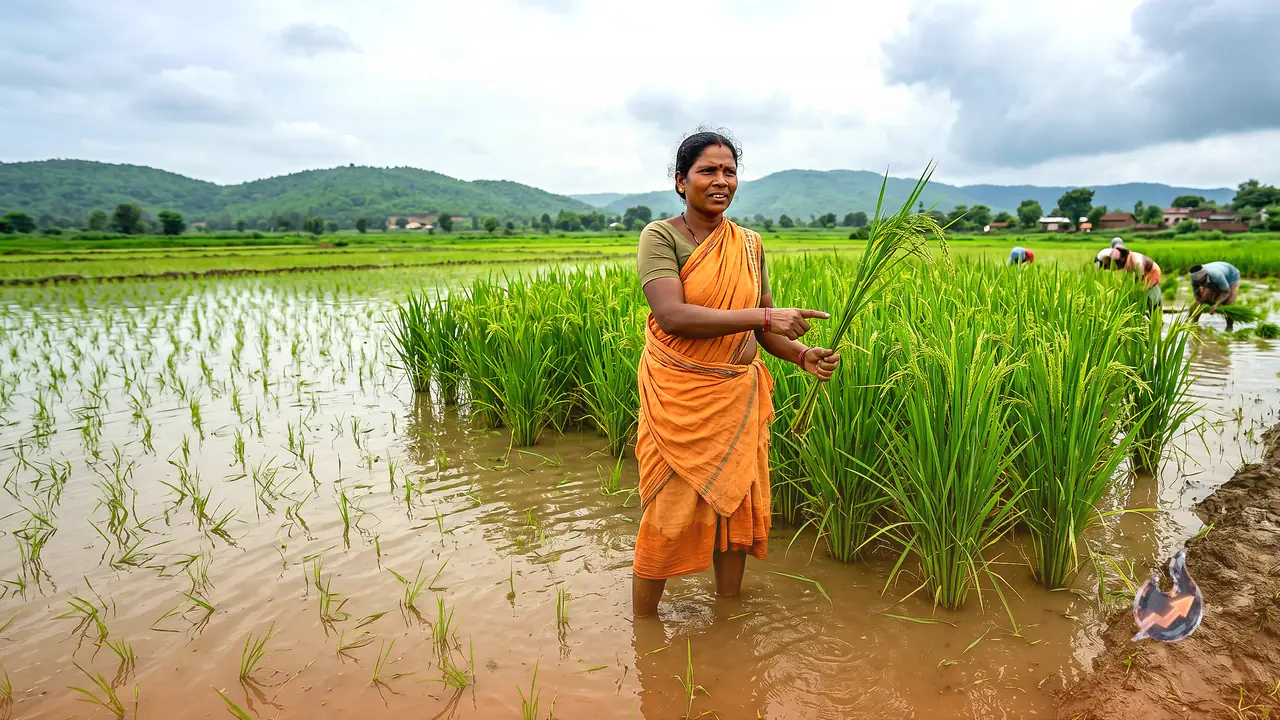
According to A. R. Gaur, subject matter specialist at the Krishi Vigyan Kendra in Balod, fields in many of Chhattisgarh's low-lying pockets turn pond-like during the rains. In the local dialect these are called baahra land. The trouble begins when farmers plant an ordinary paddy variety on such soil. Kept constantly submerged, the roots start rotting, the plants grow weak and eventually collapse. The damage shows up directly on the harvest and hits the farmer's pocket hard.
Why Jalddubi Paddy Is the Smarter Pick
Gaur explains that the answer to this exact problem is Jalddubi paddy. This variety has been developed specifically for conditions where water stagnates in the field for long stretches. Its biggest strength is that even when water levels are high, its roots stay safe and the crop keeps growing at a normal pace. In other words, the same standing water that proves fatal to ordinary paddy roots does little real harm to this variety.
How Long It Takes and How Much It Yields
According to the expert, Jalddubi paddy ripens and is ready in roughly 150 to 155 days. Its yield potential is estimated at about 20 to 25 quintals per acre, which is considered a good output for waterlogged land. Gaur says the variety is especially useful for farmers whose fields lie near drains, along riverbanks, or in areas that often turn flood-like after the rains.
The Expert's Appeal to Farmers
Gaur has urged farmers to take a close look at their field's geographical location and the availability of water there before settling on a variety. He believes the right choice does more than just raise output, it also sharply cuts down the risks and potential losses that come with farming.