
Fixed deposits remain the first choice of crores of Indian households. The pull of stock markets, mutual funds and crypto may have grown, yet most people still prefer to park a large chunk of their savings safely in FDs. A recent rise in interest rates, along with attractive schemes from small finance banks, has pushed fixed-income investing back into the spotlight.
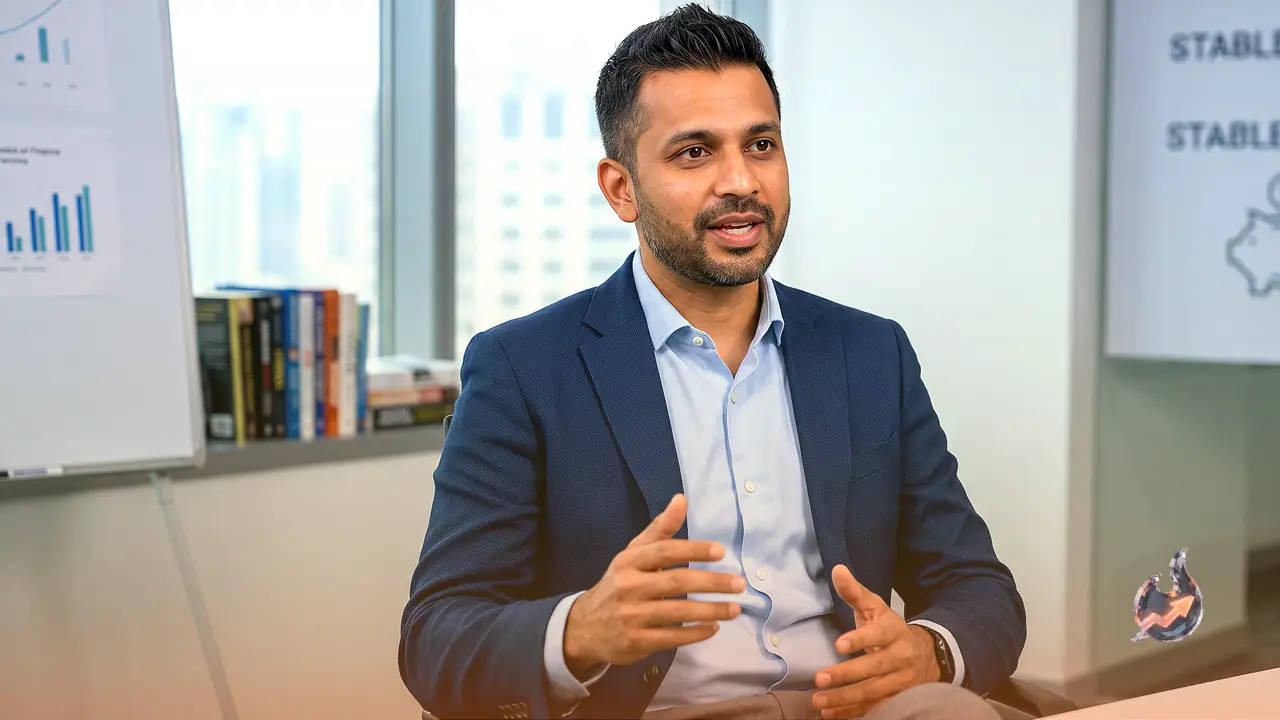
Against this backdrop, TrendKia spoke with Saurabh Jain, co-founder and CEO of Stable Money, to understand what investors should watch for when choosing an FD, how a big corpus can be built from modest savings, and why FDs still form the backbone of a strong financial plan.
Higher Interest Versus Bank Safety, Striking the Balance
Jain agrees that small finance banks are currently offering better interest on FDs, which naturally makes them appealing to those chasing higher returns. But he is clear that deciding on the interest rate alone is a mistake. While choosing an FD, an investor must pay equal attention to the strength of the bank.
He listed a few key yardsticks, RBI rules, DICGC insurance coverage, the bank's asset quality, its NPA levels, deposit growth and its overall financial status. According to him, Stable Money believes diversification plays a vital role in fixed-income investing. Instead of locking all your savings in a single bank or a single tenure, spreading money across different banks and different durations helps strike a better balance between returns, liquidity and stability. FDs, he says, are built on trust and stability, so for most investors the priority should be steady long-term returns and lasting financial confidence.
Do FDs Offer Only Safety and Not Returns
On this common belief, Jain was direct. In his words, "I believe people's thinking about FDs has changed considerably over the past few years. Earlier FDs were mainly associated with safety, but in today's interest rate environment they are also delivering competitive and predictable returns. For many middle-class families, salaried individuals and first-time investors, stability and certainty matter a great deal. Because FD returns are not affected by daily market swings, they remain relevant even today for short and medium-term financial goals. Building a large corpus does not come from taking more risk alone. Consistent investing over time, discipline and the power of compounding also play a crucial role. FDs help investors develop exactly these habits and bring stability to their portfolios."
How Those Saving ₹5,000 to ₹10,000 a Month Can Build a Big Corpus
According to Jain, you do not need to start with a large sum to build wealth, the real strength lies in consistency and discipline. A regular saving of ₹5,000 to ₹10,000 every month can gradually lay a strong financial foundation.
His first piece of advice is to begin by building an emergency fund equal to 6 to 12 months of expenses. There is no need to wait for a large lump sum to start investing, regular investing with a small amount proves just as effective over the long run.
He places special emphasis on the FD laddering strategy, in which money is split across different tenures rather than locked into a single-duration FD. This keeps liquidity intact on one hand and lets investors take advantage of different interest rate cycles on the other. For disciplined savers, he also recommends recurring deposits, or RDs, where the current interest rate gets locked in and a fixed return is received once the term ends.
He notes that the effect of compounding becomes substantial as time passes. Regular savings can later help meet big goals such as education, travel, buying a home or long-term financial security. His most important advice is simply to start early and keep investing consistently.
How the Idea of Stable Money Came About
Jain explains that Stable Money was founded on a simple insight, that crores of people in India already treat fixed deposits as their preferred way to save. According to him, most new ideas in the fintech sector were revolving around market-linked investments, while there was also a large segment that wanted safety, certainty and simplicity in their financial journey.
In his words, the goal at Stable Money was never to suddenly change investor habits, but to build a better experience around the very products Indians already trust, making them more transparent, simple and digital. He says fixed deposits already form a very large part of savings in India, yet the experience around them remained largely fragmented and offline. That is precisely where he saw an opportunity, to make access to fixed-income products easier and to help investors make better-informed decisions. According to him, over time it also became clear that many FD investors, once trust and confidence set in, begin to understand and adopt other fixed-income products as well.