
Moving goods from one corner of the country to another still costs a great deal in India, and that burden ends up loaded onto the price of almost everything people buy. To tackle that problem at its root, the government is pushing ahead with the ‘PM Gati Shakti Master Plan’, an effort meant to give the country's transport and logistics sector a fresh burst of speed.
Separate Ministries, One Digital Platform
Until now, projects tied to railways, roads and ports have run under different ministries working largely on their own. The result was a serious lack of coordination, which meant freight movement ate up both extra time and extra money. Under the Gati Shakti scheme, all of these ministries are being brought together onto a single digital platform, so each department can see and connect with the others' plans.
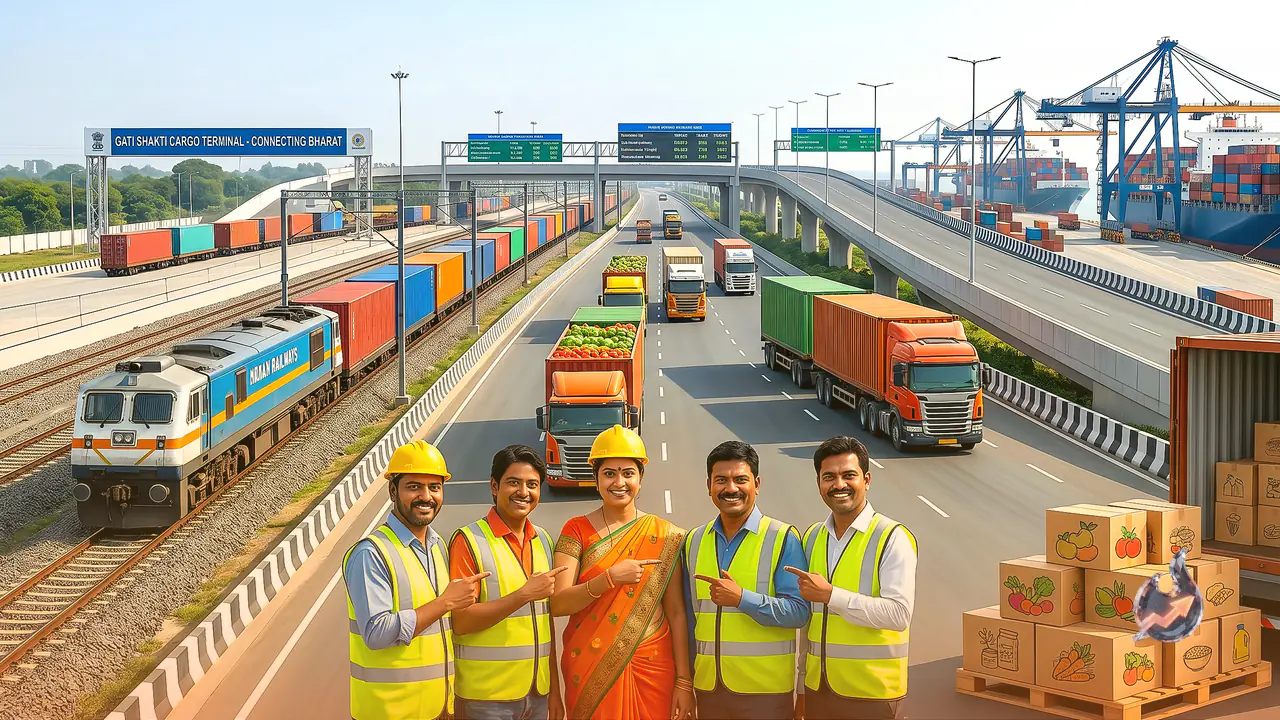
Stitching Every Mode of Transport Together
The real thrust of the plan is to link the country's various transport modes directly to one another. Once railway lines, highways and seaports are joined up, goods leaving a factory can reach the market quickly and without interruption. That, in turn, will make the movement of goods within the country far faster than it is today.
Lower Transport Costs Mean Cheaper Goods
The biggest beneficiary of this grand plan will be the ordinary consumer's wallet. The logic is simple, when a company sells its product in the market, the cost of transport is built into the price. At the moment logistics, or freight, is very expensive in India, which is exactly why goods cost more.
As soon as the PM Gati Shakti scheme strengthens the transportation system, companies' freight costs will come down. Lower costs will sharpen competition in the market, and companies will be pushed to reduce the prices of their products. The direct effect will be that everything from food items to other daily-use goods becomes cheaper.
What It Means for the Common Person's Pocket
Once the master plan is in place, several positive changes will show up in the market and in people's pockets:
- Cheaper fruit and vegetables: With transport available on time, fruit and vegetables will move from villages and farms to cities before they spoil. That will cut wastage and bring prices down.
- Factory goods at lower prices: As the cost of transporting clothes, electronics and other manufactured products falls, their final price will drop as well.
- Time saved: Better coordination between roads and railways will cut the time trucks and goods trains spend on the journey, strengthening the supply chain.
More Than Just Linking Roads and Rail
Taken together, the ‘PM Gati Shakti Master Plan’ is not merely a way to connect roads and railway lines. It is set to become a major lever for accelerating the country's economy and giving ordinary people relief from rising prices.