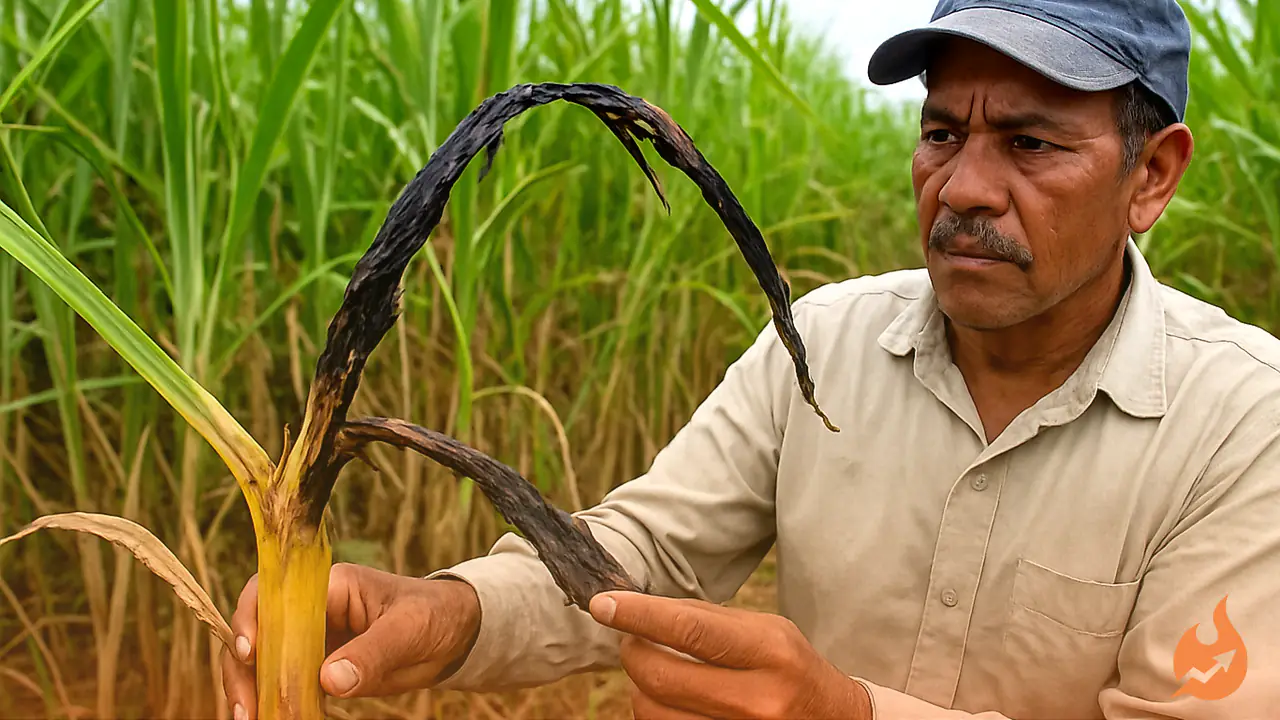

Lakhimpur Kheri district in Uttar Pradesh is a major hub of sugarcane cultivation, where farmers grow cane over large stretches of land. It is for this reason that the district is often called the sugar bowl. The month of June is considered extremely important for the sugarcane crop, and even a little carelessness during this period can hit production hard. It is in this season that pest attacks rise rapidly, which is why special attention must be paid to irrigation, hoeing, weed control and pest management.
Weeds and Hoeing
During June, weeds grow very quickly in the fields and weaken the sugarcane crop by stealing its nutrients and moisture. In such conditions, farmers should carry out hoeing from time to time and, when needed, bank up the soil between the rows of cane with the help of bullocks or a cultivator. This helps keep the weeds in check on one hand, while on the other hand it improves the growth of the plants.
Monitoring for Pests
In June, the sugarcane crop comes under attack from pests such as the Early Shoot Borer, Pyrilla, termites and Top Borer. Farmers should therefore keep their fields under regular watch. If the leaves of the cane plants are seen drying up, or the central portion dries and pulls out, they should contact agricultural experts without delay.
Heat and Irrigation
June also brings the torment of intense heat, which causes a shortage of moisture in the field and makes the sugarcane plant begin to dry out. Along with this, the risk of diseases also rises. To deal with this, the crop should be irrigated regularly so that moisture is maintained. At the same time, it is important to ensure that waterlogging does not occur in the field, as this can damage the roots.
Balanced Use of Fertiliser
For good growth of sugarcane in June, nitrogen-rich fertilisers should be used in a balanced quantity. Apply fertiliser only when there is sufficient moisture in the field, so that the plants can derive maximum benefit from it. It is often seen that farmers apply chemical fertilisers even when there is no moisture in the field, which causes the cane leaves to turn yellow. About 30 kg of urea should be spread over one acre of sugarcane.
Protection from Termites
During June, the attack of termites on the sugarcane crop can increase. Termites damage the roots and stems of the plants and affect the growth of the crop. To prevent this, maintain sufficient moisture in the field and keep up regular monitoring. If termites appear, spray Fipronil 5% SC at about 1 litre per hectare. Keep in mind that the pesticide should be sprayed only in the morning, and there must be adequate moisture in the field at the time of spraying.
The Pyrilla Outbreak
In June, there is a likelihood of the Pyrilla (Pyrilla perpusilla) pest spreading on the sugarcane crop. This pest weakens the crop by sucking the sap from the cane leaves, which stunts the growth of the plants and can reduce production. The attack of Pyrilla leaves a sticky substance deposited on the leaves, on which black fungus later begins to develop. As a remedy, Imidacloprid 17.8% SL at 100–125 ml per acre, or the recommended dose of Thiamethoxam 25% WG, can be sprayed. The pesticide should be sprayed during the morning or evening hours.
A Curse and a Boon Alike
According to District Agriculture Officer Surya Pratap Singh, the month of June is both a curse and a boon for the sugarcane crop. If farmers take proper care during this month, production rises; but the slightest lapse can also ruin the entire crop.