























A significant shift in agricultural practices is currently underway in East Champaran, Bihar. While traditional fruit farming, particularly of mangoes and litchis, has long dominated the region, farmers are now rapidly embracing diverse and high-yield alternatives. As more cultivators across the state discover the financial viability of horticulture, the ‘Banarasi Kagzi’ lime has emerged as a major topic of discussion among local agricultural communities due to its unique advantages.
Unique attributes of the Banarasi Kagzi lime
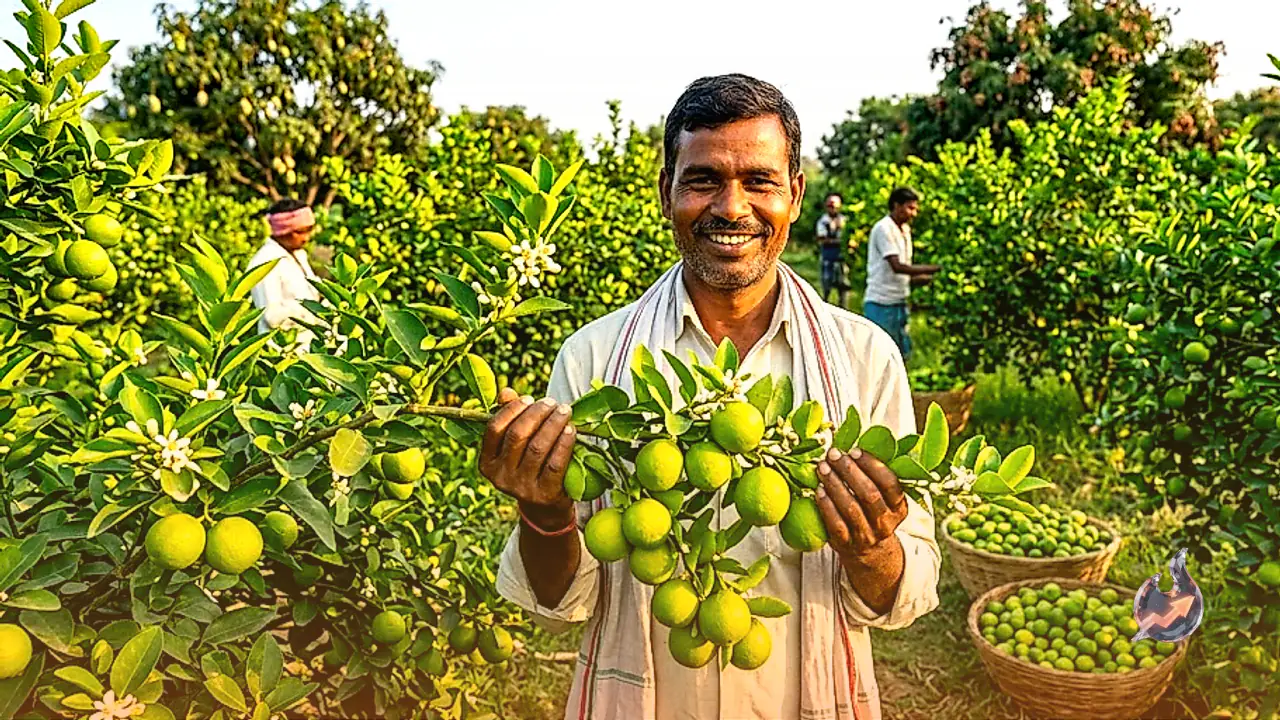
What distinguishes this specific variety from traditional limes is a set of practical characteristics that make cultivation easier and more profitable. Most notably, the plant is entirely thornless, which significantly simplifies the process of maintenance and harvesting. The fruit itself is exceptionally large and succulent. Because it contains a high volume of juice, it enjoys consistent demand in local markets throughout the year. Furthermore, the tree produces fruit in heavy clusters and yields harvests year-round, leading many to refer to it as the ‘Barahmasi’ or twelve-month lime.
Farmer success story
Vijay Yadav, a progressive farmer from Amwa village in the Turkauliya block of East Champaran, serves as a prime example of this success. He obtained the seeds for this improved variety from the local District Krishi Vigyan Kendra and planted them near his home. The results were immediate and impressive. In a single season, he harvested more than 2,000 lemons from just one tree, which he sold in the market for a handsome profit. To date, that single tree has generated more than ₹5000 in income for him.
Profitability and expansion
The Banarasi Kagzi lime tree reaches maturity and begins fruiting approximately 1.5 years after planting. Its productivity is a standout feature, as the tree can produce three high-quality harvests annually. The fruit's size is notably larger than that of a standard lime, occasionally reaching the dimensions of an orange. Encouraged by the high yields and financial returns, Vijay Yadav has expanded his operations significantly. He has now established an orchard covering about 5 kathas of land, where he has planted 100 Banarasi Kagzi lime saplings. Based on his experience, the use of organic fertilizers is key to significantly enhancing both the quality and the quantity of the fruit produced in this type of plantation.