























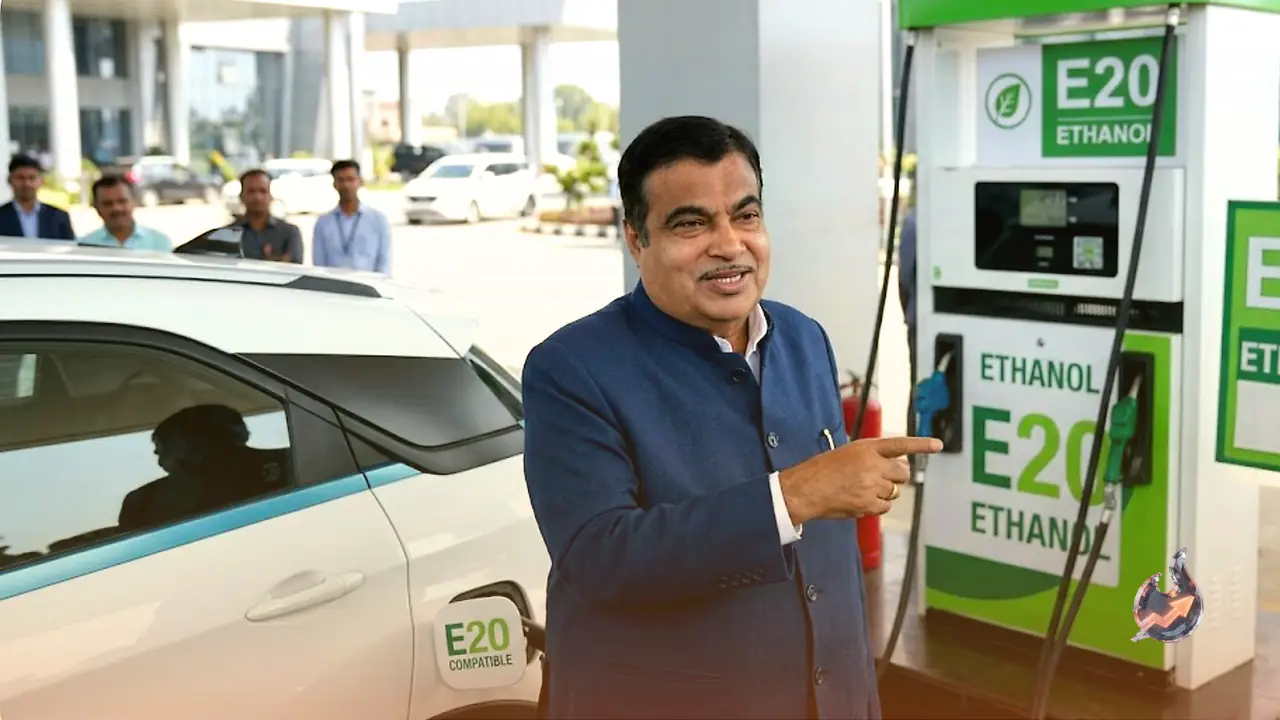

Questions regarding the use of E20 petrol, which is a blend of 20 percent ethanol with regular petrol, have become a frequent topic of debate across the country. Many users are concerned about potential drops in vehicle fuel efficiency and long-term damage to engines. Addressing these persistent claims, Union Minister for Road Transport and Highways Nitin Gadkari has issued a direct challenge to those spreading these concerns. He has openly asked anyone who possesses even a single substantiated example of a car being damaged due to E20 fuel to come forward and present it.
Speaking at the Viksit Bharat Conclave, Nitin Gadkari stated that false narratives are being peddled against the adoption of E20 fuel. He clarified that, to date, not a single instance has been reported in the country where E20 fuel caused technical failure in any vehicle. According to the minister, many of the campaigns run against E20 lack factual backing and are merely attempts to misguide the public. He emphasized that making such claims without any concrete proof is entirely irresponsible.
India achieves 20% ethanol blending target
According to government records, India has successfully achieved its target of blending 20 percent ethanol in petrol. Ethanol is primarily produced from agricultural crops such as sugarcane, maize, and rice. The objective behind increasing its usage is to lower India's dependence on crude oil imports and to mitigate pollution levels. The government maintains that shifting to ethanol-blended fuel will lead to substantial savings in foreign exchange and offer significant environmental benefits.
Why this transition is essential
Nitin Gadkari explained that India spends approximately 22 lakh crore rupees annually on importing crude oil and other fossil fuels. He noted that this expenditure is a significant burden on the national economy. He argued that if the country pivots rapidly toward clean and alternative fuels, it will reduce the import bill, strengthen energy security, and provide effective control over pollution.
Substantial gains for farmers
The minister also highlighted how the shift toward ethanol production has directly boosted farmers' income. The use of maize for ethanol production has significantly improved market prices for the crop. While the market rate for maize was previously around 1,200 rupees per quintal, it has since surged to 2,800 rupees per quintal under the current ethanol policy. He claimed that this initiative has put an additional 45,000 crore rupees into the hands of farmers in states like Uttar Pradesh and Bihar, providing a massive boost to the rural and agricultural economy.
Preparing for E85 and E100 fuels
The government's vision extends well beyond E20 fuel. The Ministry of Road Transport has prepared a draft for new regulations that will encourage the adoption of alternative fuels such as E85 (85% ethanol), E100 (nearly pure ethanol), B100 biodiesel, and hydrogen-CNG. If these regulations are implemented, India could see a rapid expansion in the use of flex-fuel and biofuel-compatible vehicles in the coming years.