




















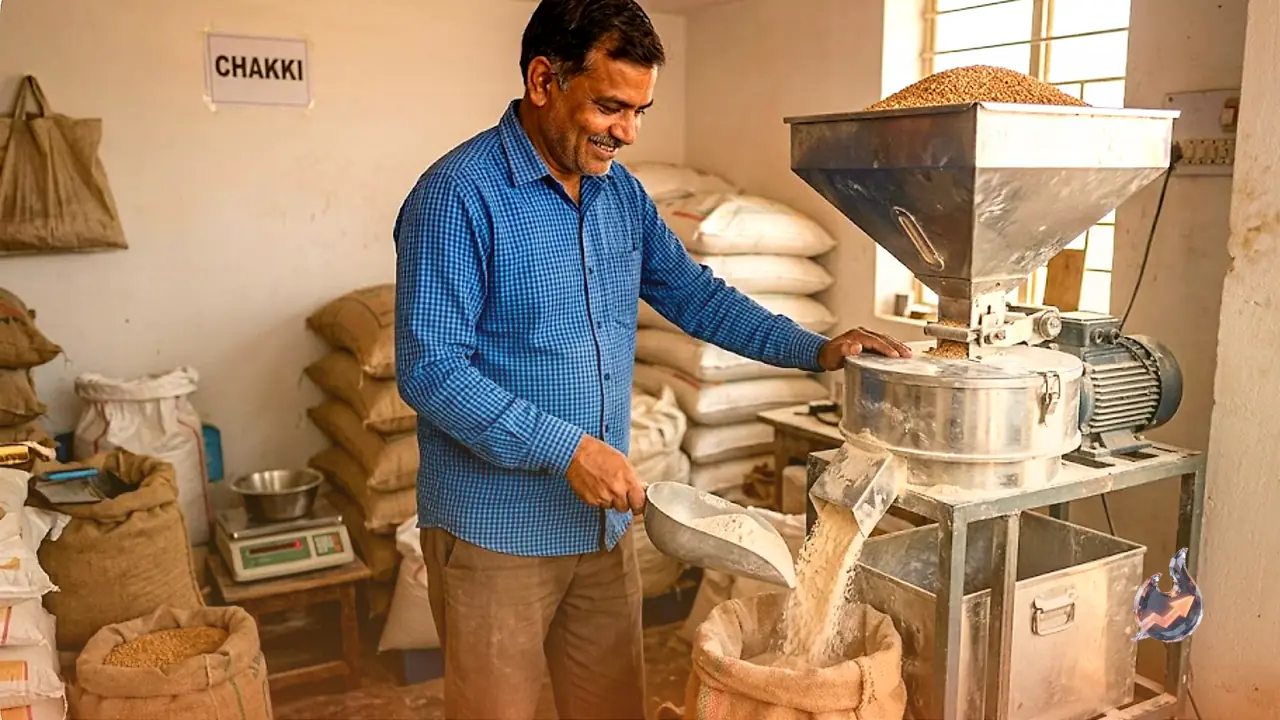

Jaykant Rai, a resident of Ghoshna village in Deoghar district, has been running a flour mill for nearly 20 years. He reflects on his journey, noting that when he first started, there were very few mills in the village. Over time, as people's trust in his work grew, residents from several surrounding villages began coming to him to grind their wheat. The greatest advantage of this business is that the need for food is constant. Since cooking is a daily activity in every home, flour is in demand every single day. This is exactly why this business remains functional throughout the year without any off-season.
Managing the workflow and daily income
According to Jaykant Rai, his mill remains busy from morning until evening even on normal days. Customers bring varying quantities of wheat, ranging from five kilograms to as much as 25 or 30 kilograms for a single grinding session. During weddings, religious festivals, and other local celebrations, the volume of work increases significantly. Often, the rush is so great that customers have to wait for their turn. He estimates that, on average, a daily income of one thousand to fifteen hundred rupees is easily achievable. If a mill is set up in an area where there are few existing competitors, the earnings can potentially be even higher.
Breakdown of costs and investment
Starting this business requires fulfilling a few primary requirements. First and foremost, a reliable electricity connection is mandatory as the entire setup operates on electrical power. Additionally, one needs to procure a high-quality flour grinding machine, an efficient motor, and other necessary equipment. Typically, setting up a small flour mill in a village involves an initial expenditure of about one lakh to 1.5 lakh rupees. If the entrepreneur already owns the space, the initial startup cost can be reduced even further.
Trust is the key to success
However, Jaykant Rai emphasizes that simply installing machinery is not enough to guarantee success. Winning the trust of customers is the most crucial aspect of this business. If the grinding process is kept clean, work is delivered on time, and customers are treated with courtesy, they tend to become loyal patrons. Once a customer is satisfied with the service, they return repeatedly and often recommend the mill to others. It is precisely this trust that has sustained his business for the past two decades.
Why demand remains high in rural areas
Even today, a large number of people in rural areas prefer to get their own wheat from fields or grains purchased from the market ground at a local mill, rather than buying pre-packaged flour. There is a strong belief that freshly ground flour is significantly more delicious and nutritious. This consumer preference ensures that the demand for flour mills in villages remains consistent. If a young person wants to start a business with low investment that offers the potential for daily earnings, the flour mill business is a viable option. Careful selection of location, high-quality machinery, and honest work are the pillars that can lead to long-term success in this field.