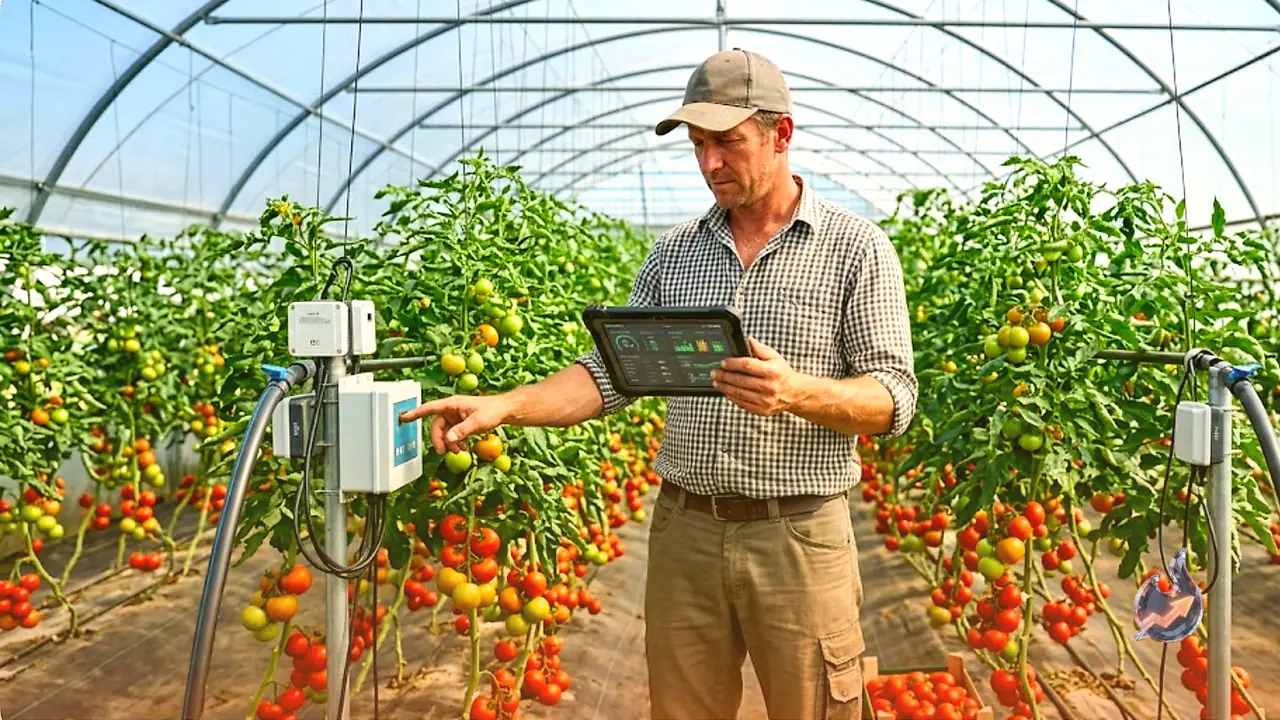

The Evolving Landscape of Agriculture
The agricultural sector is currently witnessing a transformative phase, largely driven by younger generations embracing innovative farming techniques. There's a noticeable shift away from conventional cultivation methods towards more modern and intelligent farming solutions. For today's farmers, understanding the optimal crops for specific seasons is paramount to ensuring profitability. To truly excel and maximize earnings from farming, it's crucial to think beyond traditional approaches. Fields that lie fallow following the wheat harvest present an excellent opportunity for cultivating tomatoes, a venture that promises considerable returns.
Off-Season Farming: A Gateway to Enhanced Profits
Agricultural experts highlight that the most direct route to higher farming income involves growing off-season crops. As the natural season for a particular vegetable draws to a close, its market price often escalates, sometimes by as much as five times. This phenomenon is particularly evident during the monsoon months, known as Sawan and Bhado, when vegetable prices typically skyrocket. During these periods, the cost of tomatoes can easily reach ₹100 per kilogram or even higher, creating a golden opportunity for farmers who cultivate them during the off-season.
Why Off-Season Tomato Cultivation is Beneficial
Farmers who choose to plant tomatoes during this period can expect their plants to begin bearing fruit in approximately 40 days. The financial upside is significant when considering the investment versus the potential return. The combined cost per plant, including all inputs, is estimated to be around ₹20. If off-season tomatoes fetch ₹100 per kilogram in the market, and a single plant yields about 10 kilograms of tomatoes, then one plant alone could generate an income of approximately ₹1,000.
Guidance from Bihar Agricultural University (BAU)
Dr. Duniya Ram Singh, the Vice Chancellor of Bihar Agricultural University (BAU), acknowledges that off-season farming does carry some inherent risks. However, he emphasizes that with the application of correct techniques and dedicated effort, it can prove to be highly successful. Given the challenges posed by the rainy season, Dr. Singh specifically advises farmers to adopt the Alaan method, also known as the trellis method or 'machan vidhi'.
Innovative Varieties and Techniques from BAU
Dr. Singh further elaborated on the importance of the Alaan method for monsoon tomatoes. Instead of allowing the tomato plants to spread on the ground, they must be trained upwards using supports made from wood or bamboo. Failing to do so increases the risk of the crop rotting and decaying due to heavy monsoon rains. In a stride towards scientific advancement, Bihar Agricultural University (BAU) has successfully developed a unique seedless 'garma' (summer) tomato variety. This particular type boasts significantly higher demand and commanding prices in the market compared to regular tomatoes. Additionally, after carefully assessing the soil and climate conditions of Bhagalpur, the university has recommended several high-performing varieties, including Namdhari 4266, Abhilash, and Sahu 3251. Dr. D.R. Singh, the Vice Chancellor, stressed that by selecting advanced seeds and implementing appropriate techniques like the Alaan method, farmers can transform their currently vacant fields into a primary source for manifold income growth.