























In Raipur, the rapidly declining groundwater levels and the drying up of borewells during the summer months have become major concerns for the farming community. Amidst these difficulties, Laxmikant Pradhan, a young farmer from the village of Milarabad in Chhattisgarh, has adopted a highly affordable and effective local technique for water harvesting and borehole recharging. This method serves as a potential blueprint for other farmers facing similar agricultural hardships. He has successfully repurposed stagnant, old wells that had been abandoned for years by cleaning them and transforming them into conduits for rainwater harvesting. Additionally, he has utilized a borewell recharging technique on his farm to significantly improve the local groundwater levels.
New Life for Old Wells
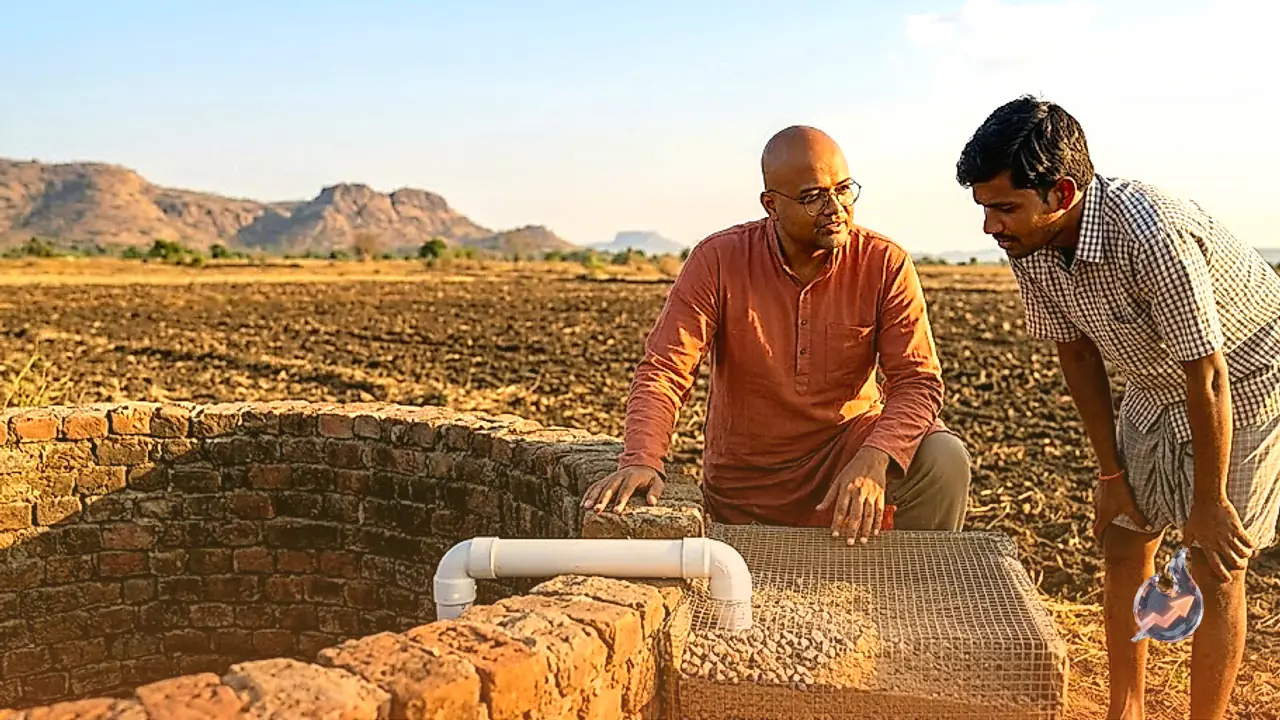
Laxmikant Pradhan explains that in the past, almost every household in the village possessed a well, but over time, most of these fell into disrepair and were rendered useless. He believes that if these old structures are cleaned and used to store rainwater from rooftops or collected surface runoff, they could play a vital role in recharging the water table. By implementing this strategy on his own old home well, he was able to set up a system that channels rainwater directly into the well. The total expenditure for this entire process was approximately 2000 rupees.
Recharging Borewells for Sustainable Irrigation
He recounted that he had drilled two borewells in 2011-12 to support a dairy farm. One of these borewells was completely dry, while the second yielded water only during the monsoon season. As soon as summer arrived, the borewell's output would drop significantly, providing water for only 5 to 10 minutes at a time. To address this crisis, he constructed a large soak pit near the borewell, which allowed rainwater to seep directly into the soil. The impact was visible the very same year, as the borewell, which previously struggled, began to provide a steady supply of water for 45 minutes to an hour throughout the summer.
Scaling the Successful Technique
Inspired by this initial success, he applied the same technique to other borewells on his property. Currently, he constructs a pit around his farm borewells that is approximately 12 feet deep and 6 feet wide to ensure rainwater is directed deep into the ground, which has led to a consistent rise in the groundwater table. While this specific setup costs between 8,000 to 10,000 rupees per borewell, it ensures the availability of water for irrigation in the long run.
A Message for Farmers
Laxmikant emphasizes that if every farmer implemented systems to harvest rainwater on their land and revived old wells, the regional water crisis could be significantly mitigated in the coming years. He argues that instead of letting rainwater go to waste by flowing away, directing it into the earth is the most effective form of water conservation. His low-cost solution is currently serving as an inspiration for neighboring farmers and highlighting the critical importance of water conservation efforts.