





















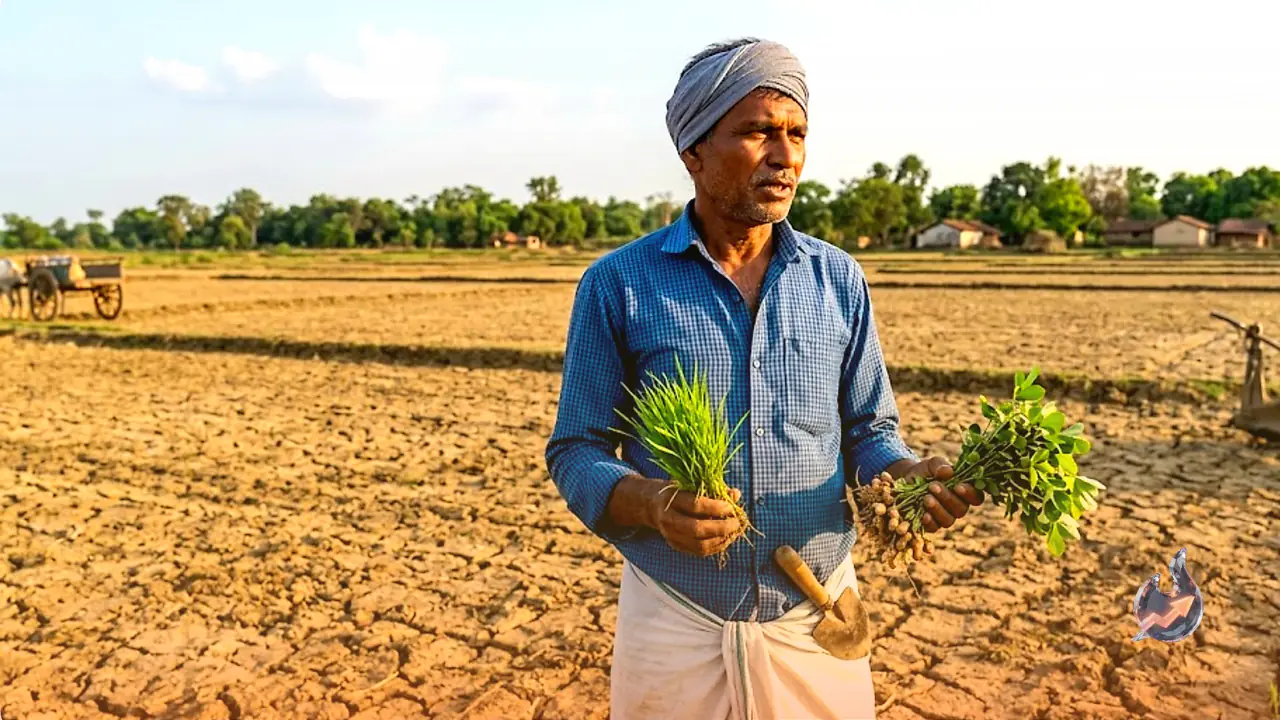

Persistent delays in the arrival of the monsoon are raising concerns for farmers in Bilaspur, as erratic rainfall across Chhattisgarh disrupts the sowing of paddy and other Kharif crops. Addressing this uncertainty, organic farmer Jadunandan Prasad Verma has urged farmers to move away from panic and instead adopt scientific and practical agricultural techniques to secure their livelihoods.
Prioritize short-duration paddy varieties
Verma emphasizes that in the current climate of unpredictable weather, farmers should avoid long-duration paddy varieties. Instead, switching to early-maturing varieties significantly reduces exposure to weather-related risks and ensures a more reliable harvest timeline.
Intercropping pulses and oilseeds
A key recommendation is to plant pulses like cowpea (lobiya) and urad, along with oilseeds like sesame (til), alongside the primary paddy crop. In the event of deficient rainfall, these auxiliary crops serve as an economic safety net, helping to offset potential financial losses from the rice crop.
Transforming crops into organic manure
The strategy remains beneficial even if rainfall turns out to be sufficient. Verma suggests that if the monsoon picks up and the paddy crop thrives, the intercropped pulses and oilseeds can be ploughed back into the field as green manure. This practice enriches the soil with organic carbon and enhances overall soil fertility.
Reducing input costs and boosting productivity
Experts highlight that pulses are natural nitrogen fixers, which inherently improve soil health. Utilizing these crops as green manure also reduces the reliance on expensive chemical fertilizers. By adopting this intercropping method, farmers not only lower their production costs but also build a sustainable and resilient agricultural model capable of withstanding the challenges of an erratic monsoon.