
Organic Honey Steals the Show at Ranchi Agriculture Fair
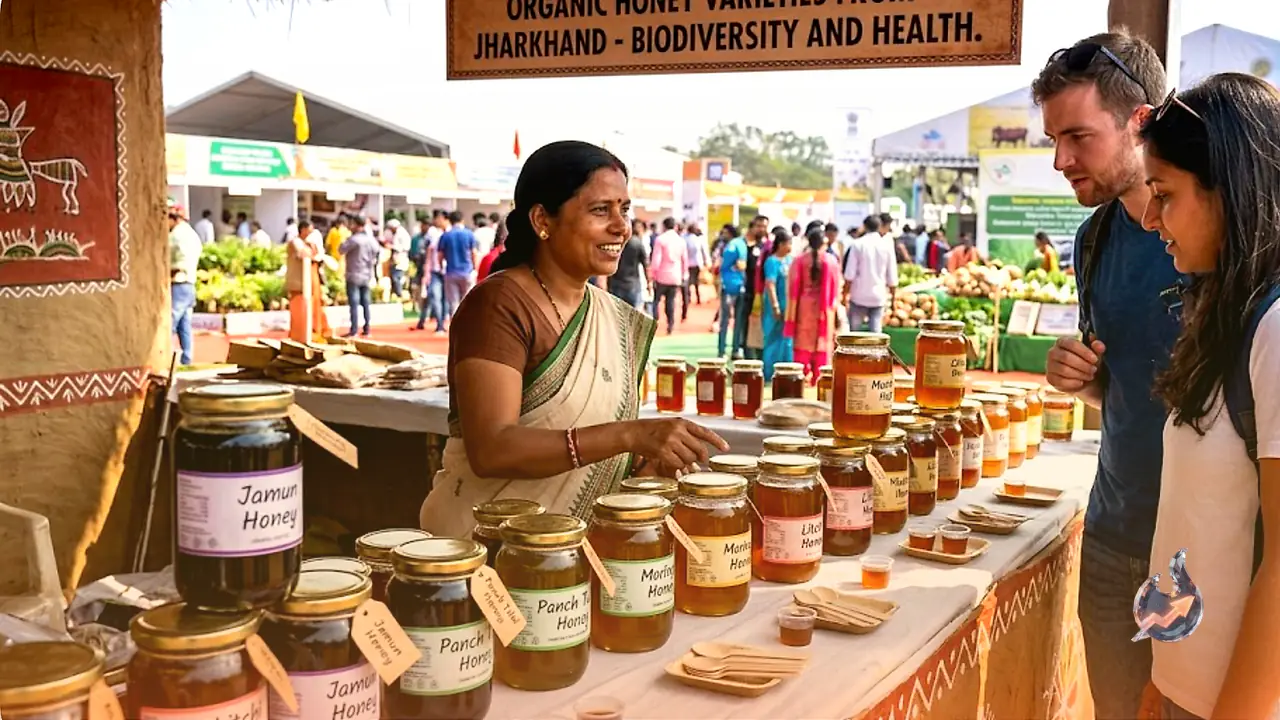
Farmers are presenting unique agricultural products at the three-day agricultural trade fair organized by the Jharkhand government at Morabadi Ground in Ranchi, the capital of Jharkhand. Among these attractions, a honey stall from the Budmu block of Ranchi has become a significant point of interest for visitors. This stall offers not just one or two, but seven different types of organic honey, drawing attention for their distinct taste, nutritional value, and medicinal benefits.
Seven Special Organic Honey Varieties Available
Stall operator Radhakant Giri informed TrendKia that while markets typically offer only one or two types of honey, his stall features a special range of varieties. These include Jamun honey, Sahjan (Moringa) honey, Litchi honey, Karanj honey, Panch Tulsi honey, Rock honey, and local Desi honey. The prices for these special honeys range from 400 to 600 rupees per kilogram. Notably, a special honey prepared by indigenous bees is being sold at a rate of 1600 rupees per kilogram.
Natural Honey Production Process
Radhakant Giri elaborated on the honey production process, stating that honey production through beekeeping is not a year-round activity, but rather collected for about six months annually. To produce a specific type of honey, beehives are placed in the vicinity of the flowers from which the honey is to be derived, during their blooming season. The bees then collect nectar from these flowers, naturally creating the honey.
Special Honey from Moringa and Jamun Flowers
According to Giri, Moringa is considered a 'superfood' due to its rich content of calcium, iron, antioxidants, and other essential nutrients. During the Moringa flowering season, beehives are positioned nearby to produce honey with the qualities of Moringa flowers. Similarly, during the flowering seasons of Jamun and Litchi, beehives are set up near their orchards to yield honey infused with the properties of those specific floral nectars.
Assurance of Purity and Quality
After production, the honey is purified using entirely natural methods, without any chemical processing. It is then delivered to consumers in hygienic packaging. Radhakant Giri attributes the increasing demand for these special honey varieties to this purity and natural process. He also clarified that pure honey does not have a fixed expiry date. However, he stressed the importance of maintaining cleanliness during its use and storage, ensuring no water or moisture enters the honey. Properly stored, honey retains its quality and remains safe for consumption for an extended period.