
A Village That Built Its Own Infrastructure
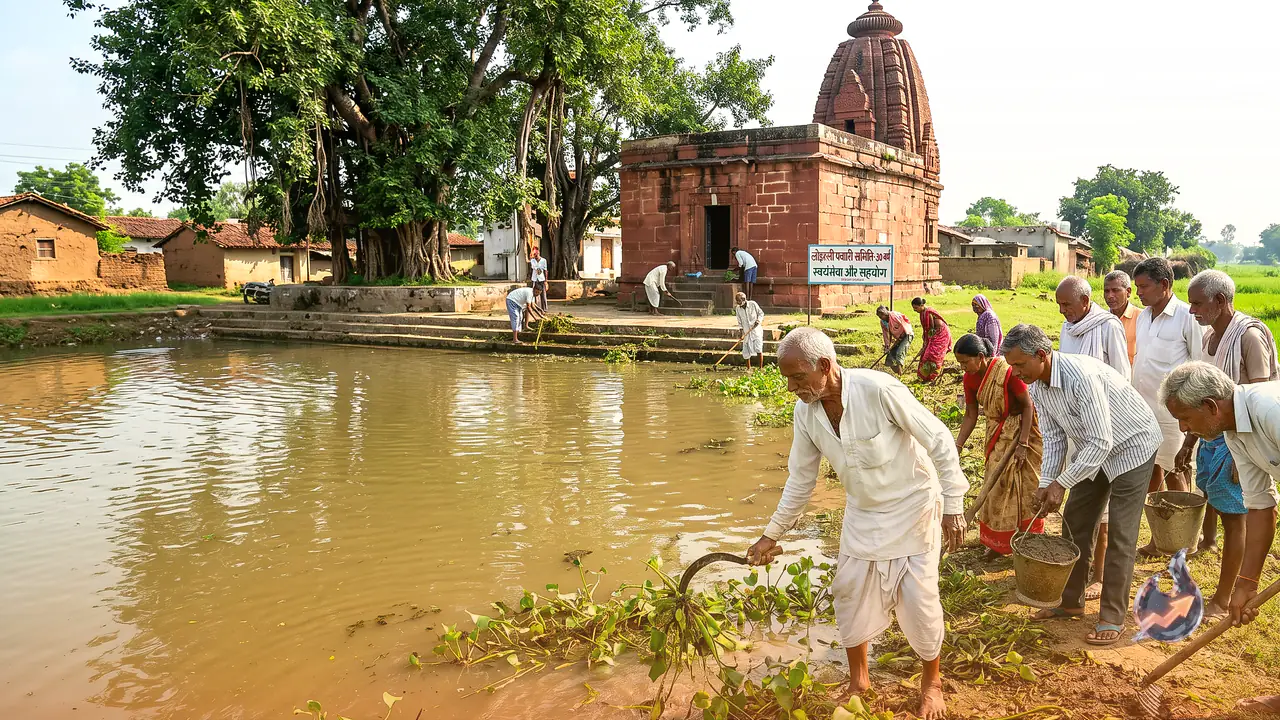
Most villages in rural India wait years for government schemes to fix their ponds and public spaces. Loharssi, a village of 5,000 people in Bilaspur district, Chhattisgarh, decided to take a different route. For thirty years, its Pachari Samiti, a volunteer committee of around 85 members, has cleaned, deepened, and maintained the village's ponds, cared for its temples, and built facilities for women, all funded by community donations and powered entirely by voluntary labour.
Born as a Religious Committee, Grown into a Development Force
The samiti's president, Manish Sahu, told TrendKia that the organisation was set up in 1992 as a Durga Puja committee. Over time, members began to see that the village's ponds and public assets needed organised, sustained attention that no single family or government body was providing. The committee took on that responsibility and has not looked back since, expanding its work to cover upkeep of temples and other shared spaces as well.
The stakes are high. About 75 percent of Loharssi's 5,000 residents use local ponds for their everyday water needs, making the committee's maintenance work a matter of daily necessity rather than optional civic pride.
Bullock Carts and the First Stones Laid
Saheb Das, an elder who has been part of the samiti almost from the beginning, vividly remembers how it all started. In 1992, soil and construction material were hauled in on bullock carts to build a pachari (stepped stone landing) and a ghat along the Mongra pond. That early exercise in collective effort set the tone for everything that followed. Decades later, he says, the same spirit of dedication runs through the newer members of the committee.
How the Money and the Work Actually Flow
Members contribute money on a regular basis, and those pooled funds are directed entirely into maintenance activities: pond cleaning, deepening operations, potash treatment of the water, and keeping the surroundings clean. The committee has also had stone platforms, chabutaras (raised sitting areas), and proper seating built along the pond banks specifically to make the space more convenient for women. Encouraged by the samiti's consistency, the gram panchayat separately arranged additional construction work in the pond area over the years.
A Commitment That Passes from Father to Son
The committee's secretary, Bhawranand Sahu, offers perhaps the clearest sign that the Pachari Samiti is more than a one-generation project. He said that his father was a member before him, and it was watching his father's involvement that drew him in. Today he coordinates pond monitoring, cleaning schedules, potash applications, and general upkeep alongside fellow members. The Loharssi Pachari Samiti has, across three decades and without heavy outside support, managed to give the village's ponds and temples a sustained second life, making it one of the more compelling examples of what organised rural volunteerism can achieve.