





















The aggressive and fearless style that has come to define the Indian men's white-ball team in recent times is frequently credited to the Indian Premier League. The domestic tournament has successfully established an assembly line of explosive hitting talent, with every consecutive season unearthing a new powerhouse. However, it is highly telling that cricket analysts and former players increasingly choose to use the word 'hitter' over 'batsman' when describing these emerging talents. Over the past few seasons, several former cricketers have voiced deep concerns regarding the erosion of classical batsmanship under the influence of the cash-rich league. Modern-day youngsters seem to evaluate their worth almost entirely by how many sixes they can manage to hit in an innings. This fundamental shift in the game's priorities, particularly in the shortest format, was set in motion long before the implementation of the Impact Player rule in IPL 2023. Historically, Indian batters faced criticism not for their lack of ability to score at a high tempo, but rather for their reluctance to do so, indicating a missing intent. Today, the pendulum has swung to the other extreme, where intent is all that remains, often at the cost of proper technique and situational awareness.
The High-Scoring Mirage of the IPL and Its Global Disconnect
To grasp the scale of this structural transformation, one must look closely at the statistical evolution. Since 2021, the average run rate in the IPL has surged from 8.05 to an astronomical 9.88. Looking at this in terms of overall scores, the average team total in the league has ballooned from 161 in 2021 to a massive 197 in 2026. This represents an enormous difference of 36 runs. In the context of the 2021 statistics, scoring an additional 36 runs would have required a team to bat for approximately 3.3 overs, which highlights just how heavily tilted in favor of run-scoring the league has become. The primary issue, however, is the rapidly widening chasm between the IPL and global T20 cricket. While run-scoring speeds have increased in T20 leagues worldwide, no other tournament matches the hyper-inflated run rates seen in India. In 2025, the overall average run rate across all T20 matches globally was 8.42, while the IPL registered a significantly higher 9.62, even with matches against weaker opponents included in the data. This trend persisted in 2026, with the worldwide T20 run rate hovering at 8.55 compared to the IPL's 9.88. The main catalysts behind this disparity are extremely flat pitches designed to favor batsmen, and highly compressed boundary dimensions at multiple venues.
Exposing Vulnerabilities on Challenging Overseas Tours
The real-world consequences of this artificial batting ecosystem have come to light during India's recent overseas campaigns, where the team suffered consecutive 0-2 series deficits against both Ireland and England. These fixtures exposed glaring technical vulnerabilities, resulting in India recording its second-lowest T20 total alongside one of its heaviest defeats in history. Jofra Archer, who has been a prominent figure in the IPL since his debut in 2018, offered a telling assessment of this phenomenon. He noted that while a score of 200 is rarely safe in the IPL, it remains a highly formidable and defendable total in international cricket. In England, bowlers enjoy a wider margin of error, whereas the small boundaries and unyielding pitches of the IPL demand absolute precision from bowlers. While some might argue that high scores were also registered during the T20 World Cup 2026, those matches were played under very specific conditions. Since Gautam Gambhir assumed the role of head coach in July 2024, India has benefited from playing a significant portion of its matches on familiar Asian subcontinental tracks.
Subcontinental Comforts Versus Overseas Realities
Following a successful series against South Africa in 2024, who themselves were not at their strongest, Indian batters have repeatedly faltered when forced outside their comfort zones. During the Asia Cup 2025, the team struggled to perform as a cohesive batting unit. Individual sparks from players like Shivam Dube, Abhishek Sharma, and Tilak Varma briefly kept the team afloat, but India managed to breach the 200-run mark only once throughout the entire tournament. The subsequent tour of Australia painted a similar picture of struggle, where almost every frontline batsman except Abhishek Sharma found it difficult to cope with local conditions. In three matches, India's first-innings scores were restricted to 125, 186, and 167. The latest debacles in Ireland and England have made it abundantly clear that when presented with pitches that offer even a modicum of assistance to bowlers, Indian batters find themselves at sea.
The Pitfalls of Identical Pitches and the Impact Player Crutch
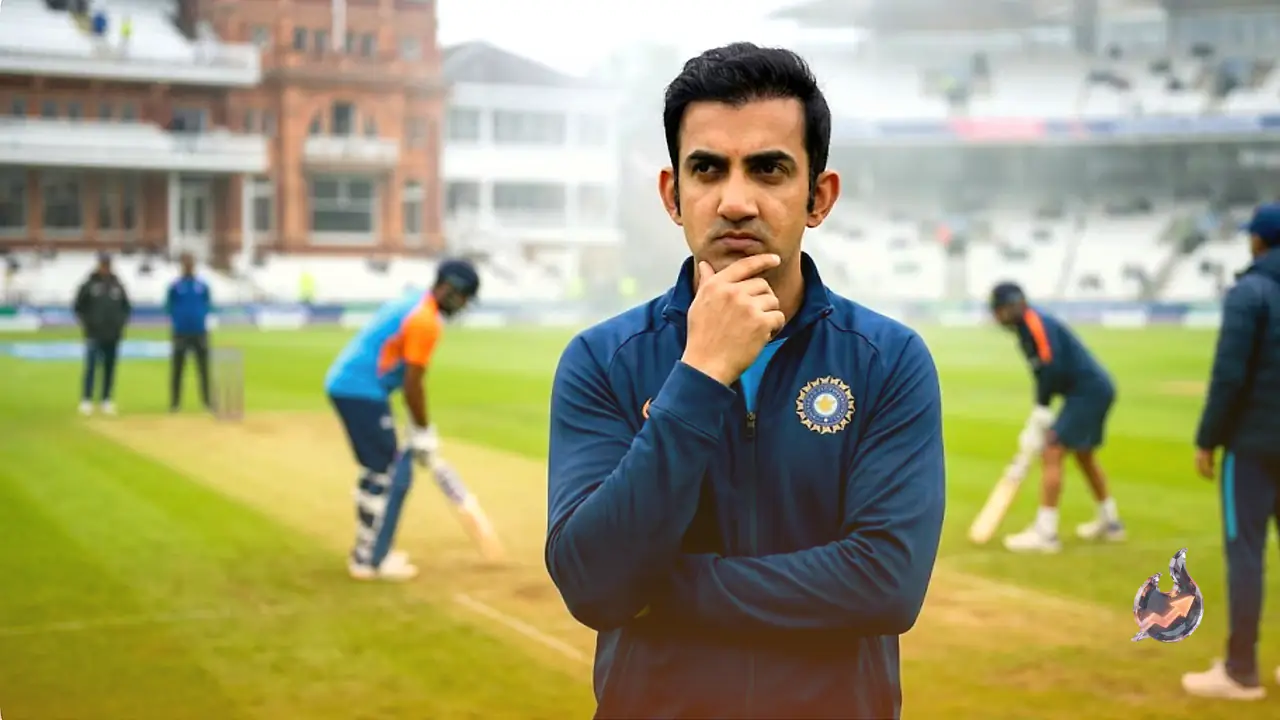
This vulnerability is not entirely the players' fault, as IPL franchises are notorious for preparing identical, batting-friendly tracks. Aside from Gujarat Titans, who consistently prepare surfaces that offer some assistance to bowlers, most venues serve up absolute roads. Even elite spinners like Yuzvendra Chahal and Rashid Khan find little to no assistance from these pitches. In stark contrast, when playing overseas, batsmen face bowlers like Will Jacks, who can use the pitch to pose serious questions. Mishits that comfortably clear the short boundaries in India end up as simple catches in the deeper outfields of England and Ireland. Furthermore, the true bounce and seam movement characteristic of English tracks cannot be replicated on typical IPL surfaces, meaning batters can no longer succeed by simply planting their front foot and swinging blindly. The presence of the Impact Player rule in the IPL has further degraded the tactical sharpness of Indian batsmen. By effectively allowing teams to play with an extra batsman, the rule eliminates the fear of a collapse, encouraging players to play high-risk shots without taking responsibility for building an innings. In international cricket, where this safety net does not exist, players look exposed. For instance, Tilak Varma has shown a distinct weakness against high-quality spin, a deficiency that is rarely exposed in the IPL due to the lack of quality spin bowling on offer. Similarly, Ishan Kishan has repeatedly struggled on demanding pitches, a vulnerability that was evident in IPL 2026 and has now been laid bare in Ireland and England. Axar Patel, despite his known struggles against express pace, continues to be promoted into the powerplay, a strategy that fails against disciplined international attacks. Following the crushing defeat at Trent Bridge, Gautam Gambhir conceded that the team failed to read and adapt to the playing conditions. This tactical blind spot has been repeated across multiple matches. Losing matches does not make India a poor team, but failing to respect variables like wind direction, boundary sizes, and pitch behavior will inevitably lead to defeat. The immediate challenge for Indian cricket is how quickly its players can unlearn their IPL habits and adapt to the rigorous demands of international cricket.