






















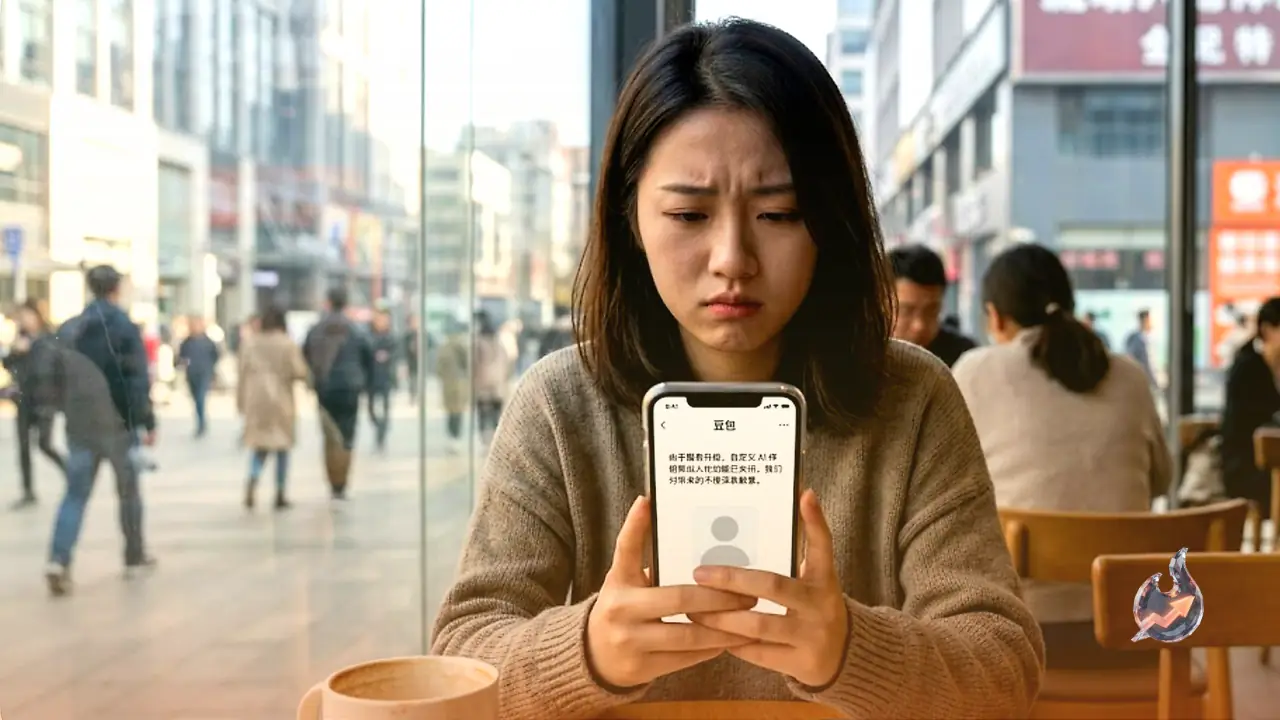

While politicians in the United States try to manage the mental health impact of AI chatbots through rules built around transparency and safeguards, Beijing is going much further and preparing to shut humanlike AI personalities down entirely. Over the weekend, two of China's biggest technology companies, ByteDance and Alibaba, both announced that they are disabling custom agent features in their most popular consumer AI products.
Both firms have framed the move as a "product function adjustment," timed to arrive just before new rules governing these kinds of products come into force.
Doubao and Qwen Set Their Deadlines
ByteDance's Doubao told users in a Friday night notice that its agent feature would go offline on July 15. After October 15, any related data will be handled under the company's privacy policy and become unrecoverable. Alibaba's Qwen is moving even faster: its "humanlike interactive agents and user-created agent functions" come down on July 10, with broader agent services following on July 15.
What Is Driving the Crackdown
At the root of all this is China's Interim Measures for the Administration of AI Anthropomorphic Interaction Services, jointly issued on April 10 by five government departments: the Cyberspace Administration of China, the National Development and Reform Commission, the Ministry of Industry and Information Technology, the Ministry of Public Security, and the State Administration for Market Regulation. The rules take effect on July 15.
The regulation specifically targets AI services that mimic human personality traits, thinking patterns, and communication styles to create "sustained emotional interaction." In plain terms, that means AI girlfriends, AI therapists, AI companions, and the custom-persona bots that Doubao and Qwen users spent months building are all being switched off.
Everything Users Built Is Gone
Both apps had offered pools of agents that could be tailored for specific tasks, speaking styles, and fixed personas. A user could take a general-purpose chatbot and turn it into a named assistant, a tutor, a role-playing character, or a companion with a consistent tone. Inside China, all of that has now disappeared.
The official document is explicit. The measures place restrictions on services offering "virtual relatives, virtual companions or other intimate relationships to minors." The text also lists risks such as extremist content, privacy leaks, harm to physical and mental health, and AI addiction.
Which Services Are Spared
Non-emotional services are clearly excluded from the crackdown. That means customer service bots, knowledge Q&A tools, workplace assistants, and educational software can carry on, as long as they do not cross into sustained emotional interaction.
Legal analysts describe the measures as treating emotional AI as "a governance problem" rather than simply a content issue. The argument is that once AI begins competing with genuine human social bonds, regulation has to target the way the system is designed, not just the harmful outputs it produces.
The Research Backs Up the Worry
Studies support the concern. Research from June found that even leading frontier AI models, from OpenAI, Anthropic, Google, and Alibaba, violated social-interaction safety guidelines more than 27% of the time, routinely encouraging emotional attachment and presenting themselves as human. A separate survey of young partnered adults found that one in seven regularly used AI romantic companions, and nearly 70% were hiding the full extent of it from their partners.
China is the first country to build a dedicated regulatory framework for this category. Legal experts have called the measures the first set of rules in China specifically targeting AI-driven emotional interaction. The EU, the U.S., and other nations have flagged similar concerns, but none have legislated in such a restrictive way.