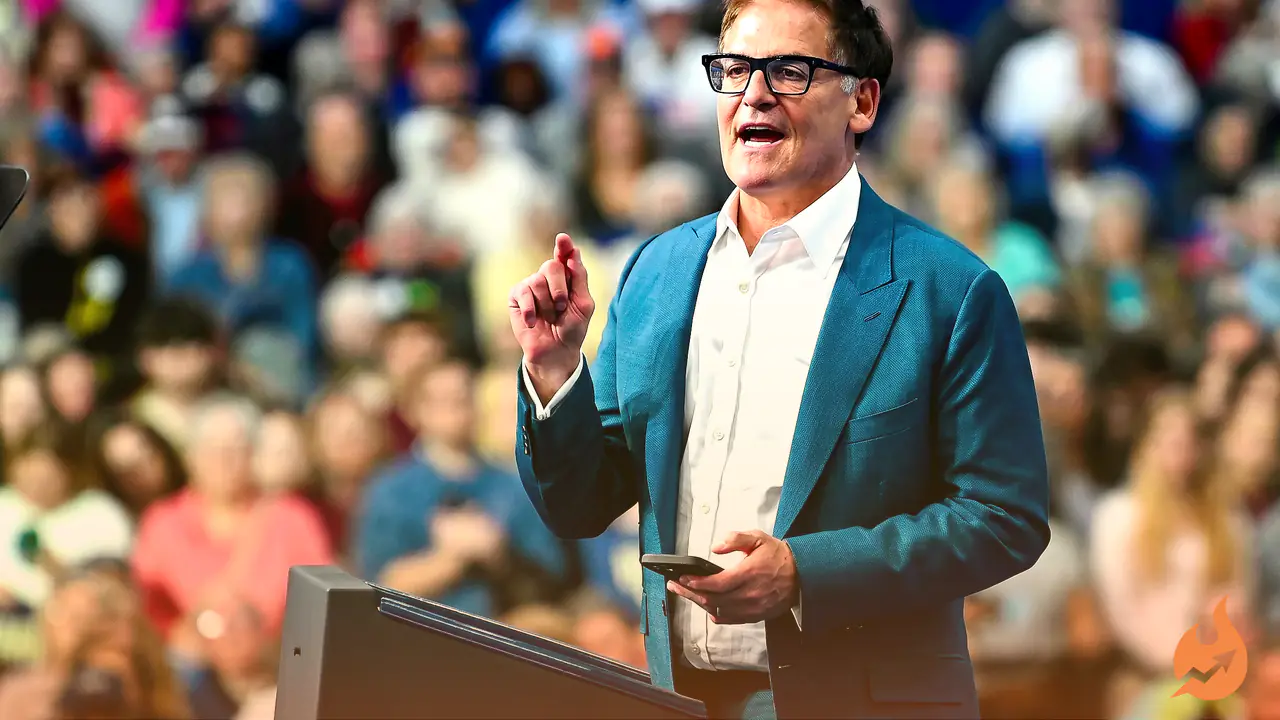

For years, billionaire Mark Cuban was one of Bitcoin's loudest cheerleaders. His pitch was blunt: if you want to get rich, throw a "Hail Mary" by putting 10% of your money into Bitcoin and simply pretend you've already lost it. Buy BTC, hold it for the long haul, and the rewards will follow — that was the gist. The endorsement carried weight, and plenty of retail traders followed him straight into the asset.
That, however, was Cuban nine years ago. Fast forward to 2026, and the same entrepreneur now says "Bitcoin has lost the plot." He has performed a full U-turn on the digital asset, conceding that "It's not the hedge that I expected it to be." And in case the criticism wasn't pointed enough, he has confirmed that he has sold off every bit of his Bitcoin holdings.
Why the Wealthy Can Walk Away in a Heartbeat
As a Shark Tank investor, Cuban is well within his rights to cash out — it's his own hard-earned money. But abandoning ship during turbulence and then talking down the very asset he once promoted lays bare a simple truth: the ultra-rich are never wedded to a single financial instrument. If Cuban sells at a loss, it barely dents him. For the average person, the same loss can mean everything.
Not Just Bitcoin — Remember the NFT Hype
This pattern isn't new. When the NFT market peaked in 2021-22, Cuban was among its biggest promoters, going so far as to call it the future and suggesting the entire financial world would orbit around these new assets. In reality, NFTs barely survived into 2023 before slipping into a deep coma. Those who bought in — celebrities included — watched their portfolios crater by more than 90%.
The Real Takeaway for Ordinary Investors
The lesson buried in this Bitcoin saga is that billionaires can say almost anything and walk away unscathed. Even after losing millions on a bet, they still have billions of dollars as a cushion. So the next time a member of the rich-list is hyping an asset, pause and ask whether the investment is genuinely worth it and what it could do to your personal finances. They can pull a U-turn and jump ship; you don't get to steer the course once the losses hit.