
Delhi High Court Delivers Key Ruling
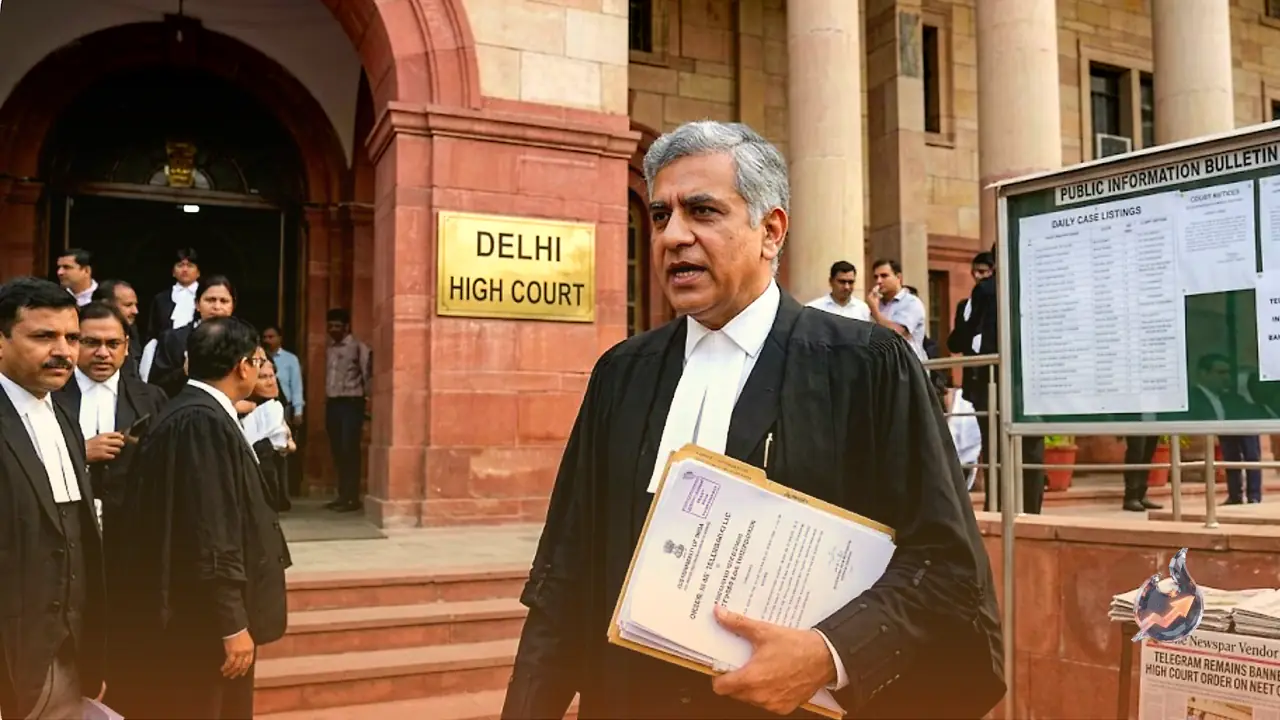
The Delhi High Court has dismissed a petition filed by Telegram challenging the temporary ban imposed by the central government, which stemmed from alleged irregularities in the NEET examination. Justice Tejas Kariya upheld the order issued under Section 69A of the Information Technology Act, 2000, thereby ensuring that the messaging platform remains blocked until June 22. Telegram had sought relief from this order in court, but its plea was unsuccessful.
Rationale Behind the Ban on Telegram
The temporary restriction was put in place following recommendations from the National Testing Agency (NTA). Allegations surfaced that the Telegram platform was being exploited for paper leaks, the dissemination of fake question papers, the operation of fraudulent networks, and the spread of misinformation. In response to these serious concerns, the Ministry of Electronics and Information Technology (MeitY) issued an order under Section 69A of the Information Technology Act 2000, restricting access to Telegram until June 22. Furthermore, the directive also included instructions to disable the app's message editing feature until June 30.
Telegram's Arguments Against the Ban
In its petition to the court, Telegram contended that the ban was entirely unnecessary and adversely affecting over 15 crore Indian users. The company argued that blocking the entire platform was disproportionate and constituted an unwarranted measure. However, the Delhi High Court did not accept Telegram's arguments, finding the government's order to be justified.
Understanding the NEET Paper Leak Controversy
The NEET-UG 2026 examination was conducted on May 3, 2026, for more than 23 lakh students across the country. Shortly after the exam, reports of widespread paper leaks emerged from various locations. Investigations revealed that 120-140 questions in Chemistry and Biology sections were identical to the actual question paper. Due to these irregularities, the NTA cancelled the examination on May 12 and subsequently announced a re-examination for June 21. A CBI investigation uncovered the involvement of NTA insiders, subject experts, translators, and coaching networks operating in states like Rajasthan and Maharashtra, leading to numerous arrests. It was also claimed that the leaked papers were sold for millions of rupees. This entire controversy significantly impacted the future of students and raised serious questions about the NTA's credibility. The Supreme Court had also strongly reprimanded the NTA, which ultimately led to the temporary ban on Telegram.