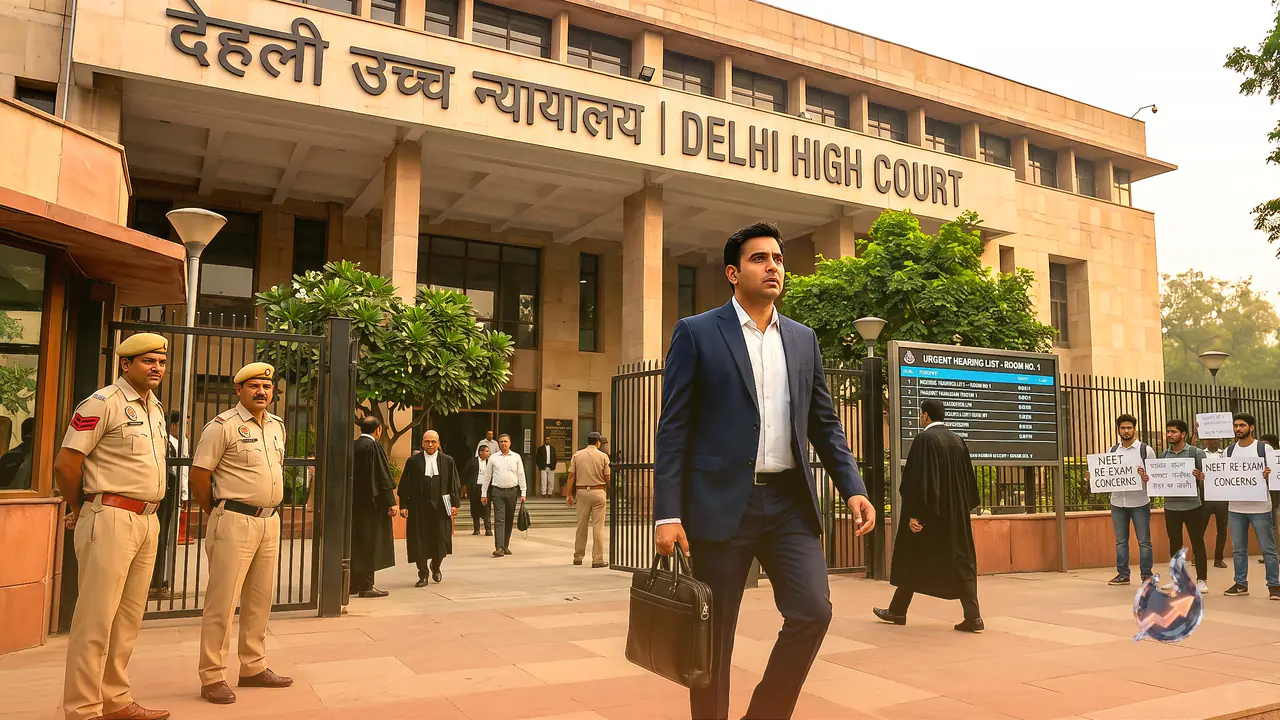

A standoff between the government and the messaging app Telegram, breaking out right before the NEET-UG 2026 re-exam, has now landed in court. Challenging the temporary ban slapped on the app, the company has approached the Delhi High Court and pressed for an immediate hearing. The High Court has accepted that plea, pushing the dispute into a legal phase.
What Actually Happened
On Tuesday, the Centre ordered a 24-hour ban on Telegram, acting on a recommendation from the National Testing Agency. The NTA is the central body responsible for conducting qualifying examinations such as the national eligibility entrance test required for admission to medical courses across the country. The government argues that the curb was meant to stop question papers from leaking and misinformation from spreading ahead of the exam, and to shut down networks that enable cheating. Alongside the ban, the company was also told to switch off its message editing feature by June 30.
What the NTA Alleged About the Feature
The agency claims that Telegram's message editing feature was being misused to manufacture fake 'paper leak' evidence. The trick, it says, was to edit older messages after the exam had taken place and insert question papers into them, while the message's original timestamp stayed untouched, making it look as though the paper had leaked beforehand. According to the NTA, both steps, the ban and the order to disable editing, were recommended to rein in gangs that leak questions and hand pre-solved question papers to medical aspirants for lakhs of rupees. The agency says the curbs were necessary to tackle organised cheating rackets and the circulation of fake exam-related messages. Meanwhile, Google and Apple have also pulled the app from their mobile application stores.
Telegram CEO Hits Back
Telegram CEO Pavel Durov has sharply criticised the decision. He argues that 'it affects millions of ordinary users without solving the root problem. It is punishing more than 15 crore ordinary Indian users.' On the other side, several student bodies and parents are welcoming the safety measures. Some, however, point out that the ban can be easily bypassed using a VPN, which means its impact will remain limited.