



















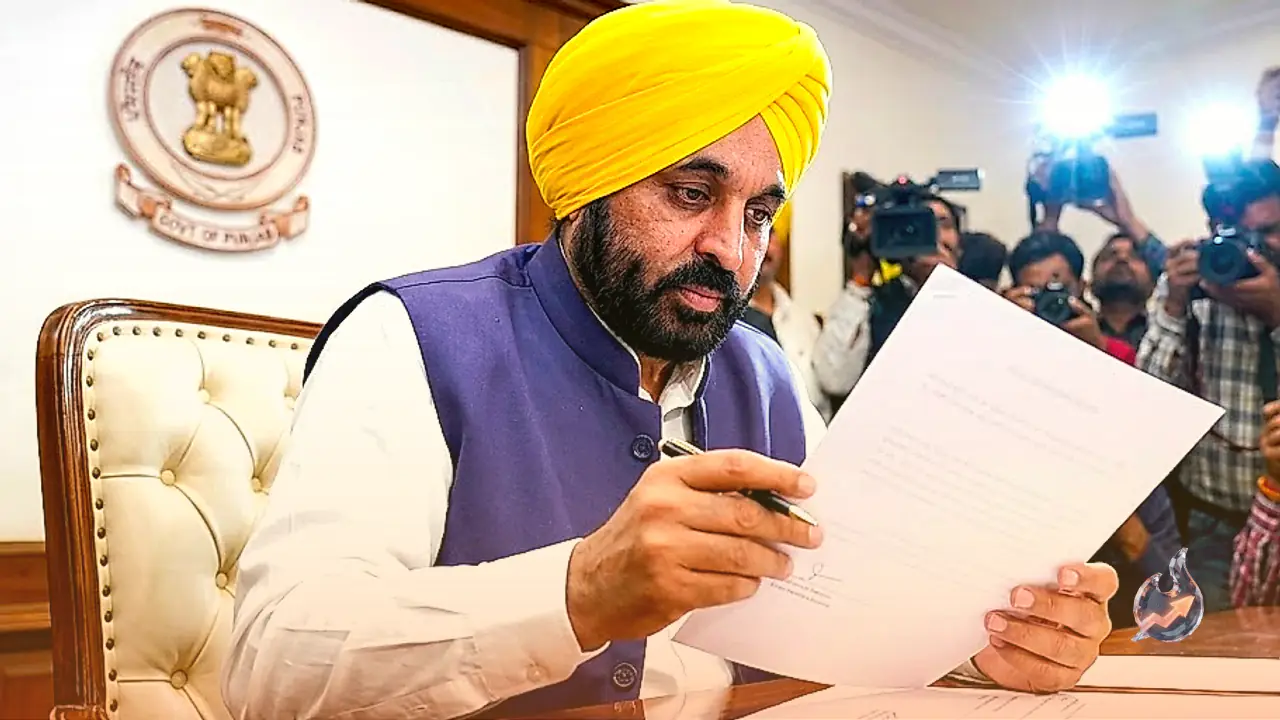

In a move providing significant relief to over 3.2 million students and their families across Punjab, the government led by Chief Minister Bhagwant Singh Mann has officially implemented the 'Punjab Regulation of Fees of Unaided Educational Institutions (Amendment) Ordinance, 2026'. This new legislation brings private schools under a rigorous regulatory framework designed to curb the arbitrary and unchecked fee hikes that have long burdened parents. The ordinance marks a decisive shift in how educational costs are managed across the state.
Key Provisions of the New Ordinance
Chief Minister Bhagwant Singh Mann announced the immediate implementation of the ordinance, thanking the Governor for his support in enabling this reform. Under the new regulations, private schools are restricted from increasing their annual fees by more than 5 percent. Any institution wishing to exceed this limit must obtain prior authorization from the regulatory authority. This rule is expected to provide much-needed predictability and financial stability for families struggling with rising school costs.
Mandatory Refunds and Forensic Audits
A critical aspect of the new law addresses historical fee grievances. The government has mandated that any private school that has cumulatively increased its fees by more than 15 percent over the last three years must refund the excess amount collected from parents. Furthermore, the state will conduct a forensic audit of these institutions to ascertain the actual fees collected through various channels. All private schools are directed to upload their detailed fee records for the past four years onto a designated government portal within the next 10 days.
Education Is Not a Commercial Venture
Emphasizing the sanctity of education, Chief Minister Bhagwant Singh Mann declared that the sector must not be treated as a profit-driven commercial enterprise. He criticized previous administrations for allowing private institutions unchecked liberty, which he noted had severely harmed the educational ecosystem. Citing Supreme Court guidelines, the Chief Minister reiterated that educational institutions cannot generate profits by collecting fees under various pretexts. Henceforth, all charges—including transportation fees, building funds, and other miscellaneous costs—will be classified as part of the tuition fee for regulatory purposes, preventing schools from circumventing the law with hidden charges.
Strict Penalties for Rule Violations
To ensure strict adherence to the ordinance, the government has established a clear penalty structure. Schools found violating the rules for the first time will face a penalty of 50,000 rupees, which will double to 1 lakh rupees for a second offense. Persistent non-compliance leading to a third violation will result in the cancellation of the school's recognition. These matters will be overseen by district-level regulatory committees chaired by the Deputy Commissioner. According to the Chief Minister, there are approximately 7,800 private schools in Punjab catering to over 3.2 million students, and this regulatory mechanism is specifically designed to protect their interests. He also stated that through these concerted efforts, Punjab has surpassed even Kerala in the education sector and vowed that the 'education mafia' will not be permitted to flourish under any circumstances.