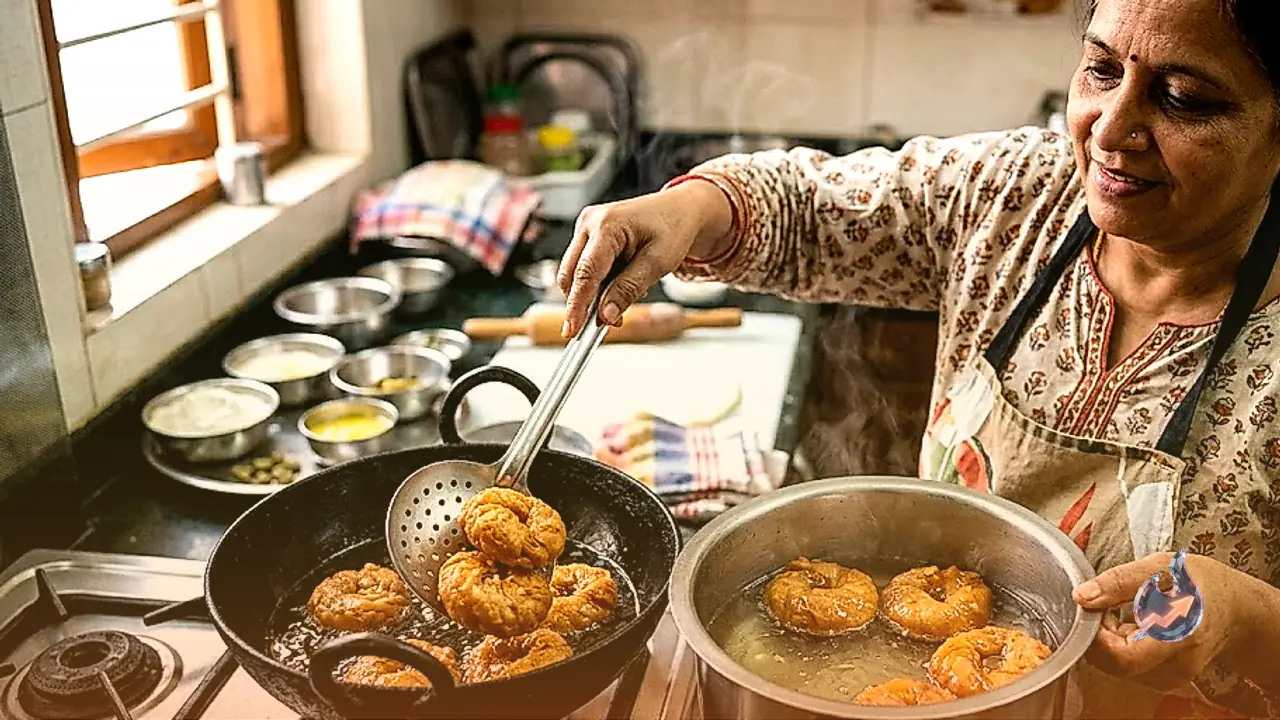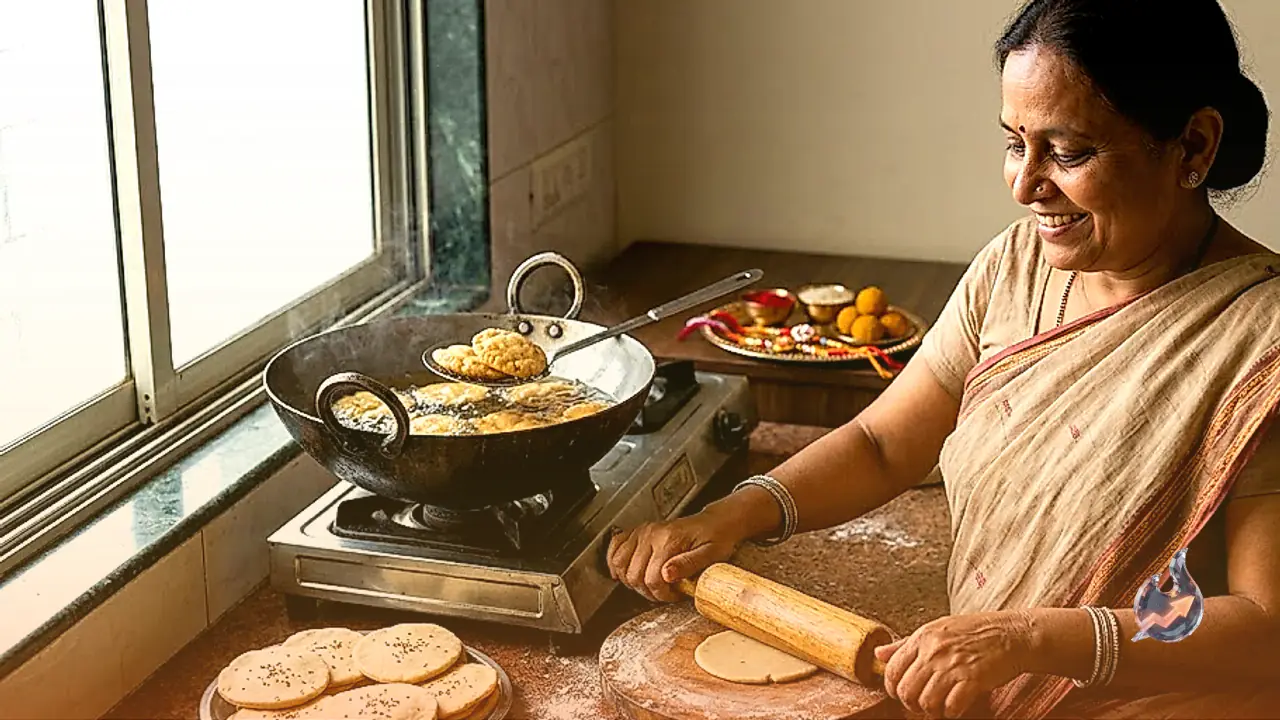























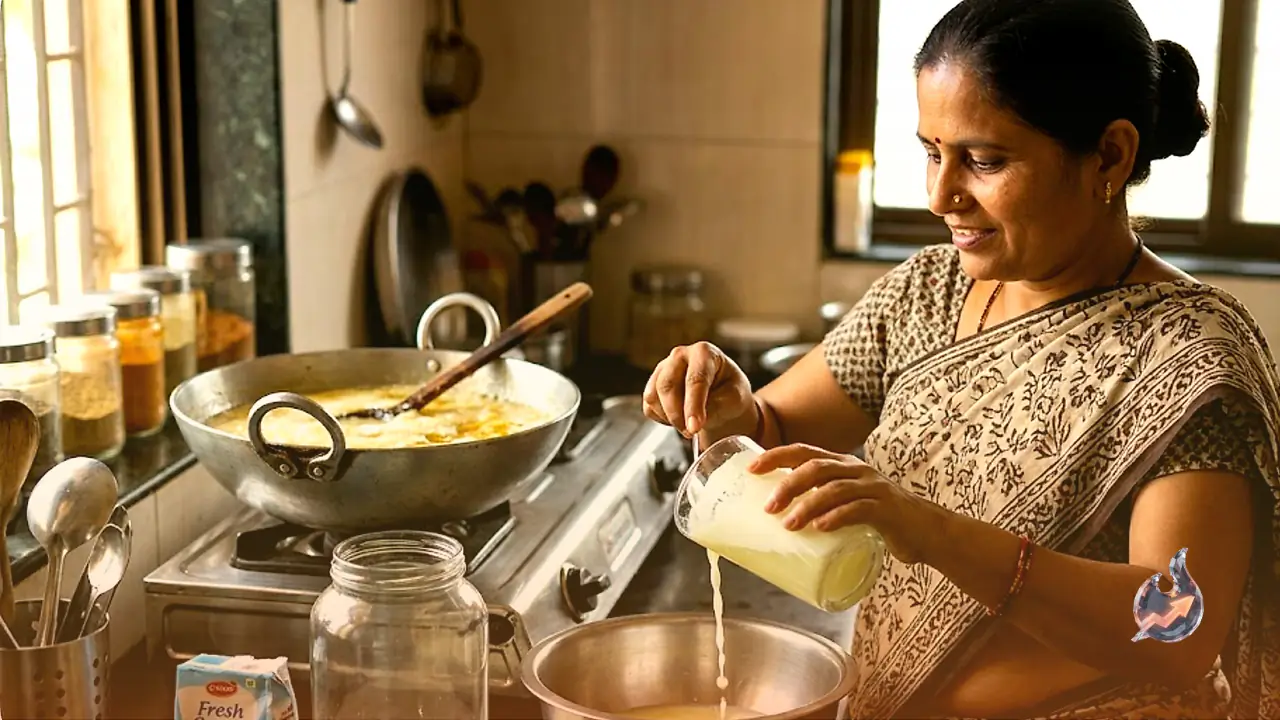

Collecting malai, or cream, at home and turning it into ghee is an old household ritual, but fewer families keep it up these days simply because of how much effort it demands. The cream has to be gathered over days, then churned to separate the butter, and finally that butter is simmered for a long stretch in a pan before it turns into ghee. Any lapse in attention during that long simmering stage and a good portion of the ghee sticks to the bottom of the pan and burns, wasting both the effort and the yield. That is exactly the frustration cooking expert Uma Meena addresses with a simple trick that skips the butter-churning stage altogether.
What makes the glass trick different
The most interesting part of this method is that it relies on nothing more than an ordinary glass sitting in the kitchen. That glass helps separate the water content in the cream from its fat, which means the ghee cooks faster, far less scraped residue forms at the bottom of the pan, and the cream ends up yielding more ghee than usual. Here is how the entire process works, step by step.
Step one, whisk the cream thoroughly
Start by taking cream that has been chilled in the refrigerator and transferring it into a deep vessel. Using a churner or a large spoon, whisk it continuously in one direction for about 2 to 3 minutes. This step should not be rushed, because whisking steadily in a single direction makes the texture of the cream noticeably smoother and thicker than before, and that smoother texture is what makes every later step easier.
Adding cold water brings the fat to the surface
Once the cream has been whisked well, cold water is mixed in, and a few ice cubes can be added as well if available. The mixture is then whisked again briskly. The cold temperature causes the fat in the cream to rise to the top quickly, and its thicker portion becomes clearly visible while the lighter, thinner liquid settles below.
Do not skip draining the extra water
The vessel is then tilted slightly so the excess water or thin buttermilk sitting in it can be poured out gradually. This step should never be skipped, because any water left behind will lead to far more scraped residue while cooking the ghee later, and a fair amount of ghee can end up stuck in that residue and go to waste.
Now comes the actual glass trick
After the water has been drained, a little clean water is mixed into the remaining thick cream. A clean glass or steel tumbler is then placed upright, standing exactly in the centre of the vessel. The whole vessel goes into the refrigerator or freezer for a while so the mixture can set properly. This is considered the most crucial part of the entire trick, because setting the mixture around the glass causes the fat and water to separate cleanly into distinct layers on their own.
Once the cream has set well, the vessel is taken out of the fridge, and the glass is removed by turning it very slowly. The moment the glass comes out, it leaves behind an empty space in the middle, and the water that has settled at the bottom drains out easily through that gap. What remains on top is just a thick layer of fat, meaning almost all the water has been separated from the cream at this point.
Ghee is ready in just 5 to 7 minutes from here
In the final step, the white fat sitting on top is transferred into a pan and cooked on low to medium flame. Since almost no water remains in this mixture, the ghee is ready far faster than usual. Very little residue forms, and the ghee takes on a clear, golden colour. The biggest relief is that the chances of the ghee burning drop considerably, allowing the cream to be put to full and proper use.
Why this method is being seen as worthwhile
The biggest advantage of this trick is that it completely removes the long, effort-heavy task of churning out butter. It also means fewer dirty vessels and considerably less time spent making the ghee. Because the water has already been separated from the cream beforehand, there is less splattering while cooking and much less residue sticking to the bottom of the pan. That is why many people consider this method easier, cleaner and more time-saving. That said, it is worth remembering that the final quantity and quality of the ghee still depend heavily on the quality and amount of cream used to begin with.