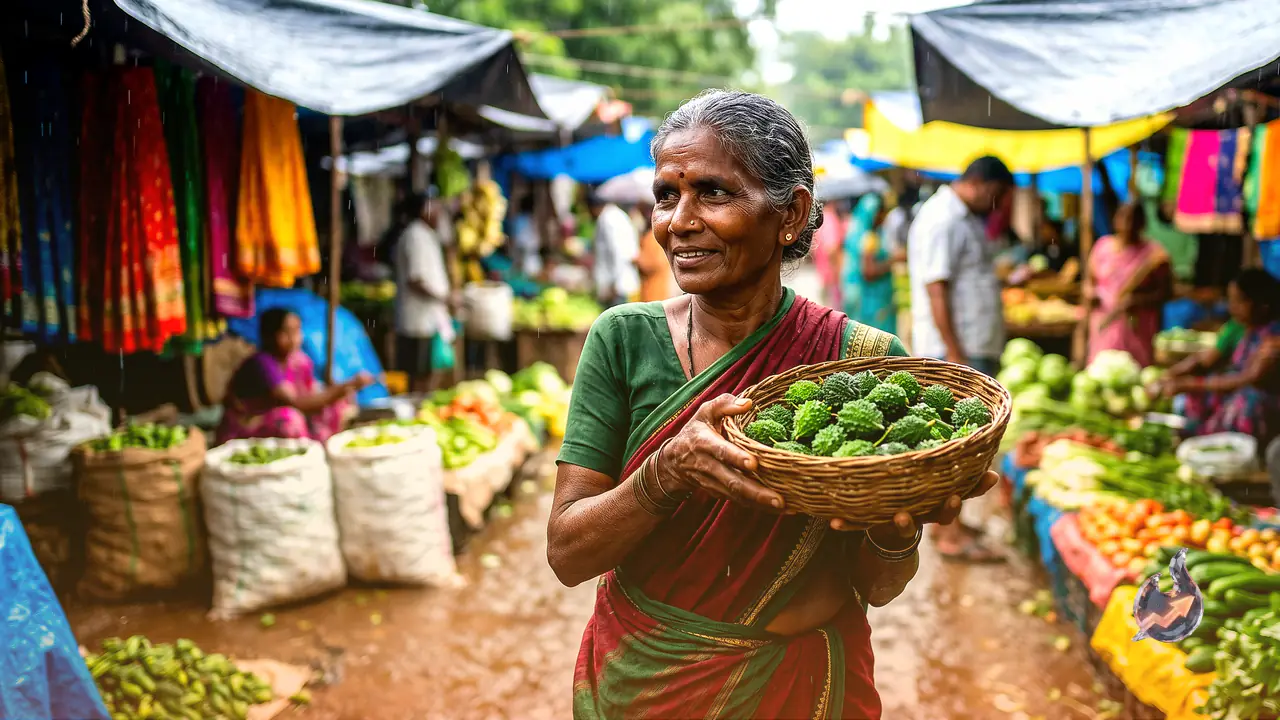

The moment the monsoon arrives, the look of vegetable markets changes completely. Produce that stays invisible through the rest of the year suddenly appears on the carts. One such native, seasonal vegetable is murela, which people casually call the little brother of the karela. The curious part is that despite being smaller in size, it beats the karela when it comes to bitterness.
One Season a Year, and Only for a Few Days
Murela is not something you can pick up around the year. It shows up in the market only during the rains, and its presence is so brief that many people do not even know its name. According to vegetable traders, it grows entirely on its own, without any farming, springing up in forests and bushes during the rainy season. That is exactly why its availability stays extremely limited.
Traders explain that the murela season begins around the same time as the kakoda vegetable, but it lasts for an even shorter spell. It comes just once a year and is barely available in the market for about a month. This scarcity is what keeps its demand strong. As for the price, it usually sells for between 50 and 80 rupees per kilo.
Cooked Like Karela, but Sharper on the Tongue
The way murela is cooked is almost identical to the karela, yet in taste it turns out even more bitter. Its small size hardly matters, because its properties set it apart from other vegetables. Locals count it among the most useful native vegetables of the early monsoon.
A Vegetable That Works Like Medicine
In rural areas murela is treated not merely as a vegetable but as food rich in medicinal value. In fact, it works rather like a herbal plant. It is packed with vitamins and minerals that help shield the body against several ailments.
This native vegetable is believed to boost the body's immunity, strengthen the digestive system and help guard against seasonal infections. Experts say that regular and balanced consumption of murela can help protect against seasonal fevers such as heat-driven fevers. Alongside this, it is also considered beneficial for eye health.
This is why people in villages still value it as a medicinal food. The vegetable may taste bitter on the tongue, but its health benefits place it firmly among the most special native vegetables of the rainy season.