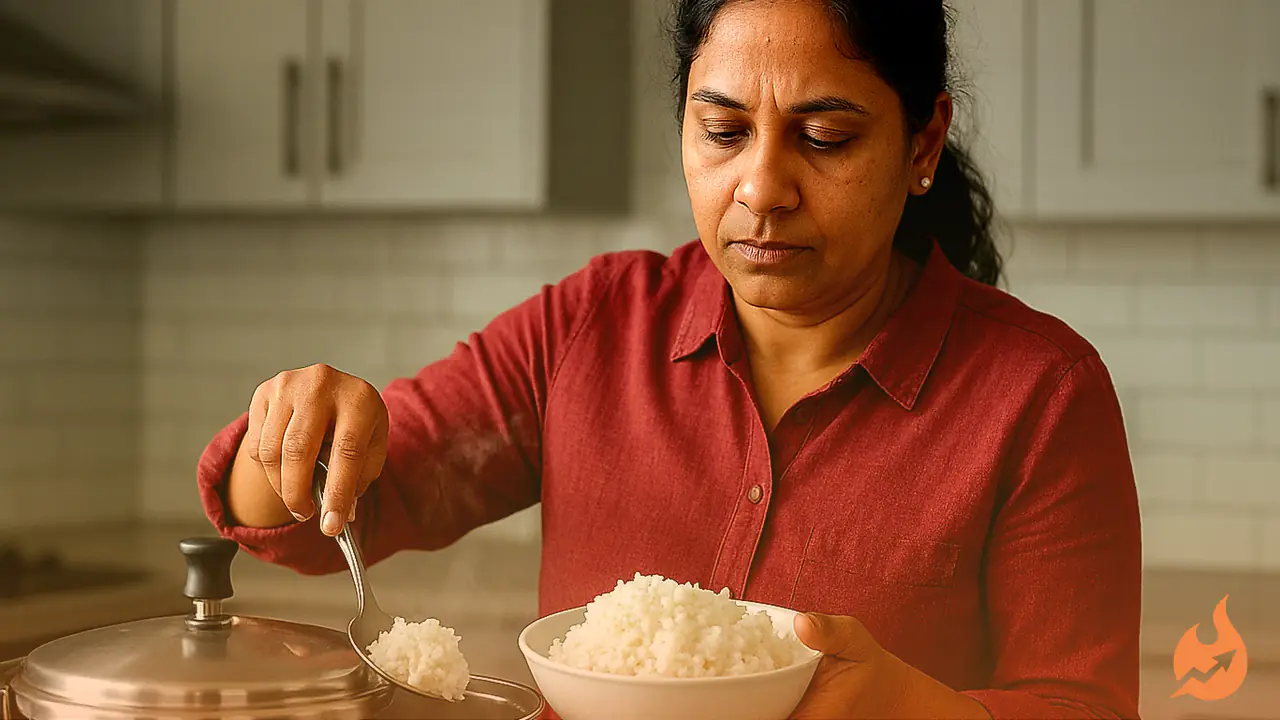

No Indian meal feels complete without rice, and in most homes it is served piping hot. That is precisely why rice usually goes on the stove just before everyone sits down to eat. When time is short and the food has to be ready fast, the pressure cooker becomes the most dependable tool in the kitchen. The catch is that getting light, separate grains out of a cooker takes a few small habits that many people simply never learn.
Because of that, one tiny slip — or a gap in know-how — leaves cooker rice either wet and sticky or scorched at the bottom. If this is a struggle you keep running into, the steps below will set it right.
It All Comes Down to Measuring the Water
Whether your cooker rice succeeds or fails is decided almost entirely by how much water goes in. Too little, and the grains risk burning; too much, and they clump together into a sticky mess. So never pour rice or water by guesswork — always measure both with the same glass or bowl so the ratio stays exact.
The rule of thumb is simple: for one glass of rice, add one and a half glasses of water using that same glass. If you are cooking two glasses of rice, then 3 glasses of water is the right amount. This balance is what lets the rice cook through properly.
How Many Whistles Make Perfect Rice
Rice does not take long to cook, so it does not need many whistles either. The flame and whistle count change with the quantity:
- For 3 glasses of rice or more, keep the gas on a high flame and switch it off after just one whistle.
- For 1 or 2 glasses of rice, keep the flame on medium and let a single whistle come.
One thing matters above all — do not open the cooker right after the whistle. Leave the lid shut until all the pressure inside has released on its own. During this time the rice settles properly inside, and when you finally open the lid, the grains come out light and separate.
Don't Make This Mistake While Washing
Before putting the rice into the cooker, rinse it only twice — no more than that. Washing it again and again makes the grains overly soft, which raises the risk of them turning wet and sticky once cooked.