Every year on 18 June, the country remembers Goa Revolution Day, and the reason lies in the events of 1946, when a historic sea of thousands gathered at the Madgaon square. This was no ordinary meeting. The crowd had come together to press its demand for freedom. It was on this very day that the people of Goa resolved to decide their own future. This was the spark that completely rattled the foundations of a 450-year-old Portuguese empire.
What surprises many is that the script for this entire revolution was not written in India, but in Germany, thousands of kilometres away. A meeting between two nationalist students at Berlin University gave birth to this movement. One of them was Dr. Juliao Menezes from Goa, and the other was Dr. Ram Manohar Lohia from Uttar Pradesh. Together, these two opened a front against Portuguese rule that changed the course of history.
A Meeting in Berlin That Laid the Groundwork for Goa's Freedom
The story begins in the closing years of the 1920s. It was during their studies at Berlin University that Dr. Menezes and Dr. Ram Manohar Lohia first crossed paths. Both young men carried the same dream in their hearts, to see their homeland free from foreign rule.
Once their studies ended, their paths did diverge. Dr. Lohia returned to India in 1933, while Dr. Menezes came back to Goa in 1938 with his medical degree in hand. Distance grew, but their goal stayed the same. They remained in constant touch and kept shaping their strategy. During the Quit India Movement, when Dr. Lohia had gone underground, it was Dr. Menezes who gave him shelter.
Lohia Comes to Goa to Rest, and a Plan for Rebellion Takes Shape
In 1946, when Dr. Lohia's health declined, Dr. Menezes brought him to Goa to recover. But instead of rest, a blueprint to uproot Portuguese rule began to take form here.
A string of secret meetings between the two leaders started in Goa's Assolna village. At that time, the Portuguese administration had imposed a complete ban on public gatherings of any kind. Defying that ban head-on, the two leaders addressed a large public meeting in Panaji on 15 June. This was an open violation of Portuguese law, and it sent people's spirits soaring.
The Evening of 18 June, When One Line by Lohia Stirred the Crowd
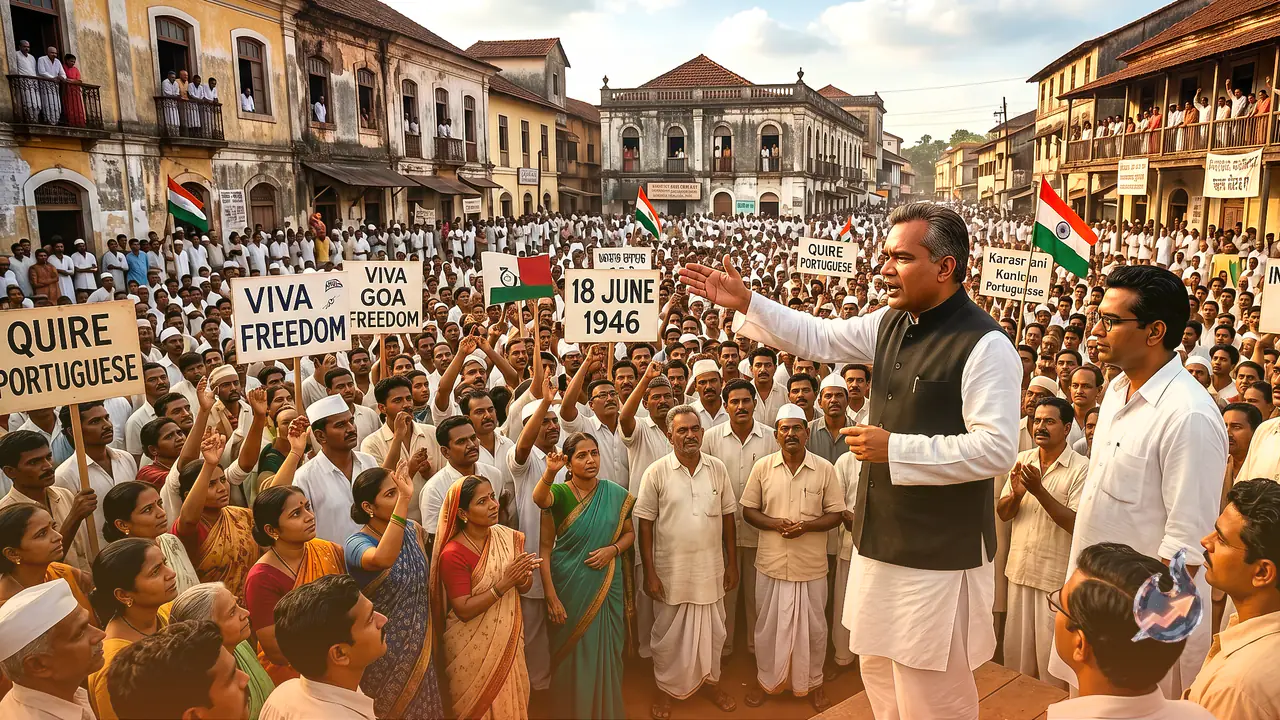
Soon after, a massive public meeting was called at the Madgaon square on 18 June 1946. Casting aside their fear of the police, thousands of locals took part. From the stage, Dr. Lohia and Dr. Menezes called on the people to stand up for their civic rights.
At this very meeting, Dr. Lohia stood before the crowd and declared, ‘Freedom is never received as charity; it has to be won through struggle’. His historic speech turned the anger that had been suppressed for years into a full-blown revolution.
The Arrests and the Public Fury That Erupted on the Streets
In the beginning, the Portuguese government had taken this movement very lightly. But the sight of the crowd at Madgaon left officials shaken. The administration hurriedly arrested Dr. Lohia and Dr. Menezes and quietly locked them up in a police station in Panaji.
The Portuguese were confident that the movement would die out the moment its leaders were jailed. But their assumption proved entirely wrong. The very next day, the news spread across Goa like wildfire. A flood of ordinary people poured onto the streets. Sit-in protests began at one place after another, and the demand for the release of both leaders echoed everywhere. Bowing to this immense pressure, the administration had to release Dr. Lohia outside the borders of Goa, while Dr. Menezes was set free in Madgaon itself.
Operation Vijay in 1961 and the End of Four and a Half Centuries of Rule
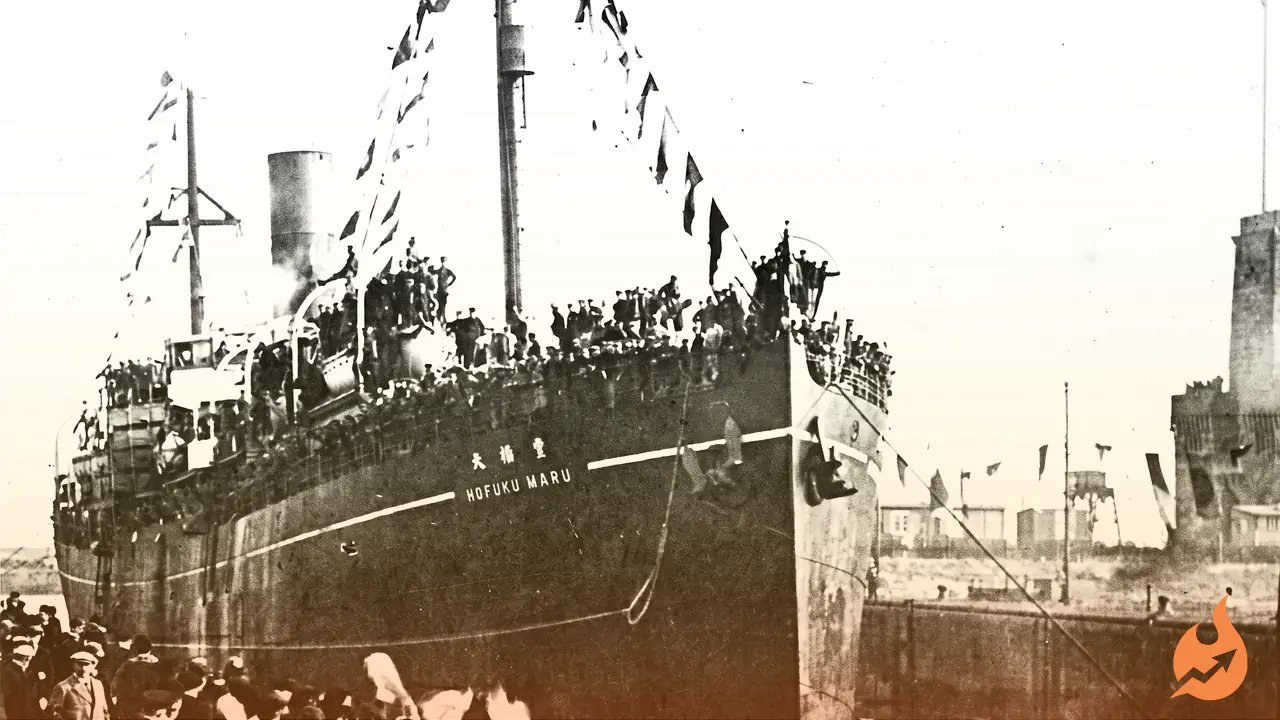
This movement erased the fear of foreign rule from the minds of Goa's people forever. In 1947, India won its freedom from the British, but Goa was still under Portuguese control. The Portuguese had been entrenched in India since the arrival of Vasco da Gama in 1498, and they were unwilling to give up Goa at any cost.
Even so, the struggle of the people of Goa continued without pause. Finally, in 1961, the Indian government took a major decision. The Indian Army launched ‘Operation Vijay’ on 19 December 1961, and within just 36 hours, the Portuguese forces surrendered before the Indian troops. In this way, a repressive rule nearly four and a half centuries old came to an end forever. India still calls it the liberation of Goa, while Portugal viewed it as an act of aggression against itself.