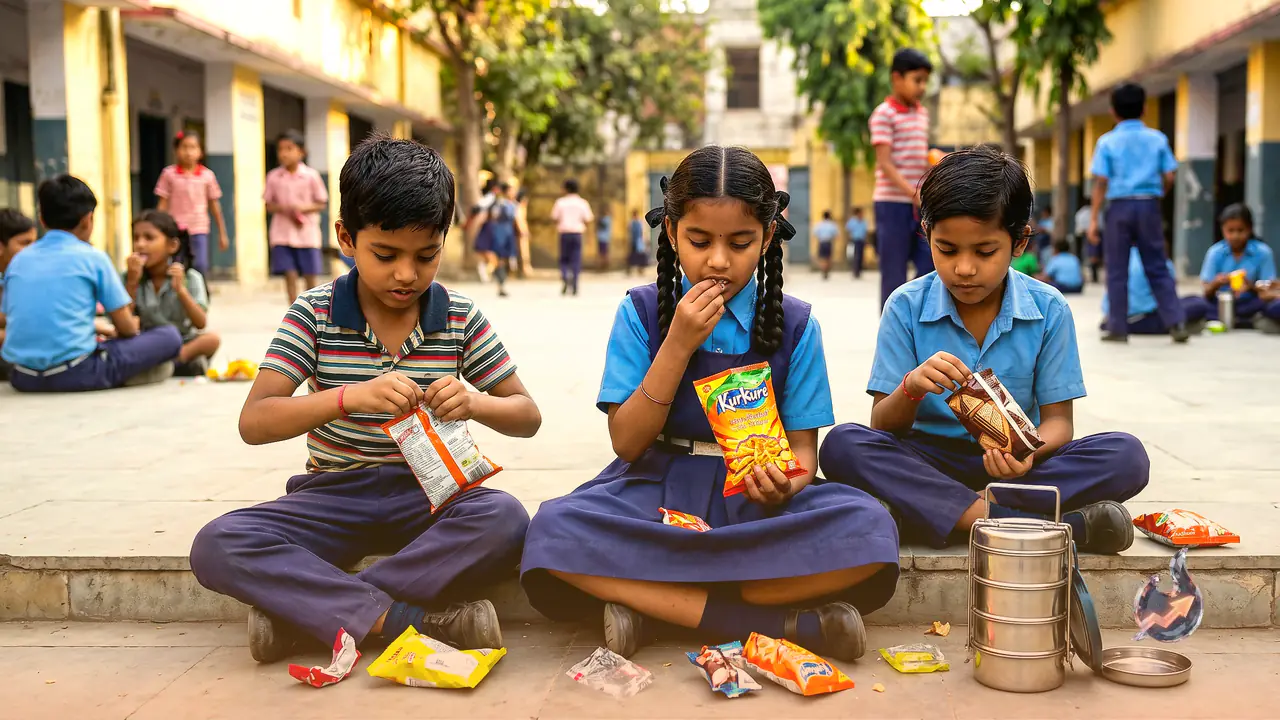

In many Indian homes, the lunch plate is steadily being replaced by the snack packet. Chips, savoury packs and assorted packaged snacks have become the easiest way to silence a child's hunger through the day. Things have reached a point where a large number of children now fill themselves up on these snacks rather than sitting down to a proper meal. Awareness drives are plenty, yet a great many parents are still unable to pull their children out of this unhealthy habit.
Why the snack dependence is worrying
Experts believe this habit can damage both the physical and mental development of children. Alongside it, obesity is spreading fast among the young. On one side, time spent playing and moving is shrinking, and on the other, screen time keeps climbing. It is exactly this imbalance that can turn into serious health problems later in life.
What Sonali Khan said
These points were raised by Sonali Khan, Managing Director of Sesame Workshop India. According to her, the organisation has long been working to build awareness among children and their parents. The programmes of Sesame Street and Sesame Workshop India are watched in more than 150 countries around the world, including India. She explained that the organisation works on the development and education of children from birth up to the age of 8, using storytelling, awareness programmes and a range of activities to nudge both children and their parents towards a healthier lifestyle.
With that same aim, the organisation carried out a study in 2025 on more than 200 children in Lucknow, the capital of Uttar Pradesh, under its 'Healthy Habits' campaign. The campaign also received the support of the Uttar Pradesh government.
Tasty but short on nutrition
The picture that emerged from the study is one that demands attention. Many parents are handing children snacks that may score high on taste but fall short on nutrition. Eating them constantly has made children shy away from regular meals, green vegetables and wholesome food. Sonali Khan points out that when children simply do not get the nutrients they need, the effect on the growth of their body and mind is inevitable.
Activity, not weight, is the real measure
Sonali Khan also dismantled a common myth. She said a child being overweight is no guarantee of good health or fitness, and in the same way being excessively thin cannot be read as a sign of being healthy. What truly matters is how active a child is and how balanced their daily routine is. According to her, the years from birth to age 8 are the most precious for the development of a child's brain and body. That is why parents must pay special attention to their children's diet, routine and activities during this period. Giving them enough time, providing nutritious food and encouraging physical activity are all essential.
Play and good habits are the foundation
Sonali Khan said her organisation is also trying to build healthy habits in children through yoga and other activities. Her clear view is that regular play is vital for children, and the biggest responsibility for shaping these good habits rests with parents. She urged guardians to teach children from an early age to wash their hands before eating, maintain cleanliness, wear clean clothes and eat a balanced diet. She believes that good habits formed in childhood stay with a person for life. This is precisely why feeding children nutritious, balanced meals is far more beneficial than handing them junk food and endless snacks.