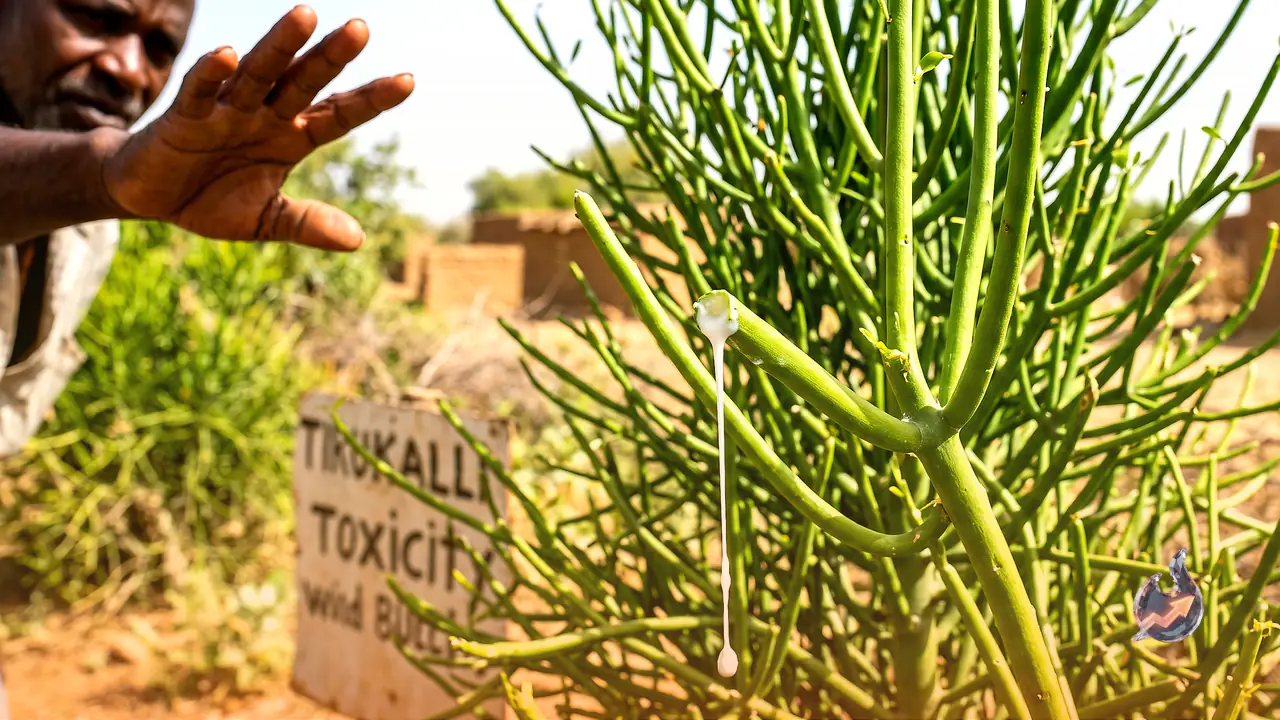

Some plants look ordinary at first glance, yet hold a special place in traditional medicine. Tirukalli is one of them. Known to many as the milky plant, thor or milk bush, its most striking feature lies hidden inside its stems and branches: a white, milk-like sap called latex. Ayurveda treats this plant as medicinally valuable, and its different parts have been used for years in traditional external remedies.
Help With Respiratory Trouble
According to Dr. Priyanka Singh, a well-known Ayurvedic practitioner from Ballia, the limited and controlled use of Tirukalli is considered beneficial for breathing-related problems. In traditional systems of medicine, its sap has been used for complaints such as cough, cold and asthma. In rural areas, people still recognise it as a home remedy. In Ballia, the plant is found easily in many places, including gardens.
Relief From Pain and Swelling
The plant's milky latex is believed to have the ability to ease pain. Its limited use is mentioned for conditions such as arthritis, nerve pain and earache. According to those familiar with Ayurveda, it is also regarded as helpful in reducing swelling and has traditionally been used as a pain reliever.
A Traditional Belief Around Bones and Fractures
In villages, even the bark of Tirukalli is considered significant, though it is never consumed directly. As per tradition, the bark is tied in a piece of cloth to make a small bundle, which is then placed on the fractured area. It is believed that this can reduce pain and swelling and support the process of bones knitting together. Even so, it should always be used under the supervision of an expert.
For Skin-Related Problems
This medicinal plant is also considered useful for several skin troubles. It is said to contain antibacterial properties, which is why it has traditionally been used for issues such as ringworm, itching, infections and warts. Some people even claim that applying its sap to the skin brings relief. However, those with sensitive skin should use it externally only with great caution.
Digestion and Animal Care
Used correctly and in limited quantity, Tirukalli is also considered helpful for problems linked to the digestive system. Its root or stem has traditionally been used for stomach pain and cramps. It also has a distinct standing among livestock owners, as it has long been adopted as a home remedy for digestive troubles in animals.
A Folk Belief About Snakebite
In folk medicine, the root of Tirukalli has also been linked to the treatment of snakebite. But caution is essential here, because modern medicine is clear that the first and most important step after a snakebite is to reach a hospital immediately and receive proper treatment. Despite this, the plant continues to hold an important place in traditional medicine. In serious situations, it should never be used without a doctor's advice.
Important Cautions and Side Effects
Great care is needed with Tirukalli, because its milky sap is toxic and can cause intense burning on the skin. If this sap gets into the eyes, it can cause serious harm. Consuming it in large amounts can lead to problems such as vomiting, diarrhoea and headache. Pregnant women should stay away from it. It is not taken orally, and its use is considered appropriate only externally. In short, using it without expert advice can prove harmful.