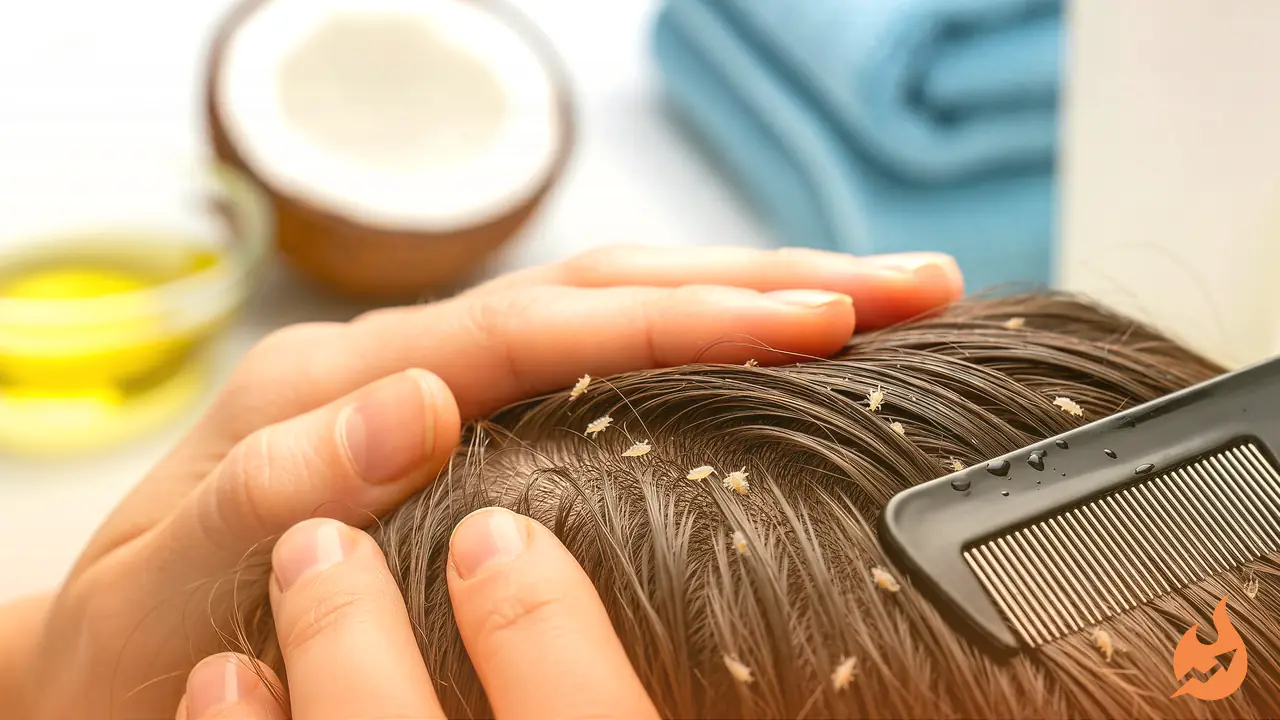

Constant itching on the scalp, a creeping sensation on the head and the urge to scratch again and again—if you or your child are noticing these signs, head lice could well be the cause. Contrary to popular belief, this is not a problem limited to children; adults can be affected too. The trouble is seen far more often among school-going children, people who share a single comb, and those with long hair.
The reassuring part is that you don't have to rush to harsh chemical products every single time. A few safe home remedies, used correctly, can bring the problem largely under control—without harming your hair in the process.
Understanding Lice: Why They Happen and How They Spread
Lice are tiny parasites that live close to the scalp and feed on blood for nourishment. Importantly, they neither fly nor jump—they pass from one person to another only through direct contact. Among children, head-to-head contact and the shared use of a pillow, comb, cap or hair accessory are the most common reasons behind an infestation.
Once lice take hold, the usual signs are an itchy scalp, small white eggs (nits) clinging to the roots of the hair, and a general feeling of restlessness. These very symptoms are what help you identify the problem early.
Home Remedies That Can Offer Relief
Coconut Oil With a Fine-Tooth Comb
The biggest advantage of coconut oil is that it slows the movement of lice, making them easier to remove from the hair. The method is simple—apply the oil, leave it on for about 30–40 minutes, and then gently work through the hair with a fine-tooth comb. This is precisely why the trick has been passed down through generations in many families: it also causes less damage to the hair.
Wet Combing
Experts often recommend wet combing—removing lice from damp hair. To do this, dampen the hair lightly, apply conditioner, divide the hair into small sections and then comb through them. The method does call for patience, but done regularly, it can deliver good results.
Using Neem
Neem has long been a part of traditional home care. Neem leaves can be boiled, the water cooled, and then used to wash the hair. Some people also use neem oil in limited amounts. One precaution is essential, though—if any oil or home ingredient causes irritation on the skin, its use should be stopped right away.
Washing Hair Alone Isn't Enough—Clean These Items Too
When tackling lice, cleaning the scalp alone is not a complete fix. It is equally important to clean pillow covers, towels, combs and other items used on the hair. If one member of the household has lice, it makes sense to check everyone else's hair as well—this sharply reduces the chances of re-infection.
Mistakes to Avoid
Many remedies found online suggest applying kerosene, harsh chemicals or excessive vinegar. Such experiments can damage both the skin and the hair. In the same way, repeatedly switching between different medicines is not considered the right approach either.
People often dash straight to medicines or strong shampoos the moment they spot lice, when in fact home care and regular cleaning can show plenty of effect on their own.
When to See a Doctor
If the lice persist even after several days of home remedies, if sores appear on the scalp, the skin turns red, or the child becomes increasingly distressed, then consulting a specialist becomes necessary. With timely, accurate identification and proper care, this is a problem that is entirely manageable.