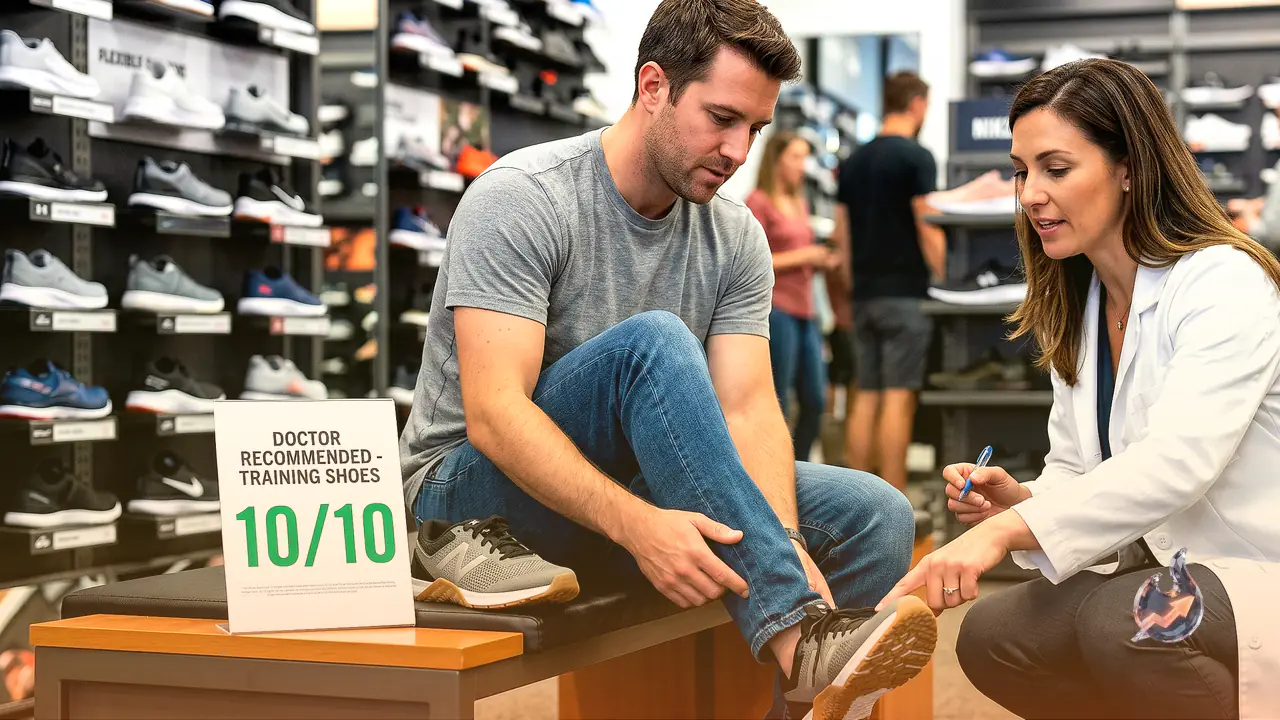

When buying shoes, most people look only at the size. And it is true that a wrong size leads to foot pain and the urge to pull the shoe off the moment you wear it. But from a health point of view there is one more thing that matters just as much, and that is the quality of the shoe, expressed as a rating. If that rating is poor, the shoe can directly harm your health.
Recently, orthopedic surgeon and integrative medicine specialist Dr. Kiran Shete shared ratings for different kinds of footwear on social media. He placed training shoes right at the top with 10/10, while slip-ons and cheap flexible shoes sat at the very bottom.
What the rating actually means
Speaking to TrendKia, Dr. Rakesh Nair, consultant and knee replacement surgeon at Zen Multispeciality Hospital, Chembur, explained the idea behind the score. According to him, the number reflects how good a shoe is medically, out of 10. The whole purpose is to help people pick the right pair, because the wrong shoes can damage the feet, ankles, knees and even the spine.
Running shoes: 8/10
Dr. Shete rated running shoes 8/10, and Dr. Rakesh Nair agrees with that score. According to Dr. Nair, their better cushioning and shock absorption make them the best choice for walking, jogging and everyday use, since they reduce the pressure on the knees and feet while you move around. Even so, they are not ideal for every activity. Despite absorbing shock well, many running shoes fail to give the feet enough side support during gym workouts or sudden change-of-direction movements.
Training shoes: 10/10
The highest rating goes to training shoes. Dr. Nair explains that, unlike heavily cushioned running shoes, these are designed for stability and firmness of the feet. That is why they are so helpful in maintaining balance during strength training, gym workouts and functional exercise. Their design improves foot stability and lowers the risk of injury during a workout. If your routine includes squats, lunges or weight lifting, they can be among the safest options for you.
Slip-on shoes: 3/10
Slip-ons received a fairly low score. The reason is that they usually do not give the foot good grip and firmness, so the foot keeps shifting around inside them while you walk. This movement raises the risk of losing balance, twisting an ankle or straining the foot, and the trouble grows when you walk or stand for long stretches. They are convenient for short errands or casual use, but they are not considered a good choice for wearing over long periods.
Light, low-support minimalist shoes: 6/10
Minimalist shoes were given an average rating. They encourage the natural movement and flexibility of the foot, but they are not right for everyone. According to Dr. Nair, while some people get used to them, others, especially beginners or those with an existing foot problem, may have to deal with extra strain on the muscles of the feet and calves because of the reduced cushioning and support.
High-cushion shoes: 6/10
Heavily cushioned shoes also earned only an average score. Their extremely soft soles can feel very comfortable at first, but too much cushioning can sometimes reduce the stability of the feet. This becomes a problem especially during workouts or movements where the foot needs to stay firmly planted on the ground. Experts believe that comfort alone does not mean proper support.
Cheap flexible shoes: 2/10
The lowest rating of all goes to these shoes. Such weak footwear often lacks the right support for the sole, proper shock absorption and structural firmness. Over time, the missing support can throw the alignment of the feet out of place and put extra load on the joints. A shoe that bends easily may feel light and comfortable in the beginning, but experts warn that, in the long run, the support it gives the foot matters far more.