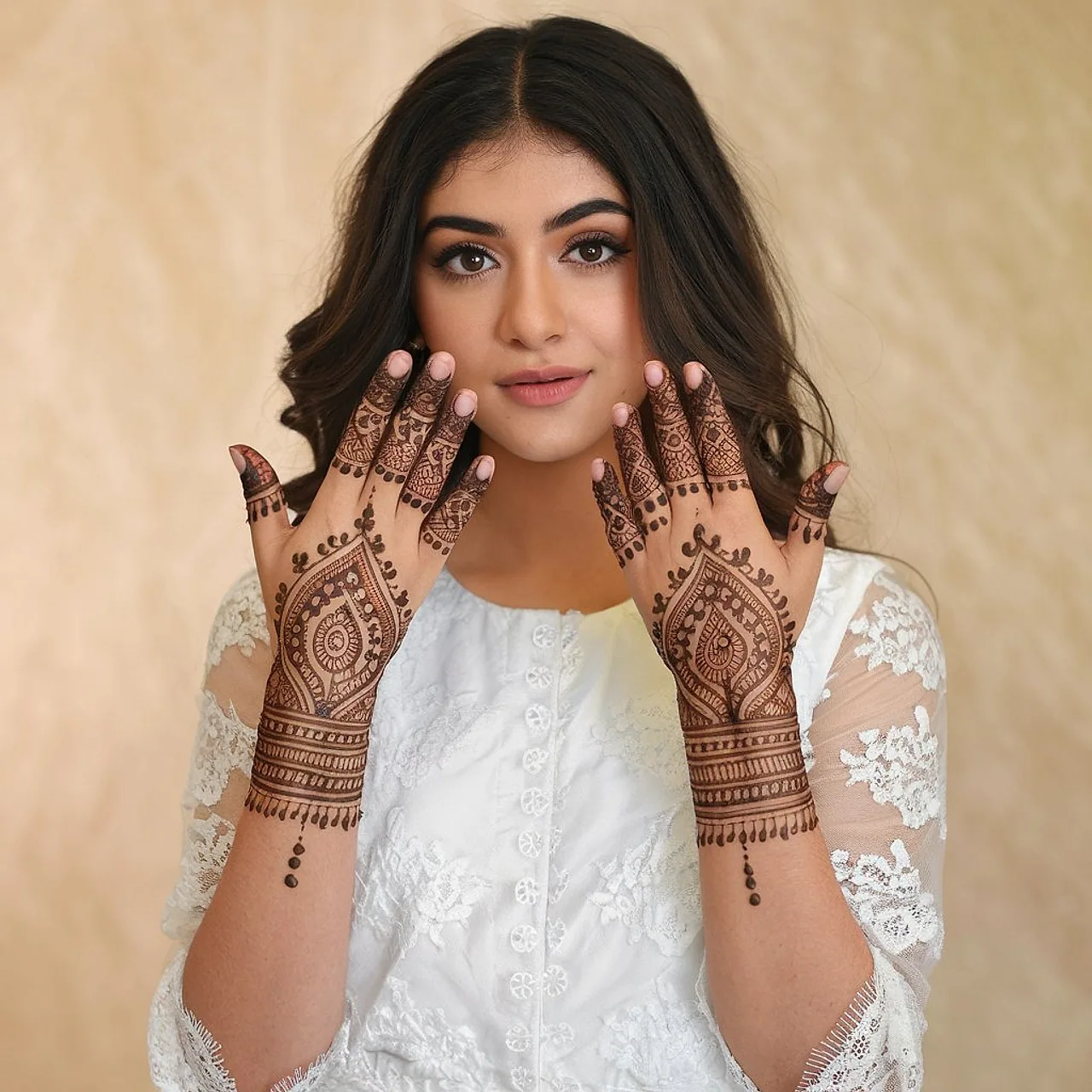

The intricate mehndi on a bride's hands and feet has become a defining image of every Indian wedding. Yet this is far more than a decorative ritual. Behind it lie centuries-old beliefs, religious faith and even health-related reasons that make the custom feel all the more meaningful once you understand them.
A Tradition Thousands of Years Old
In Indian civilisation, mehndi has long been regarded as a mark of auspiciousness, good fortune and a happy married life. Its use is nothing new — it is a practice that goes back thousands of years. Whether in the ancient civilisation of Egypt or during India's Mughal era, it always held a place of special importance.
In Vedic beliefs, mehndi is linked with love, prosperity and fertility. Perhaps that is why, even today, the custom of adorning a bride's hands and feet with beautiful mehndi before her wedding is carried out with such devotion.
Not Just Colour, but a Health Angle Too
What is interesting is that mehndi is said to contain certain properties that can help with skin care. According to traditional beliefs, it is considered helpful in guarding against some skin-related problems. Beyond that, it has long been used to cool the body and to ease troubles such as headaches and fatigue.
A Symbol of a Fresh, Joyful Start
Within Indian culture, mehndi is held to be deeply auspicious. At a wedding, it is seen as a sign of the happy beginning of the bride's new life. The peacocks, lotuses and other traditional motifs woven into mehndi designs are not drawn at random — they carry messages of love, beauty, purity and prosperity.
Dark Colour and the Bond of Love
A popular belief tied to wedding rituals holds that the darker the colour of the bride's mehndi, the greater the love of her husband and in-laws. There may be no scientific proof for this, yet the notion remains widely cherished among people even now.
Religious Faith and Positive Energy
From a religious standpoint, mehndi is viewed as a symbol of fertility, love and good luck. It is believed that its reddish-brown hue keeps negative energy at bay and brings happiness and prosperity into the lives of the newlywed couple.
Today's Mehndi and the Real Benefits
In present times, however, mehndi is mostly treated as nothing more than a part of beautification. This is why chemicals have begun to be mixed into it to achieve a darker shade. If you want the genuine benefits of mehndi, use plain, real henna only. For this, the leaves of the henna plant can be ground and filled into a cone, and to deepen the colour, lemon juice can be added to it.