
A Soybean Seed Shortage Is Creating a Real Risk for Farmers This Kharif Season
Monsoon rains are nearly at the doorstep of Madhya Pradesh. The moment the first good shower soaks the soil three to four inches deep, farmers across the state will begin their kharif sowing. But this season comes loaded with a particular worry: soybean seeds are in critically short supply, and whatever is available in the market is being sold at very high prices. Facing this shortage, many farmers are planning to sow using seed they have stored at home from the previous year's harvest. The risk here is serious. If those home-stored seeds carry poor germination, the entire sowing effort fails. Farmers are then forced to source fresh seed and fertilizer all over again for a second sowing, which effectively doubles their input costs and causes significant financial stress.
The Window Before Monsoon Is the Right Time to Test Your Seeds
Dr. K.S. Yadav, a scientist at the Sagar Krishi Vigyan Kendra in Sagar, says that the days remaining before the monsoon arrives are the best opportunity to verify seed quality. His advice covers all the major kharif crops: soybean, urad, maize, moong, sesame, paddy and arhar. Whatever crop a farmer intends to sow, the first step is to gather the seed and assess it. Certified seeds and foundation seeds supplied through agricultural institutions are already tested and carry a quality guarantee. It is the seeds stored at home that require extra care this season, particularly given how tight the soybean seed supply has become.
The Wet Jute Sack Test: A Simple Method Anyone Can Do at Home
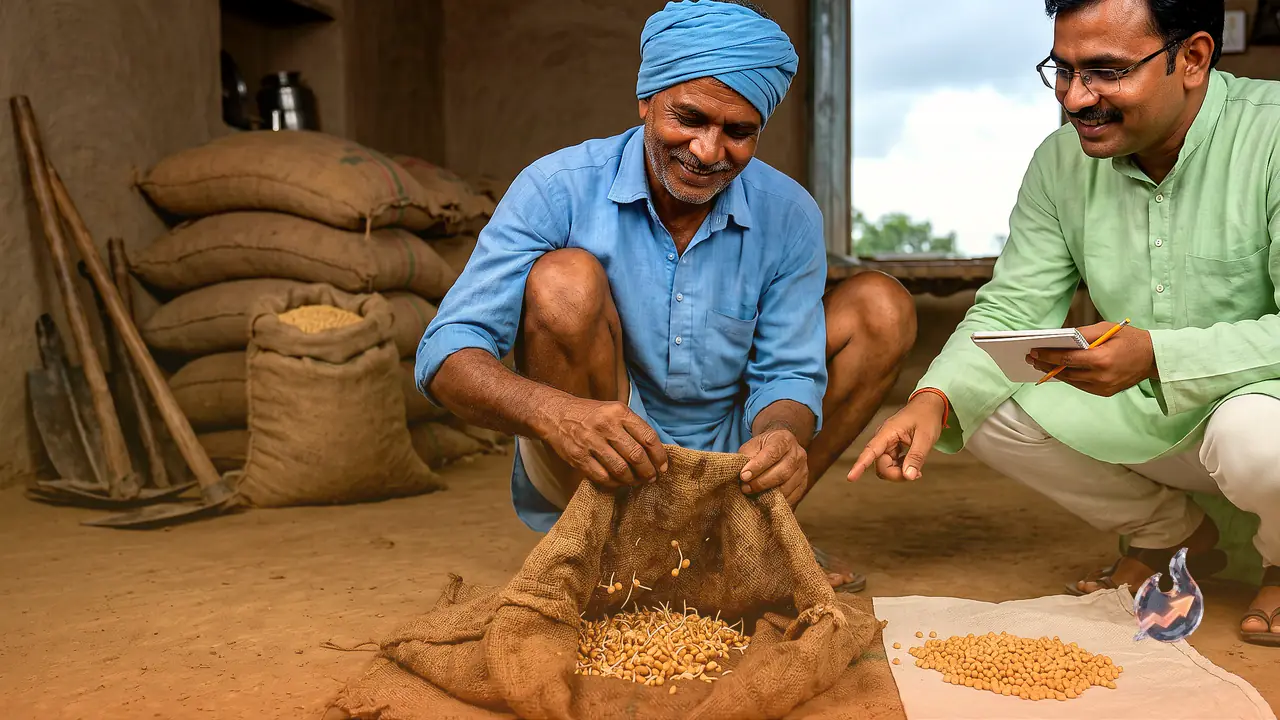
For farmers who want to check their seeds without travelling to the field, Dr. Yadav recommends a method that requires nothing more than a jute sack and water. Soak the sack thoroughly until it is fully damp. From the seed stock you plan to sow, pick up a random fistful of seeds, count them carefully and place them inside the wet sack. After a few days, count how many of those seeds have sprouted. The germination ratio you see in that sample is a reliable indicator of what the entire seed lot will do once it goes into the ground.
The 500-Seed Row Test for the Field
Farmers who prefer to run their germination test directly in the field also have a proven method available. Sort through your seed stock, select good-quality grains and set aside 500 of them. Sow these in five rows of 100 seeds each and wait for them to germinate. The count of sprouted plants gives you a precise germination percentage that can then guide your planning for the main sowing operation.
Using the Test Results to Set the Right Seed Rate
According to Dr. Yadav, if more than 70 seeds out of your test sample germinate, your seed is of high quality and can be used with confidence. The recommended sowing rate for good seed is 75 to 80 kg per hectare, which works out to 35 kg per acre. If the test shows germination at only 60 or 65 seeds, the seed is not wasted. The correct response is to increase the quantity sown by 20 to 25 percent relative to the standard rate. That adjustment compensates for the lower germination rate and ensures adequate plant density in the field.
Seed Treatment Before Sowing Is Non-Negotiable
Dr. Yadav also makes clear that testing germination is only part of the preparation. Before sowing starts, every batch of seed must go through seed treatment. This step shields the crop from seed-borne diseases and from pathogens lurking in the soil, and it also promotes stronger and more uniform germination across the entire field.