






















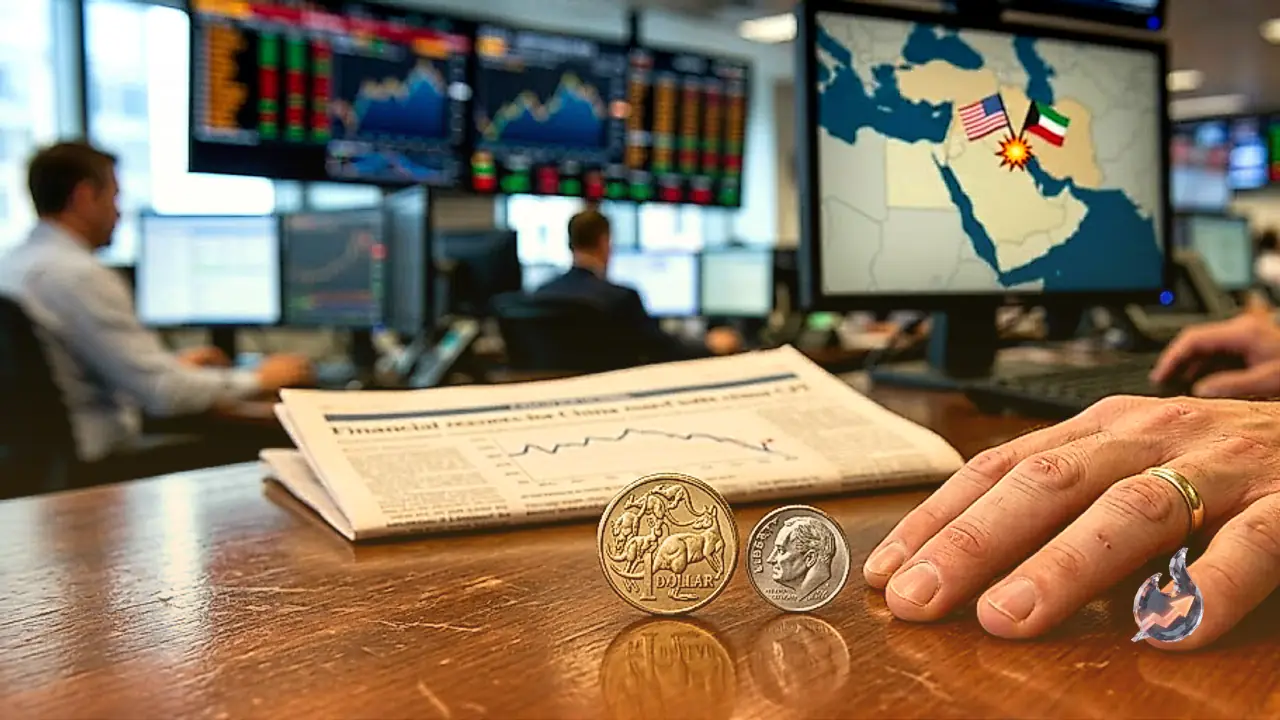

The AUD/USD currency pair is demonstrating resilience despite China's June CPI inflation data coming in softer than anticipated, showing a deceleration from earlier figures. Meanwhile, the minutes from the FOMC meeting indicate that policymakers remain divided on whether to maintain the current 3.6% interest rate or implement an increase. Compounding these factors, escalating friction between the US and Iran has intensified the demand for safe-haven assets, pushing the market-implied probability of a rate hike above 30%.
Chinese Inflation and Economic Context
Data provided by the National Bureau of Statistics (NBS) of China indicates that annual inflation for June reached 1.0%, down from 1.2% in May. The consensus among market analysts had pointed toward 1.1% for the period. On a monthly basis, CPI inflation recorded a -0.3% change, which is deeper than the 0.1% decline observed previously and softer than the 0.2% drop that had been anticipated.
Geopolitical Tensions and the Greenback
Despite these economic indicators, the downside risk for the US Dollar appears contained. Renewed tensions between the US and Iran are stoking fears of energy-driven inflation, which in turn boosts demand for the USD as a safe-haven asset. This geopolitical volatility has reinforced beliefs that the Federal Reserve may be compelled to keep interest rates higher for longer to mitigate stubborn price pressures. According to the CME FedWatch tool, swap traders have adjusted the likelihood of a rate hike in the upcoming Fed meeting to over 30%, marking a sharp increase from less than 20% just a week prior.
Statements by Donald Trump
Heightening the situation, US President Donald Trump stated on Wednesday that any interim agreement aimed at resolving the conflict with Iran was now officially over. The US President further threatened additional airstrikes and declared an intention to reimpose a naval blockade in retaliation for recent incidents involving oil tankers transiting the Strait of Hormuz.
Key Drivers of the Australian Dollar
One of the most vital factors influencing the Australian Dollar (AUD) is the interest rate environment established by the Reserve Bank of Australia (RBA). As Australia is a resource-heavy economy, the valuation of its primary export, Iron Ore, acts as another major determinant. Additionally, the economic health of China—Australia's largest trading partner—coupled with domestic inflation, growth rates, and the Trade Balance, play critical roles. Market sentiment regarding risk appetite also significantly impacts the AUD, with risk-on environments generally benefiting the currency.
RBA Policy Influence
The Reserve Bank of Australia steers the AUD by setting interbank lending rates, which effectively influence the broader economy's interest rate environment. The RBA’s primary mandate is to maintain inflation within a 2-3% target range through proactive adjustments. Higher interest rates relative to other major central banks typically support the AUD. Furthermore, the RBA utilizes monetary tools like quantitative easing or tightening to manage credit conditions, impacting currency valuation accordingly.
Dependency on the Chinese Economy
Given that China is Australia's primary trading partner, the vitality of the Chinese economy is a fundamental influence on AUD value. When the Chinese economy thrives, its increased demand for raw materials and services from Australia drives up demand for the AUD. Conversely, growth that fails to meet expectations often results in downward pressure on the currency.
Iron Ore and Trade Balance
Iron Ore remains Australia's leading export, with 2021 data placing its annual value at $118 billion, primarily destined for China. Consequently, fluctuations in Iron Ore prices directly correlate with the AUD's performance; rising prices often boost the currency by increasing aggregate demand. A positive Trade Balance, reflecting higher export earnings relative to import costs, further strengthens the currency, whereas a negative balance typically exerts a weakening effect.