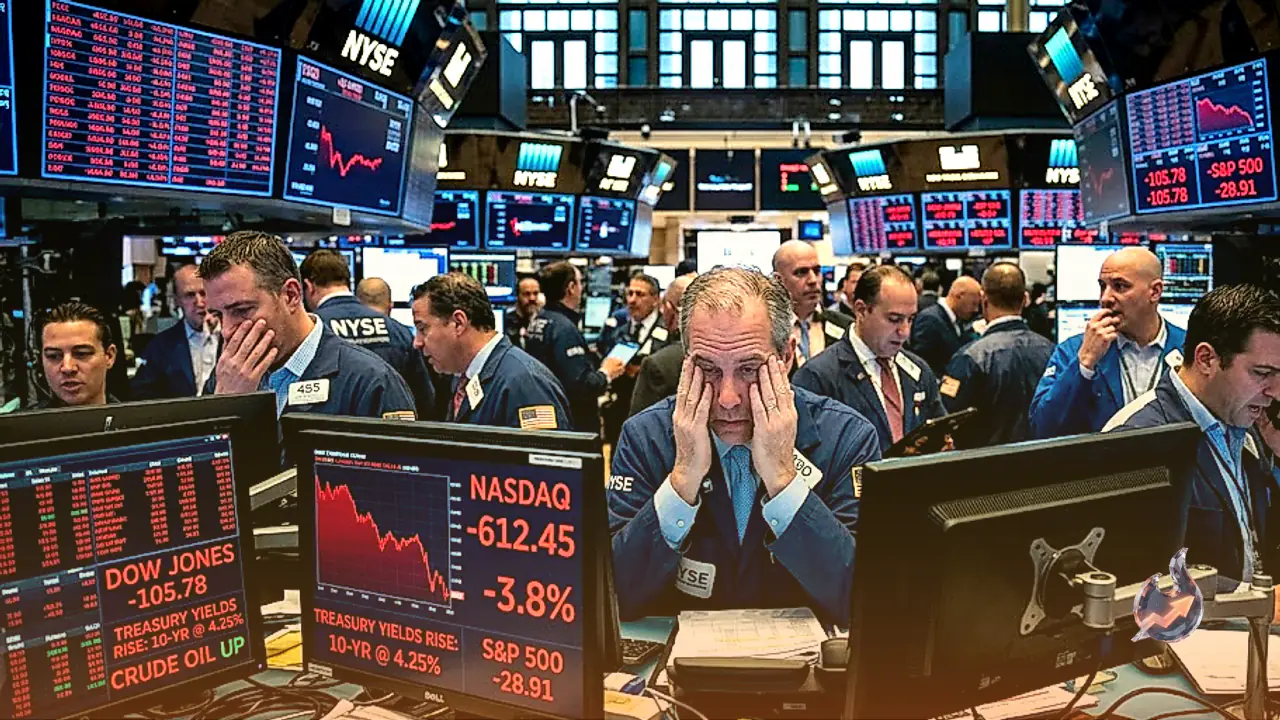
























Gold prices drifted lower to near the $4,075 level during Thursday's early Asian trading session. The precious metal is facing pressure as global market sentiment shifts amid rising geopolitical risks and evolving economic outlooks. While gold typically serves as a hedge against market volatility, current developments have introduced a complex dynamic for investors tracking its performance.
Renewed Tensions and Inflation Concerns
The situation in the Middle East has intensified following statements from Donald Trump, who indicated that the interim ceasefire agreement aimed at resolving the conflict with Iran is now effectively over. Furthermore, the US President has threatened potential military action against Iran and the reimposition of a US naval blockade in response to incidents involving tankers in the Strait of Hormuz. These developments have heightened fears regarding energy-driven inflation. According to David Meger, director of metals trading at High Ridge Futures, the escalation of tensions between the US and Iran has diminished the appetite for risk assets, with gold prices feeling the impact as the potential for a stable ceasefire diminishes.
Federal Reserve Outlook and Rate Hike Speculation
Market participants are closely watching the Federal Reserve, with interest rate hike expectations gaining momentum. Data from the CME FedWatch tool suggests that swap traders now price the likelihood of a rate hike at the next Fed meeting at over 30%, a significant jump from less than 20% just last Thursday. The minutes from the Federal Reserve's June 16-17 meeting, released on Wednesday, revealed that policymakers were divided regarding the path of interest rates. While the consensus supported maintaining the current rates, a segment of the committee pointed to a valid case for hiking them. These minutes highlighted a growing concern among officials regarding persistent inflation, even as anxieties surrounding the labor market have begun to subside slightly.
The Strategic Role of Gold in Global Markets
Gold has historically functioned as a foundational store of value and a reliable medium of exchange. In the modern financial era, beyond its ornamental appeal in jewelry, it remains a quintessential safe-haven asset. Investors often turn to gold during periods of economic turbulence to protect their wealth. As an asset that does not rely on any specific government or issuer, gold serves as a critical hedge against both currency depreciation and high inflation.
Central Bank Accumulation Patterns
Central banks represent the largest institutional holders of gold. To fortify their reserves and bolster the perceived stability of their national economies during uncertain times, these institutions frequently diversify their holdings into the yellow metal. Data provided by the World Gold Council shows that central banks added 1,136 tonnes of gold, valued at approximately $70 billion, to their reserves in 2022. This represents the largest annual acquisition since record-keeping began. Notably, central banks in emerging markets, including China, India, and Turkey, are leading the charge in aggressively expanding their gold reserves.
Market Correlations and Price Dynamics
Gold exhibits an inverse correlation with both the US Dollar and US Treasuries, which are also viewed as primary safe-haven assets. When the value of the dollar declines, gold often experiences upward momentum, providing a mechanism for central banks and investors to hedge against volatility. Additionally, gold tends to maintain an inverse relationship with risk-on assets; rallies in the equity markets can exert downward pressure on gold, while market sell-offs typically enhance its appeal. The price of gold is influenced by a diverse array of factors, including geopolitical stability and recessionary fears. As a yield-less asset, gold often thrives in low-interest-rate environments, whereas higher interest rates can weigh on its performance. Ultimately, because gold is priced in US Dollars (XAU/USD), its movement is deeply tied to the strength of the greenback; a stronger dollar keeps gold prices in check, while a weaker dollar provides fuel for potential rallies.