























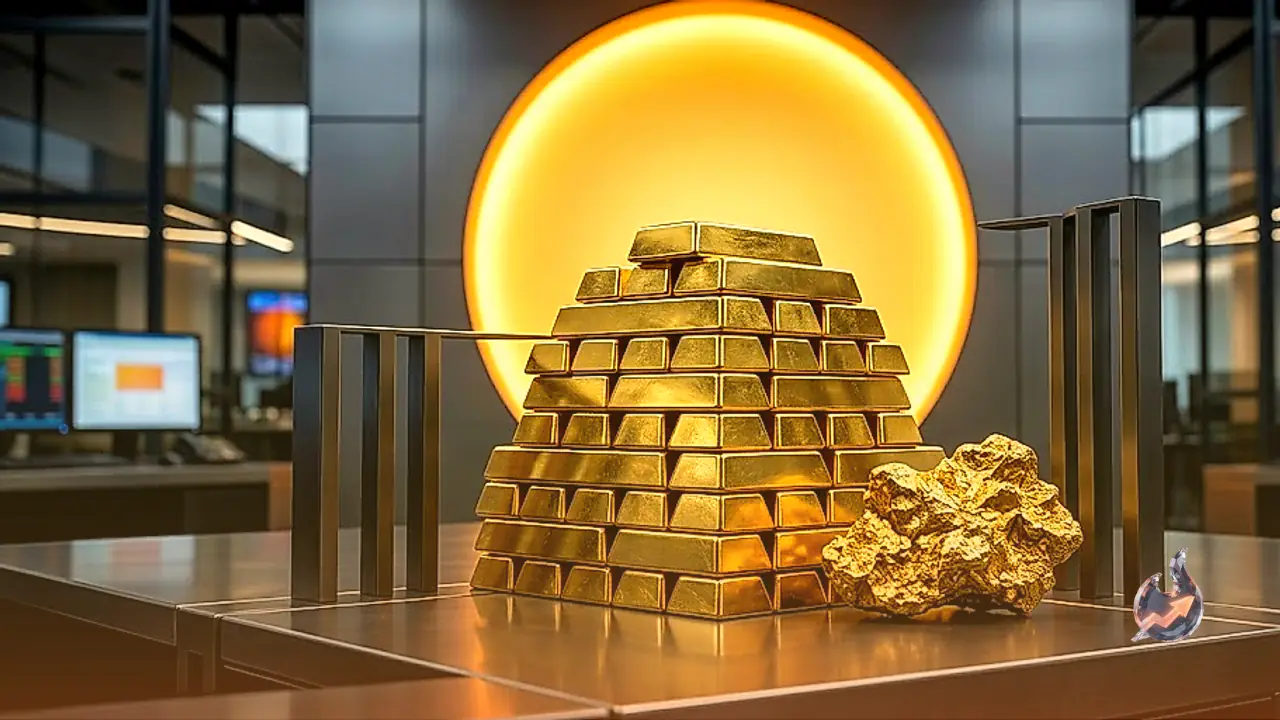

The price of Gold has witnessed a recovery, edging higher to nearly $4,120 in the early Asian session this Friday. This upward movement comes as traders continue to assess the escalating geopolitical risks between the US and Iran. The precious metal is currently trading as a safe-haven asset, reacting to the fears of renewed conflict in the Middle East, though the potential for hawkish policy adjustments from the Federal Reserve remains a factor that could cap further gains.
Federal Reserve Outlook
Market sentiment is being shaped by the latest minutes from the Federal Reserve, which reveal a divided stance among policymakers regarding future interest rate paths. According to the records, many participants suggested that the federal funds rate should ideally sit within or slightly below the current target range by the end of the year. Conversely, many other participants argued that the appropriate level would be above the current range. This uncertainty, often referred to as a hawkish expectation, poses a challenge for Gold, as it is a non-yielding asset that generally struggles when interest rates rise.
The Role of Gold as a Store of Value
Gold has served as a critical store of value and a medium of exchange throughout human history. Beyond its traditional use in jewelry, the metal is widely regarded as a safe-haven asset, offering protection during periods of economic turbulence. As an asset that does not rely on any specific government or issuer, Gold acts as a significant hedge against both inflation and the depreciation of currencies, making it a preferred choice for investors during times of financial uncertainty.
Central Bank Reserves
Central banks represent the largest holders of Gold globally. In their ongoing efforts to stabilize their national currencies and bolster perceptions of economic solvency, these institutions are increasingly diversifying their reserves. Data provided by the World Gold Council highlights that central banks added a record-breaking 1,136 tonnes of Gold to their reserves in 2022, amounting to approximately $70 billion. This trend is particularly evident among emerging economies such as China, India, and Turkey, which are rapidly expanding their holdings.
Market Correlations
Gold maintains an inverse correlation with both the US Dollar and US Treasuries, which are also considered major safe-haven assets. When the Dollar weakens, Gold prices typically rise, allowing central banks and investors to hedge their exposure. Additionally, there is a distinct inverse correlation with risk-sensitive assets. A rally in equity markets often exerts downward pressure on Gold prices, while sell-offs in riskier markets tend to drive demand for the yellow metal. As Gold is priced in dollars (XAU/USD), its price is highly sensitive to the fluctuations of the US Dollar, where a strong Dollar keeps Gold prices controlled and a weaker Dollar tends to push them higher.
Broader Market Dynamics
Looking at other markets, the GBP/USD pair retreated after hitting a three-week high above 1.3430, currently testing the 1.3400 yardstick. While eased political uncertainty in the UK provides some support to the British pound, escalating tensions in the Middle East continue to bolster the US Dollar. Meanwhile, EUR/USD continues its recovery, aiming to consolidate gains above 1.1400. In the crypto sector, Aave has edged above $90.00, supported by the announcement of Stable Vaults, a new platform designed to help businesses integrate fixed-rate stablecoin yields, thereby providing a minor lift to the broader ecosystem.