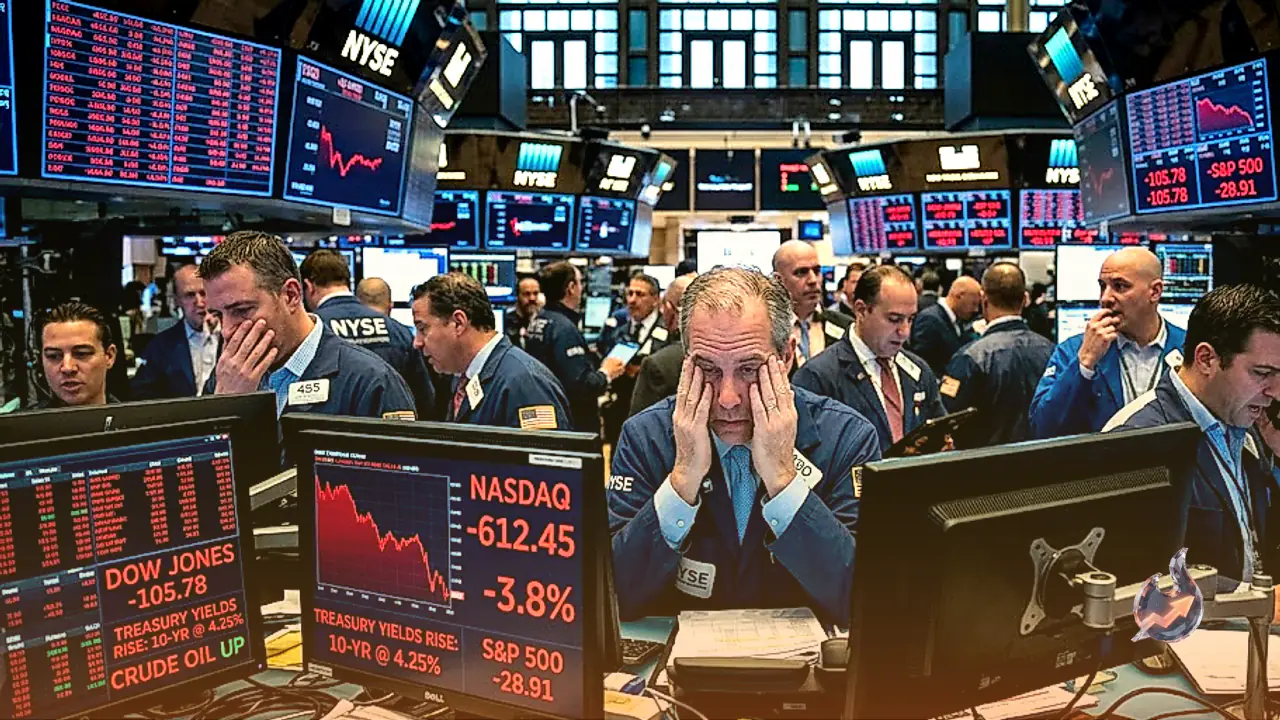

























Gold is trading around $4,056 as revived global inflation fears force traders to reconsider their expectations regarding Federal Reserve interest rate moves. Investors are seeking fresh cues on the potential acceleration of US inflation following the renewal of hostilities in the Middle East.
Geopolitical Conflict and US Policy
On Wednesday, the United States Central Command announced it launched fresh strikes on Iran, aimed at keeping the Strait of Hormuz open for transit. This region is a critical chokepoint for nearly 20% of the world's energy supply. This military action followed US President Donald Trump's announcement that the memorandum of understanding (MoU) signed with Iran, intended to end the Middle East war, is officially over.
FOMC Minutes and Monetary Policy
The Federal Open Market Committee (FOMC) Minutes from the June policy meeting, released on Wednesday, indicated that policymakers continue to view inflation as the primary risk. Several officials remain convinced that further policy tightening could be necessary to manage economic stability.
Technical Outlook and Market Trends
XAU/USD is currently trading near $4,056, maintaining a bearish bias in the near term. The metal remains below the 20-day exponential moving average (EMA) at $4,149.09, which acts as a key dynamic barrier preventing upside momentum. Furthermore, the Relative Strength Index (RSI) at 40.11 sits in mildly negative territory, suggesting persistent selling pressure. If gold manages to sustain itself above the 20-day EMA, it could advance toward $4,200. Conversely, if it drops below the June 30 low of $3,941.76, the precious metal could slide toward $3,800.
Gold as a Safe Haven Asset
Throughout history, gold has served as a reliable store of value. Beyond its use in jewelry, it is widely considered a safe-haven asset during turbulent economic times. Because gold does not rely on any specific government or issuer, it is frequently used as a hedge against inflation and depreciating currencies. According to data from the World Gold Council, central banks purchased 1,136 tonnes of gold in 2022—the highest annual total on record. Emerging economies including China, India, and Turkey are actively increasing their gold reserves to bolster economic strength.
Correlation with Financial Markets
Gold exhibits an inverse correlation with both the US Dollar and US Treasuries. When the Dollar weakens, gold prices typically rise. Additionally, there is an inverse correlation with risk-oriented assets; rallies in the stock market often cause gold prices to soften, while market sell-offs tend to favor the metal. While factors like recession fears can boost gold's price, high interest rates generally weigh on non-yielding assets, making the behavior of the US Dollar the most critical driver of XAU/USD performance.