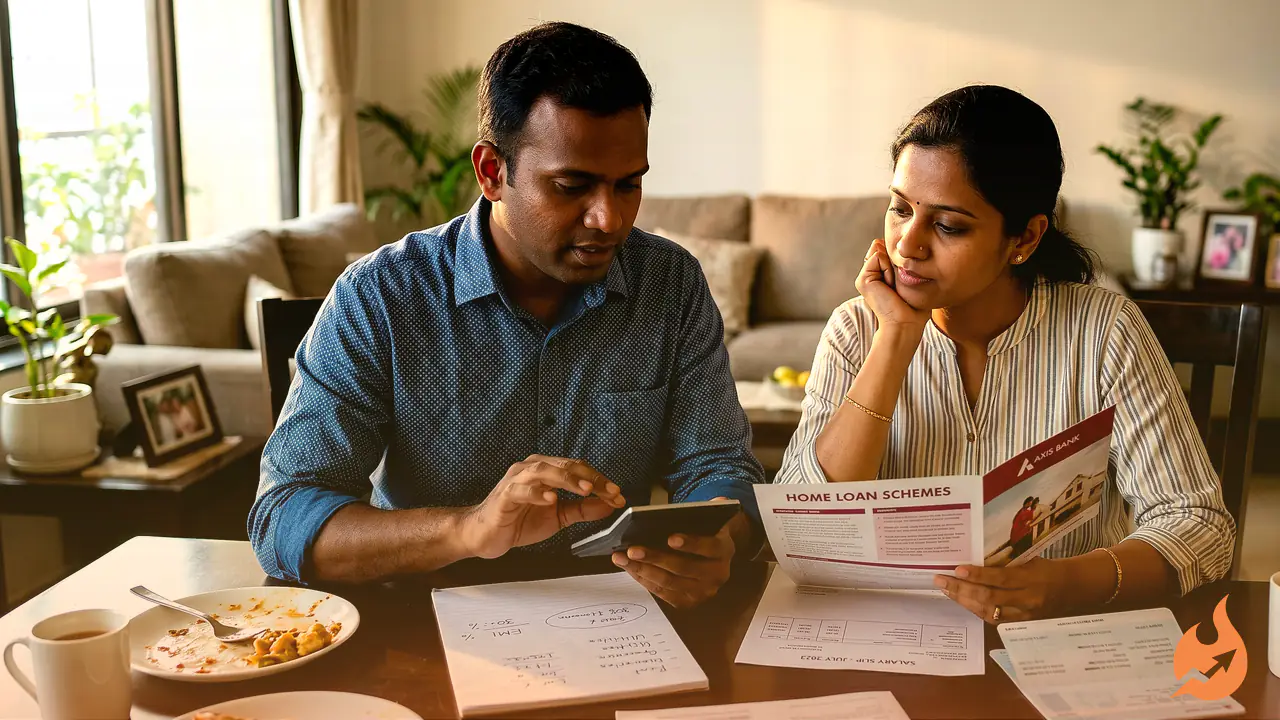

Owning a home sits near the top of almost everyone's wish list, and for most people the only way to get there is a home loan. Here is the catch most buyers miss: banks often look at your income and sanction a far bigger loan than you expected — but the loan you qualify for and the loan that is good for you are rarely the same thing. Financial experts are blunt about it: before you fall in love with a property, work out how large a monthly instalment you can actually carry without strain. A rushed decision here can squeeze your finances for years to come.
This Is a Commitment Measured in Decades, Not Months
A home loan is typically taken for 15 to 20 years, and in many cases even longer. That means a fixed slice of your salary will be carved out as an EMI month after month for a very long stretch. For that reason, borrowing simply because the bank says you are eligible is a poor yardstick. The real measure should be your own requirement and your genuine ability to repay.
The Big Question: How Heavy Should the Instalment Be?
According to financial advisor Ankur Warikoo, your home loan EMI should never cross 30 percent of your monthly income. Put it in plain numbers: if you take home 1 lakh rupees a month, your instalment should stay capped at around 30,000 rupees. Holding to that ceiling keeps your other essential spending untouched and your household budget in balance.
Don't Leave These Costs Out of the Maths
A family's budget is never just the home instalment. Plenty of expenses simply cannot be skipped — children's school fees, health insurance, medical bills, a vehicle EMI, everyday household running costs, and on top of that your investments and savings. If the bulk of your income disappears into the home loan instalment alone, meeting all these other needs becomes a real struggle.
A Bigger House Now, or Your Children's Future?
Experts stress that spending on a child's education is the single most valuable investment you can make for the future. With the cost of higher education climbing fast, stretching beyond your means just to buy a larger house is not considered a wise trade-off. If it comes to it, you can settle for a slightly smaller home — but cutting corners on your children's education and your family's security is not worth it.
Run This Check Before You Apply
Before filling out the application, sit down and add up your total income, your monthly outgoings, your existing savings, and the financial demands you can see coming. If your EMI lands somewhere near 30% of your income, your financial footing will be far steadier. Keep one final thought firmly in mind: what matters is not how large a loan the bank is willing to hand you, but how large an instalment you can repay, month after month, without any stress.