
A Heat Wave That Rewrote the Record Books
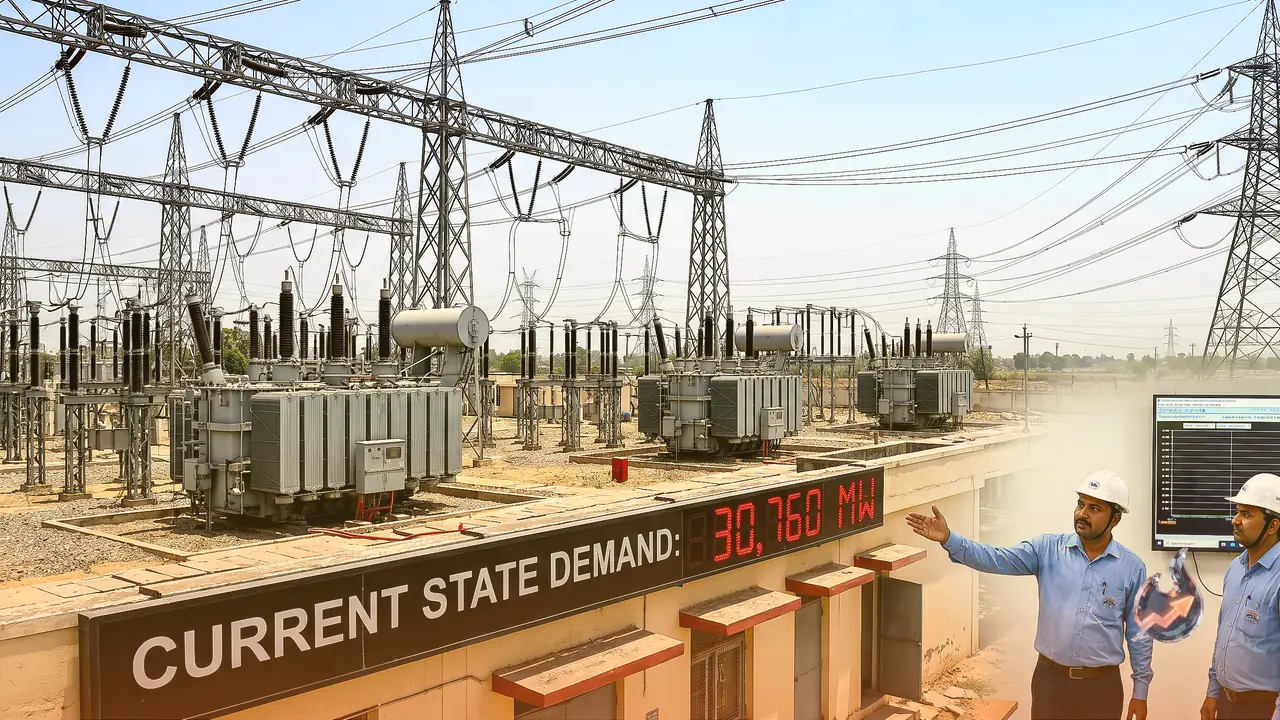
The relentless heat sweeping across northern India pushed Uttar Pradesh's electricity grid to a point never reached before. On June 17, power demand in the state hit 30,760 MW, an unprecedented peak that UPPCL confirmed as a new all-time high. This was the third successive day on which the state broke its own record. Figures for the preceding days show 29,579 MW on June 15 and 29,571 MW on June 14. Despite this extraordinary strain on the system, UPPCL reported that no significant supply disruption occurred anywhere in the state across all three days.
Three States Combined Could Not Match UP Alone
The sheer scale of UP's June 17 consumption becomes striking when compared with other large states. According to UPPCL data, the electricity supplied to UP on that single day was equivalent to the total combined consumption of Tamil Nadu, Punjab, and Karnataka. Outpacing three major states simultaneously reflects not only UP's vast population but also the sustained effort the state government has put into strengthening energy infrastructure. Officials attribute the ability to absorb record demand without breakdowns to exactly those infrastructure investments.
Where UP Gets Its Electricity
Meeting a demand of this scale requires drawing from multiple sources. The Uttar Pradesh Rajya Vidyut Utpadan Nigam Limited operates thermal power stations at Anpara, Obra, Parichha, and Harduaganj, which form the backbone of in-state generation. The central public sector utility NTPC contributes through its plants at Rihand Dam, Unchahar, and Singrauli, all located within UP. A power plant using the latest technology at Ghatampur in Kanpur rounds out the generation network available to the state.
The Gap Between What UP Makes and What It Consumes
UP's own generation capacity, based on May figures, was roughly 10,000 MW, translating to approximately 1 crore units per day. On June 17, however, the state consumed 3,07,60,000 units in a single day, nearly three times that daily production capacity. To bridge this substantial gap, the state's DISCOMs have to purchase the shortfall from electricity sources outside UP.
The Workforce Keeping the Lights On
The state government has directed officials to maintain supply on schedule without interruption in both urban and rural areas, and the results are visible in the improved power situation across both settings. UPPCL noted that its workforce has remained on duty continuously through intense heat, strong winds, and rain. Senior officials are carrying out regular inspections of substations and power houses to identify and fix faults quickly. UPPCL's Director of Distribution, Gyanendra Dhar Dwivedi, said that the state is consistently meeting demand and that the entire UPPCL team is working around the clock to keep supply steady.