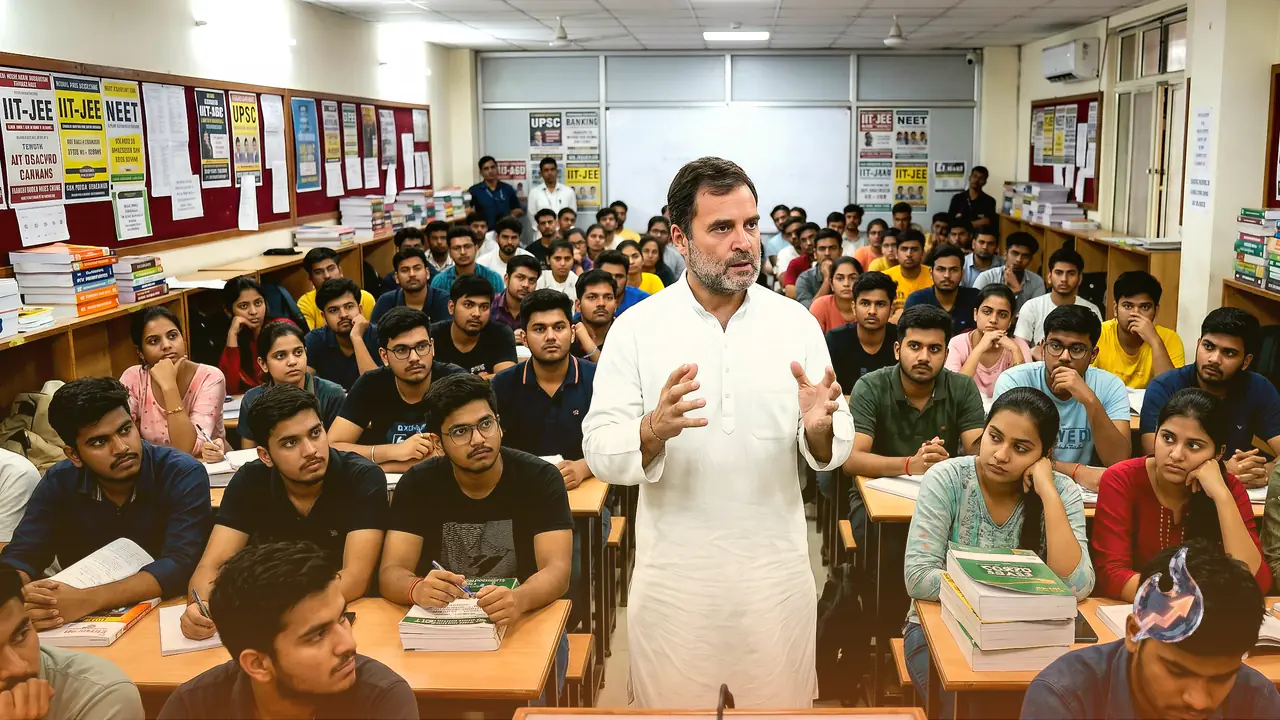

Congress leader Rahul Gandhi has once again turned the spotlight on India's exam and coaching machinery, sharing a post on the social media platform X that highlights just how heavily the race for government jobs and medical and engineering seats weighs on ordinary households.
Five Exams, One Staggering Number
In his post, Rahul Gandhi pointed to just five of the country's biggest competitive examinations, NEET, JEE, SSC, UPSC and RRB. According to him, students and their families together spend a combined ₹3.5 lakh crore every single year simply preparing for these five exams. It is a figure that paints a far larger picture of financial strain than most people realise.
Nearly Triple the Education Budget
Setting that spending against official numbers, Rahul Gandhi wrote that the ₹3.5 lakh crore figure is roughly three times the entire education budget of the Indian government. In other words, families collectively pour close to three times more into preparing for these five exams than the government spends on the country's whole education system in a year.
Equal to Five Ministries Combined
The comparison does not stop there. According to Rahul Gandhi, the amount is so large that it matches the combined budget of five central ministries, education, health, labour, science, and women and child development. His point is pointed: the money households shell out just to prepare for exams rivals what the government spends on the very sectors that hold up the nation's future.
The Larger Message
Through the post, Rahul Gandhi appears to be questioning the coaching culture and exam-driven system, in which the scramble for jobs and admissions has pushed middle-class families into severe financial pressure. His argument is that when the cost of preparation runs several times higher than the government's own education budget, it signals a deep flaw in how the system works.
Public Reaction
The post drew a mixed response. Many users backed him for raising the issue, voicing concern over the financial and mental burden bearing down on students, while others asked when concrete steps would actually be taken to fix it. Some, however, questioned the political intent behind the post and dismissed it as mere rhetoric.