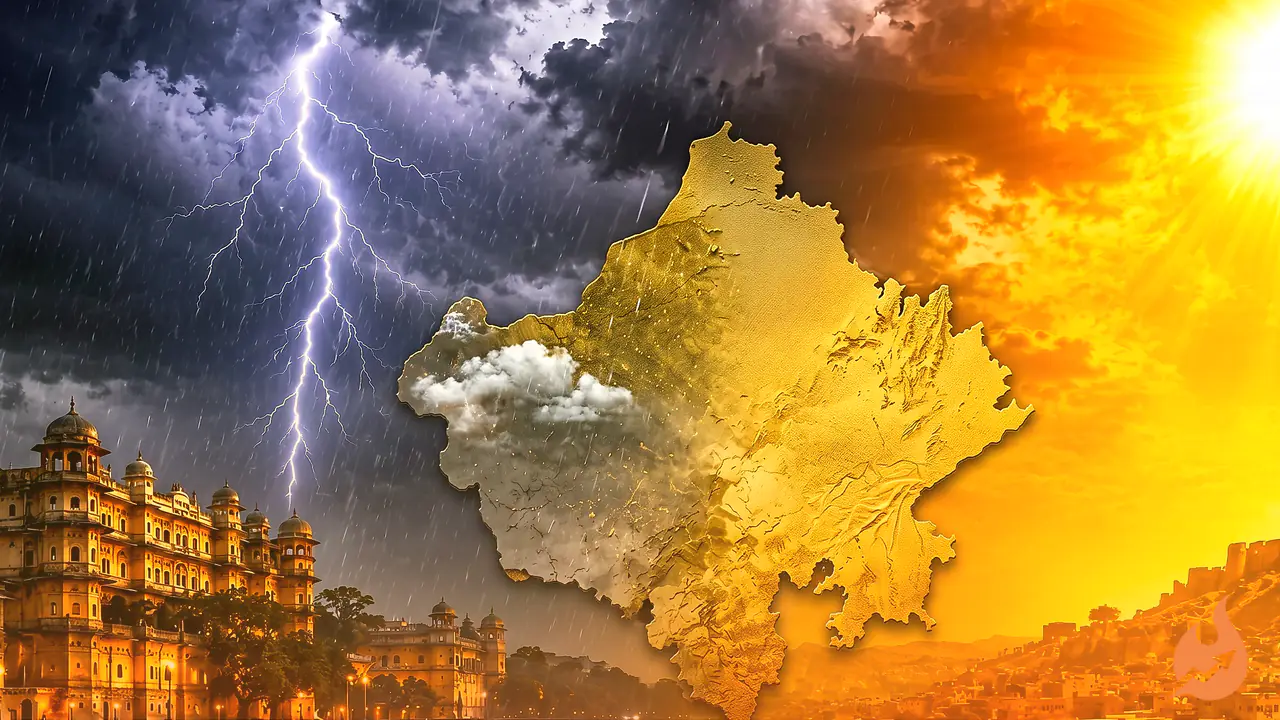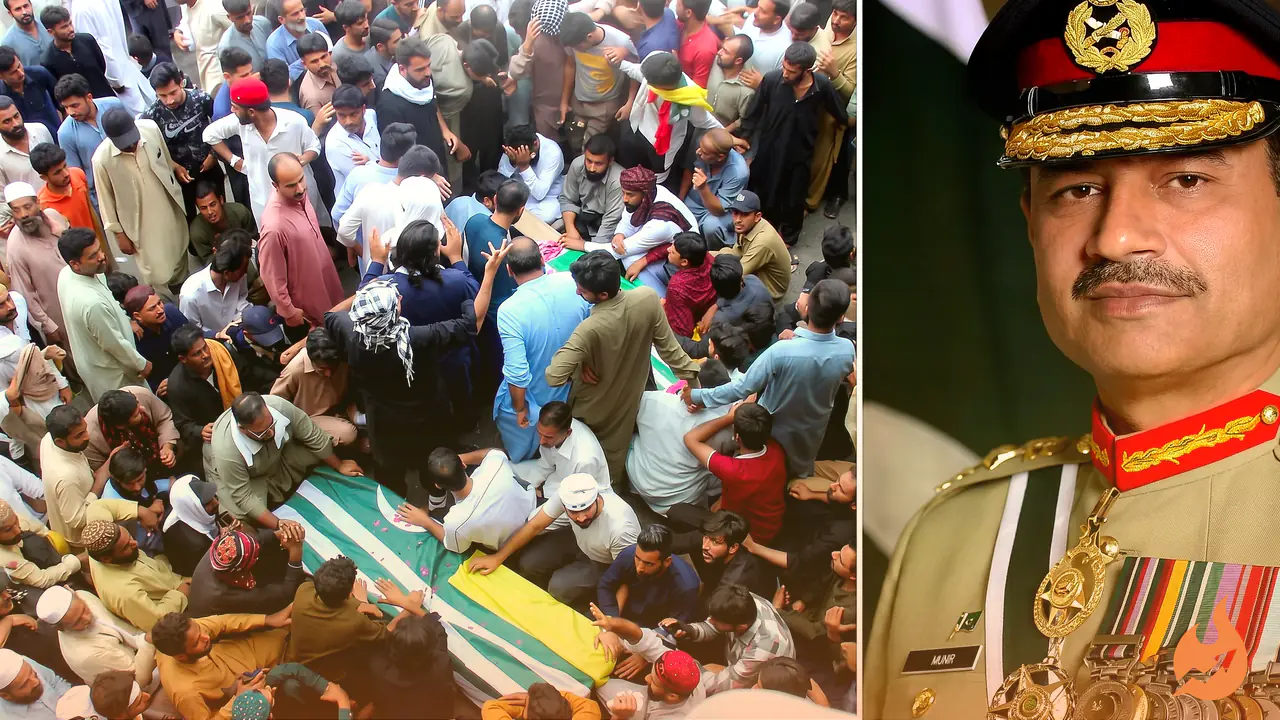

The discontent that had been simmering for months in Pakistan-occupied Kashmir (PoK) has now spilled into open revolt. What began as a fight over everyday concerns — electricity tariffs and the subsidy on flour — has grown so intense that people are losing their lives on the streets. When Pakistani troops opened fire on these demonstrators, Shehbaz and Asim Munir drew sharp condemnation around the world. Seeing that naked force was backfiring, the Field Marshal has switched tactics and dusted off an old legal weapon: 'Article 56'.
Rising Bills and a Vanishing Subsidy Lit the Fuse
The 'Joint Awami Action Committee' (JAAC) launched its agitation months ago against soaring electricity prices, runaway inflation and the withdrawal of the subsidy on flour. That movement has since swelled into something far larger. When bullets and killings failed to silence it, Pakistan's 'Field Marshal' laid down a final condition before the protesters — either kneel to Islamabad's terms, or be ready to face the lash of 'Article 56'. This is the very provision that could bury whatever autonomy PoK still has, permanently.
What Article 56 Really Does
The territory Pakistan parades before the world as 'Azad Kashmir' is governed by its own interim constitution — the AJK Interim Constitution Act, 1974 — whose Article 56 hands Islamabad limitless powers. Under this provision, Pakistan's federal government can act at will here whenever it pleases, with full legal cover.
- It can dismiss the popularly elected Muzaffarabad government in a single minute.
- It can dissolve the entire legislative assembly in one stroke and lock its doors.
- Most chilling of all: it does not matter whether the Muzaffarabad government commands a majority or not — that makes not the slightest difference to Islamabad.
The upshot is that the whole executive authority of PoK is squeezed straight into the hands of the 'Azad Kashmir Council' seated in Islamabad and the Prime Minister of Pakistan.
The Inverse of India's Article 370
Pakistan's Article 56 is, in effect, a twisted version of the same Article 370 that India scrapped in 2019. At the time of the accession agreement with Maharaja Hari Singh, and given the circumstances then, India had used Article 370 to grant Kashmir a 'special status' and a guarantee of protection. Later, when that provision came to be seen as an obstacle to development, it was removed. The aim was clear — to end terrorism, separatism and stone-pelting in the Valley, to give the people of Kashmir the same full rights enjoyed by other states, and to open new avenues of investment and employment that would draw the region into the mainstream.
The contrast could not be starker. India removed 370 to hand rights to its people; Pakistan's army is wielding the inverse of that very abolished provision as a weapon to permanently smother the voice of a population that took to the streets for its rights. Munir wants to use Article 56 not for any development, but to choke off the little freedom and democracy the people of Kashmir have left.
Three Proposals Cooked Up Behind Closed Doors
To douse the flames of this revolt and break the resolve of the JAAC agitators, the Pakistan government has drawn up three proposals in closed rooms, dressed as dialogue. Each carries the pretence of talks and the threat of ruin in equal measure.
Proposal 1: A high-power delegation of all of Pakistan's political parties will be sent to Muzaffarabad. This delegation will make a show of talking to local leaders and to those JAAC members the government has not 'banned' — the real goal being to split the movement from within.
Proposal 2: The general elections due on 27 July should be allowed to proceed on schedule, after which the new assembly would halve the disputed '12 refugee seats' to just 06. These seats are reserved in the name of the refugees of 1947 for people living in Pakistan's main provinces such as Punjab and Sindh. Islamabad has long used them to install its preferred puppet governments, while local Kashmiris are demanding that they be abolished altogether.
Proposal 3: If JAAC or any political party there flatly refuses to accept these terms, Article 56 will be slapped on without delay. The keys to power in Muzaffarabad would then pass directly into Islamabad's hands, and the rule of military boots would follow.
Pakistan's Hypocrisy Laid Bare
This entire dispute has also stripped away the lie Pakistan has been selling on international platforms for years. The truth is that Pakistan's own 1973 constitution does not treat PoK as a formal part of the country or as a fifth province. Clause (2)(d) of Article 1 of that constitution describes it as a 'territory included by other means', while Article 257 states that the relationship between the two will be settled only when the people of Kashmir decide to join Pakistan.
Yet the reality behind this paper freedom is something else entirely. PoK is firmly clamped in the grip of the Pakistani army:
- Defence and security: control here rests wholly with the Pakistani military.
- Foreign affairs: PoK has no independent existence of its own on the world stage.