
“If you don't do what I say, I won't invite you to my birthday party!” — or — “If you don't share your tiffin, I won't do the project with you.” Lines like these, spilling out of small schoolgoing children, have become so routine that most parents and teachers brush them off as ‘childishness’ or ‘harmless squabbles.’ But pause for a moment — where does this idea of getting your way by threatening, pressuring or emotionally blackmailing someone actually come from in such young minds?
The Roots Lie Inside the Home
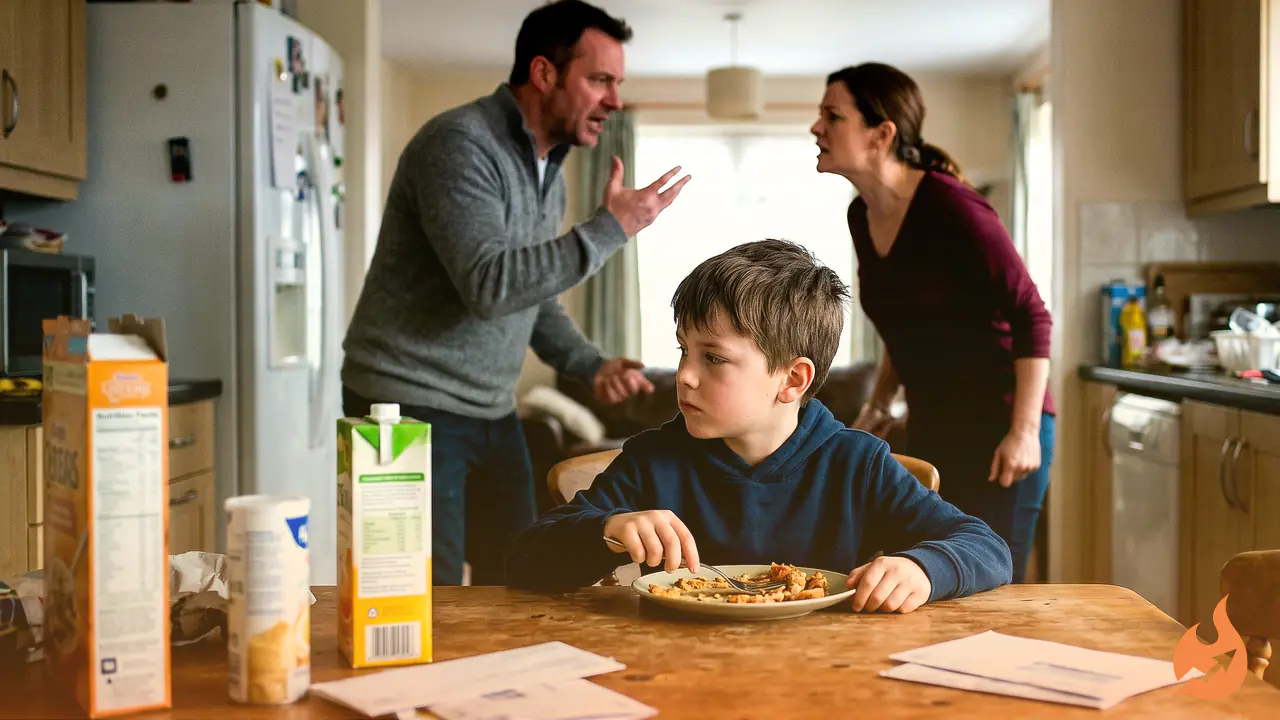
Child psychologists say the source is usually not outside the house but within it — buried in the very environment the child grows up in. An old saying fits perfectly here: children don't do what we tell them to do, they do what they see us doing.
A recent study conducted in Denver echoed exactly this. According to it, children copy the adults of their household almost exactly. They don't merely learn what to say; they keenly observe which tactics the grown-ups use to get their own way.
When the Parents' Method Itself Is Wrong
If, at home, a husband and wife get their way by threatening each other, hurling taunts, resorting to the ‘silent treatment’ (cutting off conversation), or emotionally blackmailing one another, the child unknowingly concludes that this is the ‘right’ approach. The lesson sinks in deep — that work can be extracted from others by dominating them or putting them down.
Consider some very common examples — belittling remarks such as “you're useless” or “you'll never amount to anything”; imposing conditions like “if you don't listen to me, I won't speak to you”; exploiting each other's weaknesses and criticising one another constantly. A child who witnesses this daily soon starts telling friends, “Your clothes aren't nice, you can't play in our group.”
What the Bobo Doll Experiment Proves
Psychology has a famous study known as the ‘Bobo Doll Experiment.’ It found that children who watched adults behave aggressively toward a doll went on to repeat exactly the same violent, aggressive behaviour with that doll when left alone.
Experts point out that the pre-school years — ages 3 to 6 — are the most sensitive of all. Whatever a child sees at home during this phase leaves the deepest imprint on a tender mind. Even if parents no longer use physical violence in front of children, hurting each other mentally and verbally is just as harmful.
The Dangerous Future of a Bullying Habit
The most worrying part is that bullying doesn't only harm the child on the receiving end — it also pushes the future of the child who does it into darkness. Experts warn that children who learn aggressive or manipulative behaviour early in life face a sharply multiplied risk, once they reach their teenage years, of falling into depression, breaking rules and developing criminal tendencies, and getting trapped in substance addiction.
The Solution Lies Entirely With Parents
The reassuring news is that the key to this problem rests squarely in parents' hands. Every child is essentially driven by two things — getting what they want (like love, toys, praise) and avoiding what they don't (like studying or going to bed early). The only question is which path you show them for getting their way.
Swapping negative methods for positive ones changes the outcome:
- Respect and cooperation: Say “thank you” to each other in front of the children, offer praise, and be seen working like a team.
- The habit of appreciation: When you praise your partner in front of the children — for instance, “We reached on time today thanks to Mummy” — the child grasps the real value of cooperation.
- Resolve with patience: When there's a disagreement, sit down calmly and sort it out instead of shouting.
When children see kindness, respect and mutual harmony at home, they not only stop bullying others but also become less likely to be bullied themselves. A strong sense of self-esteem grows within them. Remember — you don't just hold the power to get children to do things; you also carry the responsibility of shaping them into sensitive, fine human beings.