
A Wide-Ranging Agenda at the BJP-RSS Delhi Session
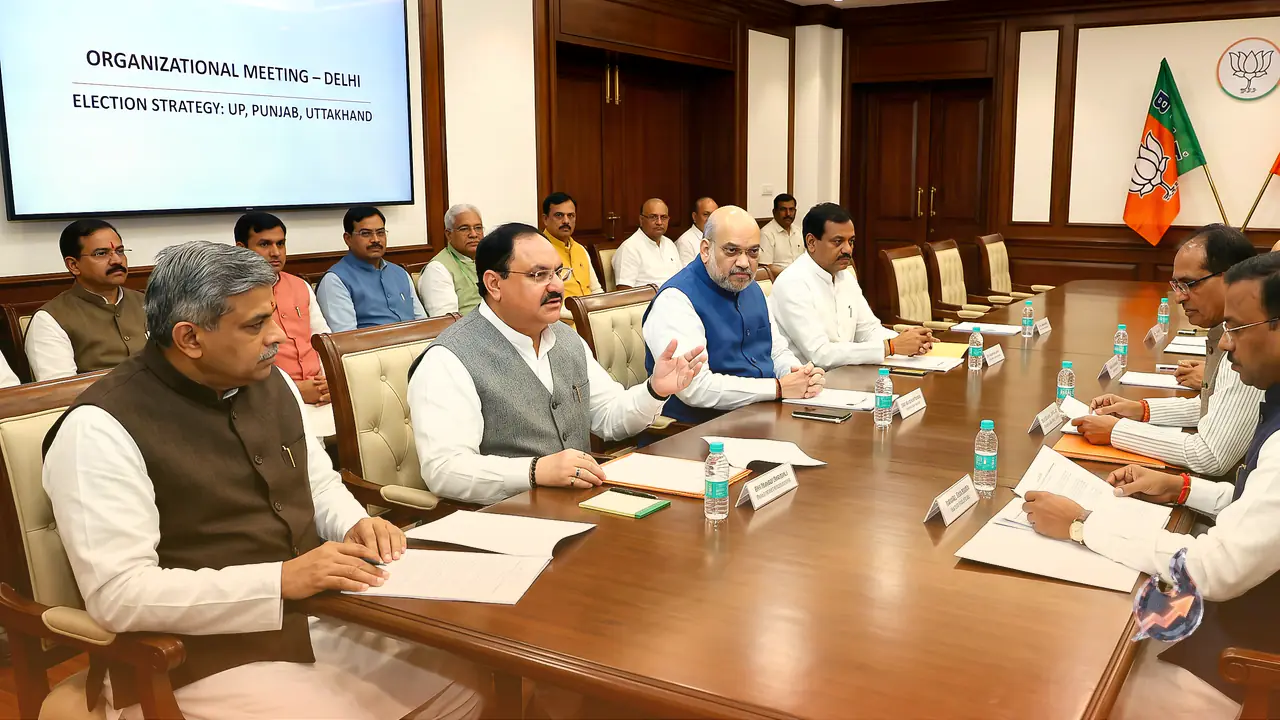
The Bharatiya Janata Party and the Rashtriya Swayamsevak Sangh held a high-level joint meeting in Delhi on Monday, covering everything from internal organizational restructuring to electoral strategy for five upcoming state assembly elections. No formal appointments or official decisions have been announced yet, but the discussions are being regarded as a foundational step in shaping the party's path forward.
Who Was in the Room
BJP sent a powerful contingent to the meeting, with Union Home Minister Amit Shah, Defence Minister Rajnath Singh, BJP National President Nitin Naveen, Organization General Secretary BL Santosh, National General Secretary Vinod Tawde, Parliamentary Affairs Minister Kiren Rijiju and Union Minister Dharmendra Pradhan all in attendance. Representing the RSS were Sarkaryavah Dattatreya Hosabale, Co-Sarkaryavah Arun Kumar and several other senior functionaries.
Probable Role Reassignments Across Key States
According to sources, BJP National General Secretary Vinod Tawde is being considered for organizational responsibilities covering Punjab and Uttarakhand. Former Madhya Pradesh Chief Minister Shivraj Singh Chouhan is reportedly under consideration for a significantly expanded role in the party's Uttar Pradesh operations. UP remains one of BJP's most politically critical states, and the party is already working on reinforcing its organizational structure there with the 2027 state assembly elections firmly in view.
Veteran BJP organizer Sunil Bansal is expected to continue his current responsibilities in Uttar Pradesh and may additionally be entrusted with the task of strengthening the party machinery in Manipur. National General Secretary Tarun Chugh is being seen as a key liaison between the central leadership and the broader organizational apparatus on the ground.
Ideology and Outreach Figured as Prominently as Appointments
Sources say the meeting's scope extended well beyond personnel decisions. BJP's political messaging strategy, the planning of public outreach campaigns and ways to deepen ideological engagement among party workers at the grassroots level were all discussed at length. The RSS leadership urged the party to maintain close and sustained engagement with its core ideological base and its traditional support constituencies.
Dattatreya Hosabale specifically emphasized the need to make Hindutva-based public contact programs and social participation initiatives more robust and effective. He also flagged that the party must be careful not to become excessively dependent on caste arithmetic when formulating electoral strategy.
Learning from 2024 and Preparing for 2027
The deliberations took place against a meaningful backdrop. Following the 2024 Lok Sabha election results, conversations about social coalition-building and caste-driven electoral approaches had gained considerable traction within different tiers of BJP. In that context, this BJP-RSS meeting is being read both as an exercise in introspection and as a strategic signal for what the party intends to do next. The five upcoming state elections and, above all, the 2027 Uttar Pradesh assembly contest represent the near-term tests BJP is now gearing up for, and Monday's joint session is being seen as the first concrete move in that preparation.